 Lynden Siding
 Windows Built for the Deming Climate, Not a Showroom
Deming sits inland from Lynden along the Nooksack River corridor, but it shares the same weather pattern that shapes every home in this part of Whatcom County: wet, mild winters with weeks of steady rain, damp river-bottom air that lingers in the valley, and a moss season that can stretch from October well into spring. Add in the salt-laden air that moves inland off Bellingham Bay and the Strait of Georgia on a west wind, and you have conditions that are genuinely harder on windows than most manufacturers' warranty literature accounts for. A window that performs fine in a dry climate can fail here in a fraction of the time if it's not selected and installed with this specific environment in mind.
Custom windows aren't just about matching an odd-shaped opening or getting a look you can't find off the shelf, though that's part of it. In Deming, "custom" also means custom to the climate — the right frame material, the right glazing package, and flashing details that account for how water actually moves across this region's siding and trim in a long, driving rainstorm.
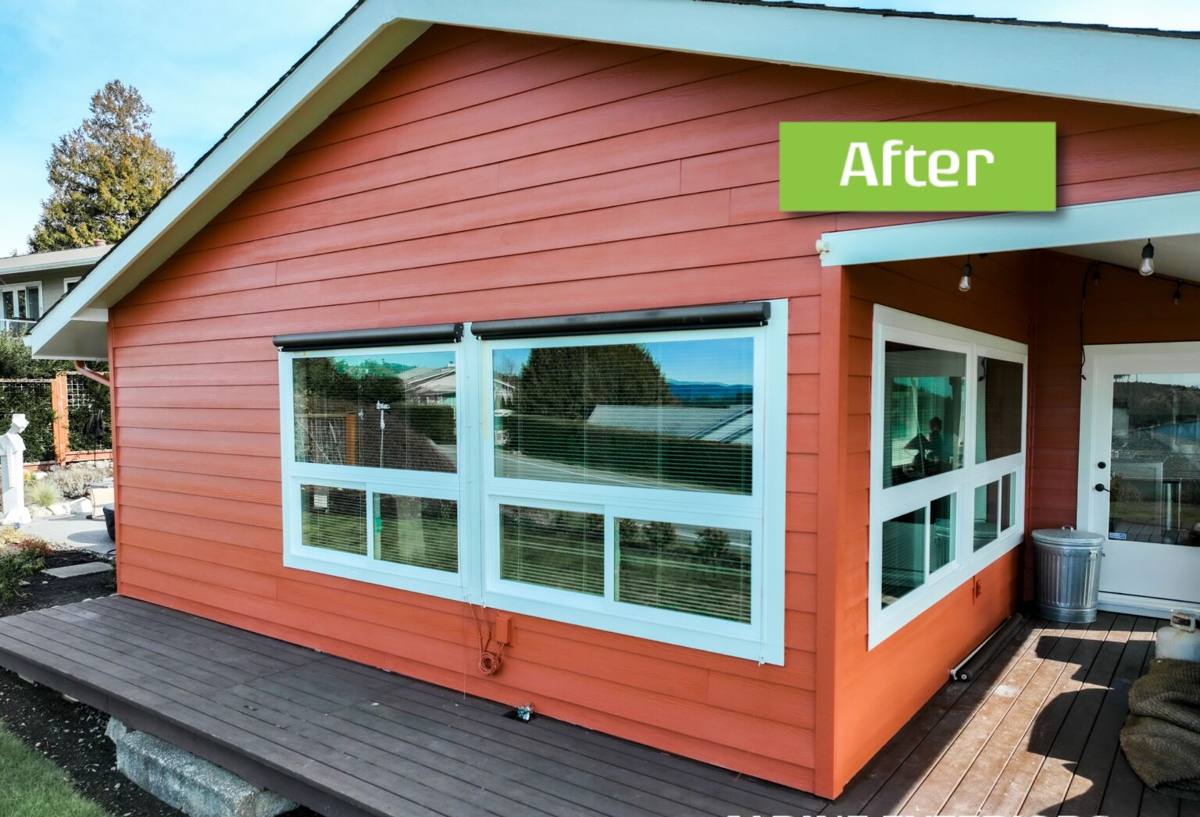
What Driving Rain and Salt Air Actually Do to Windows
It helps to understand the failure modes before talking about the fix. Two separate forces are working against windows here, and they attack different parts of the assembly.
Driving Rain and Wind-Driven Moisture
Whatcom County storms frequently come with enough wind to push rain sideways against a wall rather than straight down it. That means water is testing every seam, every nailing flange, and every sill pan on a window — not just sitting on the sill like a still-air rain would. Poorly flashed windows let that water track behind the trim and into the wall cavity, where it can sit for months before anyone notices a soft spot or a stain.
Salt Air and Corrosion
Salt-laden air doesn't need to be right on the water to do damage — it travels inland on prevailing winds and settles as a fine film on exterior surfaces, including window hardware. Over years, that film accelerates corrosion on lower-grade fasteners, hinges, and balance mechanisms, and it can pit unprotected aluminum components. It also breaks down cheaper sealants faster than a dry climate would, which shortens the effective life of the weatherseal around the sash.
Moss and Prolonged Dampness
A long moss season means extended stretches where wood trim, sills, and the lower edges of a window frame stay damp rather than drying out between rains. That sustained moisture is what actually causes rot — it's rarely a single storm, it's weeks of a surface that never fully dries. Any wood component that isn't properly sealed or that lacks a way to shed water quickly is at risk.
What a Correct Custom Window Installation Involves
A window is only as good as the parts of the job nobody sees once it's caulked and trimmed. For Deming homes, we treat the following as non-negotiable, not upgrades:
- A properly sloped sill pan under every window, so any water that gets past the sash drains outward instead of pooling against the framing
- Correctly lapped flashing tape at the head, jambs, and sill, installed in the right shingle-style order so water is always directed down and out
- A continuous bead of quality sealant at the nailing flange, matched to the substrate it's bonding to
- Corrosion-resistant fasteners and hardware suited to a marine-influenced climate, not generic interior-grade parts
- Insulation in the gap between the window frame and the rough opening, without over-packing it in a way that bows the frame
- Trim and casing details that shed water away from the frame rather than channeling it toward the joint
Skipping any one of these doesn't cause an immediate problem — it causes a slow one, usually discovered years later as rot, mold, or a failed seal that's already let moisture into the wall.
Choosing the Right Window for a Deming Property
Frame material matters more here than in a dry inland climate, because the frame is what's absorbing the daily cycle of rain, humidity, and occasional salt exposure. There's no single "best" material for every home — it depends on the home's age, style, and how much upkeep the owner wants to take on.
| Frame Material | How It Handles This Climate | Trade-Offs to Know |
|---|---|---|
| Vinyl | Doesn't rot or corrode; handles damp conditions well with minimal upkeep | Fewer custom color and profile options than wood or fiberglass; can look less authentic on older or historic-style homes |
| Fiberglass | Very stable in temperature swings and damp conditions; strong resistance to warping | Higher upfront cost than vinyl; fewer installers are experienced with it |
| Wood (clad exterior) | Classic look, good insulating properties, exterior cladding protects the wood from direct weather | Interior wood still needs periodic attention; any breach in the cladding exposes wood to rot risk |
| Aluminum | Strong and slim-profile, good for large or modern openings | Prone to condensation and, without a thermal break, more susceptible to corrosion near salt air over time |
We'll walk through this table in person, against your actual home, rather than pushing one material as universally best — the right call depends on your home's exposure, budget, and how it's sided and trimmed.
Our Process, Start to Finish
1. On-Site Assessment
We look at the existing openings, the condition of the surrounding trim and sheathing, and how water currently moves across that wall in a storm. This is where we catch hidden rot or flashing problems before they become a surprise mid-project.
2. Product and Sizing Recommendation
We recommend frame material, glazing package, and style based on the assessment — not a one-size answer. If your home already has custom or non-standard openings, we measure and order accordingly rather than forcing a standard size to fit.
3. Removal and Opening Prep
Old windows come out carefully so we can inspect the rough opening, sill, and sheathing underneath. Any rot or moisture damage found here gets repaired before a new window goes in — installing a new window over a compromised opening just hides the problem.
4. Flashing, Sealing, and Installation
This is the step that determines whether the window lasts. Sill pan, flashing tape, sealant, and fasteners go in following the sequence described above, matched to this region's rain and salt exposure.
5. Trim, Cleanup, and Walkthrough
Interior and exterior trim is finished, the site is cleaned, and we walk the job with you so you know exactly what was done and what, if anything, needs attention down the road.
Signs Your Current Windows Are Already Struggling
Because window failure in this climate is usually gradual, homeowners often live with early warning signs for a while before calling. Worth checking for:
- Soft or spongy trim around the window frame, especially at the bottom corners
- Visible moss or persistent green staining on the sill or lower casing
- Condensation forming between panes, which usually means a failed seal
- Drafts you can feel near the frame on a windy day
- Difficulty opening, closing, or locking a window that used to operate smoothly
- Paint or finish that's peeling specifically around the window opening and nowhere else on the wall
Any one of these on its own isn't an emergency, but a couple together usually means water has already found a way in.
Why a Crew That Already Works in Deming Matters
Window installation done right depends on understanding the specific water and weather patterns a home actually faces — not a generic install checklist. A crew that regularly works Deming and the greater Lynden area already knows how storms move through this part of Whatcom County, how far salt air realistically travels inland on a west wind, and how long a moss season here typically runs. That local pattern recognition shapes real decisions on site: which side of a home needs the most conservative flashing detail, which materials hold up best against this specific mix of dampness and occasional salt exposure, and which older Deming-area homes tend to have hidden rot behind their original trim. It's the difference between a crew executing a generic install and a crew making judgment calls based on what actually happens to windows in this exact area.
Keeping New Windows Performing for the Long Haul
A correctly installed window still benefits from a bit of seasonal attention in a climate like this one:
- Clear moss and debris off sills and lower trim before it has a chance to hold moisture against the frame
- Rinse salt film off exterior hardware and glass periodically if the home is exposed to west winds
- Check exterior caulking annually and re-seal any joints that have cracked or pulled away
- Keep gutters and downspouts clear so roof runoff isn't dumping extra water directly onto window openings
None of this is heavy maintenance — it's a few minutes a season, and it goes a long way toward getting the full lifespan out of the investment.
Get a Straight Answer for Your Home
Every Deming property is a little different in how it's oriented, how it's sided, and how much weather exposure it actually gets. If you're dealing with drafty, foggy, or hard-to-operate windows, or you're planning ahead for a remodel, we're glad to take a look and give you a straightforward, no-pressure estimate — including an honest read on what your current windows and trim are telling us. Use the form below to get started.