 Lynden Siding
 Deck Repair for Aldergrove, BC Homes
Aldergrove sits just across the Aldergrove–Lynden border crossing from our shop, and the decks over there age the same way decks in Lynden do. The same wet marine air, driving rain, and long moss season that work on Whatcom County homes don't stop at the border — they do the same slow damage to framing, fasteners, and decking on the Aldergrove side. If your deck has a soft spot underfoot, a railing that's gone loose, or boards that never seem to dry out, it's worth having someone look at the structure before you decide whether it's a repair or a full rebuild.
This page is about one job — deck repair — for one area. It's not a sales pitch for a full replacement you might not need, and it's not generic advice that could apply to any deck anywhere. It's what we actually look for and actually do when we're called out to fix a deck in this part of the Fraser Valley border area.
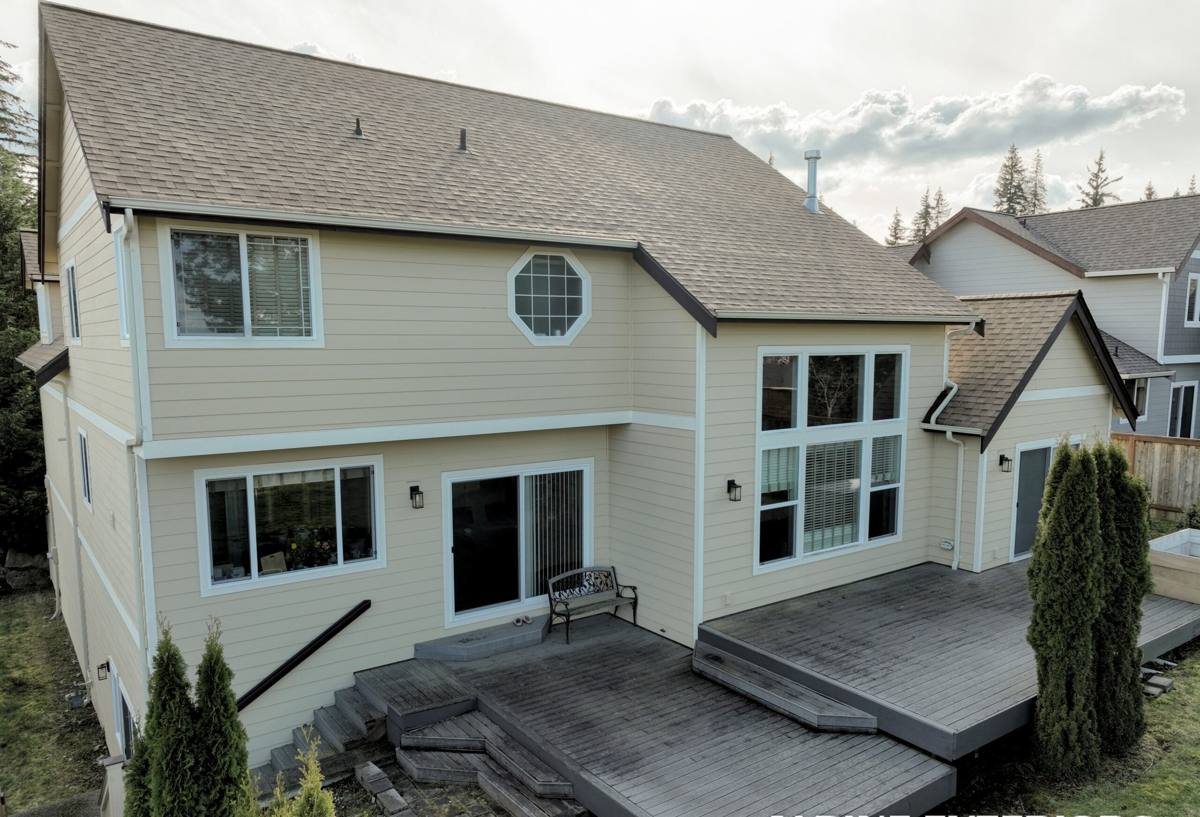
What the Local Climate Does to a Deck
Decks fail here for a small, predictable set of reasons, and almost all of them trace back to moisture that has nowhere to go.
Moss and Trapped Moisture
Shaded decks, north-facing decks, and anything under mature trees stays damp for long stretches through fall, winter, and spring. Moss and algae take hold on boards, railings, and stair treads, and once established they hold water against the wood surface far longer than bare wood would on its own. That constant dampness is what actually causes rot — the moss itself is mostly a symptom of a deck that isn't shedding water and drying between rains.
Driving Rain and the Ledger Board
Wind-driven rain during fall and winter storms pushes water sideways, not just down. That matters most at the ledger board — the framing member that bolts the deck to the house — because wind-driven rain can work its way behind poorly flashed ledgers and siding transitions. Ledger rot is one of the most serious deck problems we find, because it's a structural connection, not a cosmetic one, and it's often hidden until the deck starts to feel loose where it meets the house.
Marine Air and Fastener Corrosion
The marine-influenced air moving up through the lowlands carries enough moisture and salt content to accelerate corrosion on lower-grade fasteners and hardware over time. Rust streaking down a deck board from a nail or screw head is a sign the fastener is failing, not just staining the wood — and a deck is only as strong as the metal holding it together.
Signs Your Deck Needs Repair
Most decks give warning signs well before anything becomes dangerous. Worth checking for:
- Boards that feel spongy, springy, or soft when you walk on them
- Rust streaks bleeding out from screw or nail heads
- Gaps, dark staining, or soft wood where the deck meets the house at the ledger board
- Railings or posts that wobble or shift under hand pressure
- Stair stringers that flex or creak more than they used to
- Persistent moss or algae that returns within weeks of cleaning
- Visible daylight or gaps between joists and the beams or posts supporting them
- Fasteners backing out or heads that have sheared off
Any one of these on its own might be a small fix. Several together, especially anything involving the ledger board or main support posts, means the structure needs a real look before anyone uses the deck heavily again.
Repair or Replace? What Actually Decides It
Homeowners often assume a deck with problems needs to be torn out entirely. In our experience, that's true less often than people expect — but it depends on which parts are failing, not how old the deck looks.
| Factor | Usually Repairable | Usually Points to Replacement |
|---|---|---|
| Decking boards | Isolated soft or split boards, surface weathering | Most boards soft, cupped, or rotted throughout |
| Ledger board | Minor surface rot caught early, flashing failure with sound wood beneath | Significant rot in the ledger itself or the rim joist behind it |
| Joists and framing | One or two damaged joists, isolated beam issues | Widespread rot across the joist bay, undersized framing for current code |
| Posts and footings | Surface checking, minor post rot above grade | Footings that have shifted, heaved, or lack adequate depth |
| Railings | Loose balusters, worn caps, single failed post | Railing height or spacing that no longer meets code |
A deck built with a sound structural frame and a compromised surface is often a very reasonable repair. A deck with rot in the ledger, main beams, or footings usually isn't worth chasing with patches — that's when we'll tell a homeowner honestly that a rebuild is the better use of their money.
What a Correct Deck Repair Job Involves
Structural Work Comes First
Before any decking boards go back on, the framing underneath gets checked: joists, beams, ledger connection, and post-to-footing connections. Any repair that skips this step and just replaces the visible boards is a cosmetic fix on top of a structural problem — the deck will look fine and still be unsafe.
Flashing and Fasteners Matter More Than the Boards
Where a deck meets the house, proper flashing directs water away from the ledger board and the wall framing behind it. This is the detail that's easiest to get wrong and hardest to see once the deck is finished, which is exactly why it causes so much hidden damage. On the fastener side, we use corrosion-resistant, code-rated hardware sized for the connection — not whatever is quickest, since a ledger bolted with the wrong fasteners is a liability no matter how good the decking looks.
Matching the Repair to the Existing Structure
Repairs need to tie into the existing framing correctly — matching lumber dimensions, joist spacing, and fastening patterns so the repaired section carries load the same way the rest of the deck does. A patch that doesn't match the original structure can create a weak point even if every individual piece is sound.
Decking Material Trade-Offs
When boards need to be replaced, the material choice affects both the maintenance burden and how the deck will hold up through another wet season.
| Material | Moisture Behavior | Maintenance | Trade-Off |
|---|---|---|---|
| Pressure-treated wood | Resists rot when sealed and maintained; absorbs water if finish is neglected | Needs cleaning and re-sealing every 1-2 years | Lowest upfront cost, highest ongoing upkeep |
| Cedar | Naturally moisture-resistant but softer surface than treated wood | Needs regular sealing to hold color and resist checking | Good appearance, but sensitive to installation and sun exposure |
| Composite decking | Doesn't absorb water like wood; performance depends heavily on correct spacing and ventilation underneath | Low — periodic cleaning, no sealing | Higher upfront cost; installation mistakes (gapping, fastening) show up as problems later |
We don't push one material over another as a default. Each one is a reasonable choice when it's installed correctly for how it actually behaves in wet weather — the failures we see almost always trace back to installation shortcuts, not the material itself.
How Our Deck Repair Process Works
- On-site inspection of the decking, framing, ledger connection, and posts — we get underneath the deck, not just walk across the top
- A written scope that separates what's structural, what's cosmetic, and what's optional
- Structural repairs completed first: framing, ledger flashing, post and footing connections
- Decking, railings, and stairs repaired or replaced to match, using corrosion-resistant fasteners
- Final walkthrough so you know exactly what was fixed and what to watch going forward
We don't sell a bigger job than the deck needs. If a repair will genuinely hold up through another few years of Whatcom County winters, that's what we recommend — a full rebuild only when the structure actually calls for it.
Why a Lynden Crew That Already Works Aldergrove, BC Matters
We're based in Lynden, and Aldergrove is close enough that it's part of our regular service area, not a special trip. That matters for a repair job in a few practical ways: we can get out to look at the deck without a long delay, we're not learning the regional climate on your project, and we already know what driving rain and a wet Fraser Valley winter do to a deck frame because we see it constantly on this side of the border too.
One honest note on the cross-border part: our company operates and is licensed on the Washington side. Building permit requirements, inspection processes, and code details in Aldergrove fall under Langley Township and British Columbia's own building authority, and those can differ from Whatcom County requirements. We'll always be straightforward with you about what falls under our scope of work versus what you'll need to confirm with your local permitting office before work begins — we'd rather tell you that upfront than have it become a surprise partway through the job.
Keeping Your Deck in Shape After the Repair
A repaired deck lasts a lot longer with a little seasonal attention. Clear leaves and debris out of gaps between boards before fall rains set in — trapped organic matter is what feeds moss growth. Rinse off moss and algae as soon as you notice it rather than letting it re-establish over winter. Keep an eye on the area where the deck meets the house, since that's the spot most likely to show early signs of a flashing or ledger problem again. And if you notice any of the warning signs from earlier on this page returning, it's worth a quick look before the next wet season rather than after.
If your deck in Aldergrove, BC needs a second opinion or a straight answer on repair versus replacement, we're glad to come take a look. The estimate is free, there's no pressure attached to it, and you'll get a clear breakdown of what we find — just fill out the form below.