 Lynden Siding
 Building a Deck That Holds Up in Bellingham
A deck in Bellingham lives a harder life than a deck built inland. Between the salt-laden air off Bellingham Bay, the long stretch of driving rain that defines a Pacific Northwest fall and winter, and a moss season that can run eight months out of the year, the materials and details that work fine in a drier climate start failing early here. We've built and repaired decks throughout Whatcom County long enough to know which shortcuts show up as problems in year two, not year twenty.
This page is about deck building specifically for Bellingham conditions — not a generic overview. If you're planning a new deck, replacing boards on an old one, or trying to figure out why your current deck feels soft or slick, this covers what actually matters here.
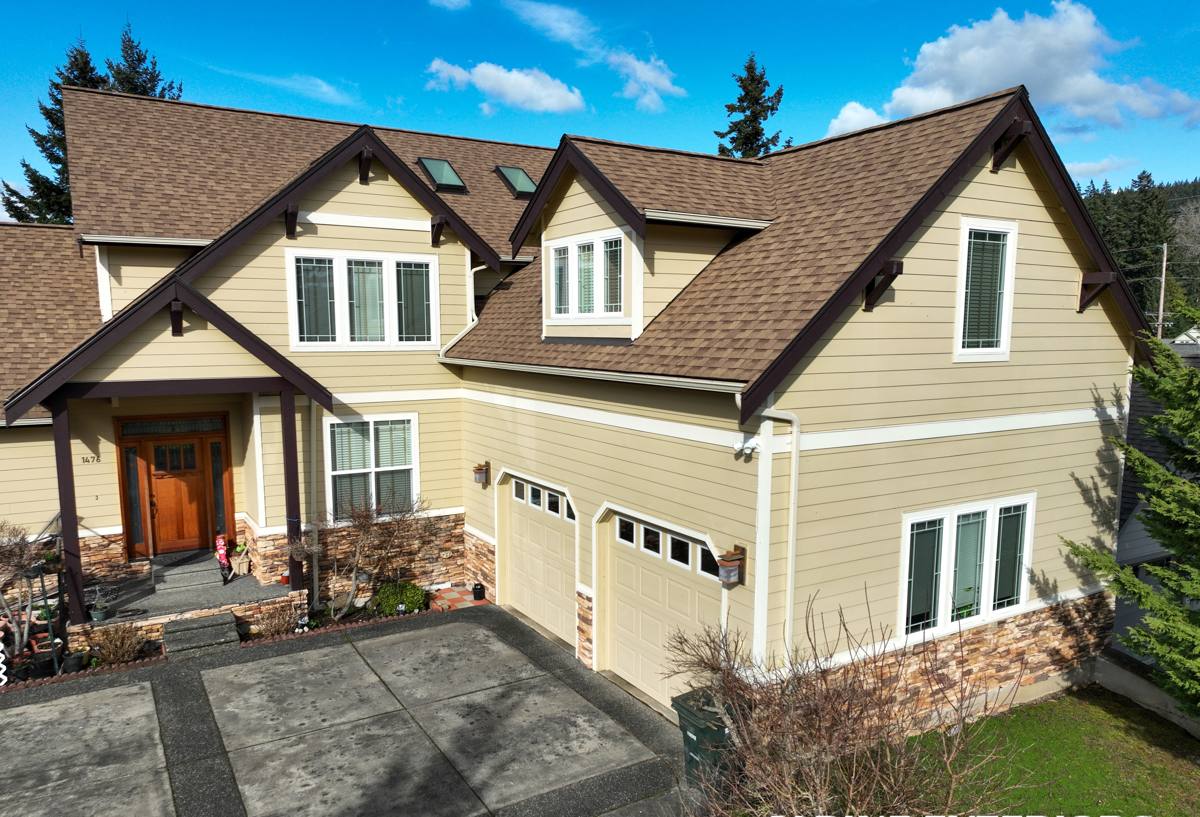
What Salt Air and Moss Season Do to a Deck Over Time
Every material decision on a coastal deck is really a decision about how it will age under moisture and salt exposure, not how it looks on day one.
Fasteners and Hardware
Standard electro-galvanized screws and nails corrode faster near salt air than most homeowners expect. Once a fastener starts rusting, it weeps stains into the wood around it and loses holding strength. On any deck within a few miles of the water, hardware needs to be rated for the exposure — not just "exterior grade," but corrosion-resistant enough for a marine-influenced environment.
Decking Surface and Moss Growth
Moss and algae need shade, moisture, and time — Bellingham provides all three for most of the year. On decks with poor airflow underneath, tight board spacing, or a north-facing orientation, a green film can build up on the surface within a season or two. That film isn't just cosmetic; it holds moisture against the board and makes the surface genuinely slippery, which is a real fall hazard on stairs and landings.
Wood Rot at Ground Contact Points
Post bases, stair stringers, and any framing near grade take the brunt of splash-back and standing moisture. In a climate that stays wet for months at a stretch, untreated or poorly detailed contact points are almost always where we find rot first when we're called out to inspect an older deck.
Choosing the Right Decking Material for This Climate
There's no single "best" decking material — there's a best fit for your budget, your maintenance appetite, and how exposed the deck is to weather. Here's how the common options compare specifically for a Whatcom County coastal setting.
| Material | Upfront Cost | Moisture & Salt Resistance | Moss/Algae Resistance | Maintenance |
|---|---|---|---|---|
| Pressure-treated pine | Lowest | Good if properly sealed and maintained | Low — needs regular cleaning | Annual cleaning, periodic re-sealing |
| Cedar | Mid-range | Naturally decay-resistant, but softens over time without upkeep | Low to moderate | Regular cleaning and re-staining to preserve color and protection |
| Capped composite | Higher | Very good — won't rot or absorb water like wood | Moderate — surface film can still develop, but cleans off easily | Occasional washing, no sealing or staining |
| Fully encapsulated (PVC-edge) composite | Highest | Excellent — all sides sealed against moisture intrusion | Moderate to good | Lowest — periodic washing only |
We don't push any one product on every job. A shaded, low-airflow deck under a covered porch benefits more from a moss-resistant composite than an open, sun-exposed deck where a well-maintained cedar or PT deck can perform just fine for years. The honest trade-off with wood is that its performance depends heavily on how consistently it gets cleaned and resealed — skip a year or two and a coastal climate catches up fast.
Framing and Structure: Getting the Bones Right
The decking boards are what you see, but the framing underneath determines whether the deck is safe and how long it actually lasts.
Footings and Frost Depth
Footings need to be sized and set to local frost depth and soil conditions, not guessed at. Undersized or shallow footings are one of the more common issues we find on older decks — they may hold for years before movement or settling starts showing up as uneven decking or a wobbly rail post.
Ledger Board Attachment and Flashing
Where a deck attaches to the house is the single most important flashing detail on the entire structure. Water that gets behind an improperly flashed ledger board doesn't just rot the ledger — it can work its way into the house's rim joist and wall framing, which turns a deck problem into a siding and structural problem. In a climate with this much sustained rainfall, ledger flashing isn't optional trim work, it's the detail that protects your home.
Joist Hangers and Fasteners
Matching hardware to the framing lumber and the exposure matters more here than in drier regions. Hangers, structural screws, and bolts should all be rated for the corrosion exposure of a coastal site — mixing incompatible metals, or using standard hardware where marine-grade is called for, shortens the life of the whole structure.
Drainage and Layout Choices That Matter Here
Board Spacing and Slope
Correct gapping between boards and a slight slope away from the house give water somewhere to go instead of sitting on the surface. Too tight a gap traps debris and moisture; too wide invites its own problems. Getting this right is part of why deck spacing isn't just a cosmetic choice in this climate.
Under-Deck Drainage
For decks with usable space underneath — a patio, storage, or a lower-level entry — an under-deck drainage system keeps that space dry and keeps water moving off the structure instead of pooling against framing members below.
Covered vs. Open Decks
A covered or partially covered deck is genuinely more comfortable to use through a Whatcom County winter, but shade and reduced airflow are exactly the conditions moss favors. If you're considering a cover, it's worth planning decking material and cleaning routine around that from the start rather than dealing with a slick, green surface later.
Railings, Stairs, and Code Requirements
Deck railings and stairs are safety items first, and getting them right also keeps you in line with local building code.
Railing Height and Baluster Spacing
Guardrails on most residential decks need to reach a minimum height and have baluster spacing tight enough that a small child can't pass through. These aren't arbitrary rules — they're based on real fall-prevention data, and they get checked at inspection.
Stair Requirements
Stair rise and run need to be consistent step to step — inconsistent stairs are a common trip hazard on older decks. Combined with a slick, moss-prone surface, uneven stairs are one of the higher-risk spots on any coastal deck, which is part of why we pay close attention to both the geometry and the surface material on stair treads.
Permits and Local Requirements
Most new decks and many significant deck repairs or replacements require a building permit in Whatcom County and within Bellingham city limits, particularly for structures attached to the house or built above a certain height off grade. Requirements and thresholds can shift, and every property is a little different, so we check with the applicable jurisdiction for your specific project rather than assuming. Skipping a required permit can create real problems later — at resale, at insurance claim time, or if the work needs to be inspected for any reason.
Our Process for Bellingham Deck Projects
Site Visit and Assessment
We start by looking at your site's actual exposure — how much sun and shade it gets, how close it is to the water, drainage patterns, and the condition of anything we're replacing. That assessment drives the material and framing recommendations, not the other way around.
Planning and Permitting
We handle the permit process where required and plan the framing, footings, and flashing details around your specific site conditions before any material gets ordered.
Build and Walkthrough
During the build, the framing and flashing details get the same attention as the visible decking — that's where the long-term performance actually comes from. When it's done, we walk the finished deck with you and cover basic care specific to the material you chose, so you're not guessing at maintenance later.
Why a Lynden-Based Crew That Works Bellingham Regularly Matters
We're based in Lynden, and Bellingham is a regular part of our service area — not a one-off trip. That means we're familiar with the coastal exposure differences across Whatcom County, from more sheltered inland lots to properties that take the full brunt of bay-driven weather. It also means we're not learning the local permitting process or the region's rot and moss patterns on your project. We've already seen what fails and what holds up in this specific climate, and we build accordingly.
Questions Worth Asking Before You Hire a Deck Contractor
- Do they pull permits themselves, and do they know the requirements for your specific jurisdiction?
- Do they use corrosion-rated hardware and fasteners appropriate for a coastal environment?
- How do they detail and flash the ledger board where the deck meets your house?
- Can they explain the maintenance trade-offs between wood and composite decking honestly, not just push one product?
- Do they size footings to actual local frost depth and soil conditions, or use a one-size-fits-all approach?
- Are they insured and willing to put the scope of work in writing?
If you're planning a new deck in Bellingham or dealing with an aging one that's showing rot, moss, or movement, we're happy to take a look and give you a straightforward, no-pressure estimate. Use the form below to get started.