 Lynden Siding
 Roofing in Custer: A Different Set of Problems Than Most Roofers Plan For
Custer sits in the part of Whatcom County where marine air, open farmland wind, and near-constant winter moisture all converge on a roof at once. A roofing crew that mostly works drier inland climates will often spec a roof the "standard" way — and it'll look fine for the first year or two. The problems show up later, in the third or fourth wet season, when moss has worked into the granules, fasteners near the coast start showing corrosion, and a roof that should have had another 15 years left is suddenly leaking at the valleys.
A correct roof installation in Custer isn't about using exotic materials. It's about respecting three things this area throws at a roof harder than most: salt-laden air, driving wind-driven rain, and a moss season that can run eight months or longer. Get the underlayment, ventilation, fastener choice, and moss defense right at install time, and the roof behaves the way it's supposed to for its full service life. Skip any one of those, and you're looking at premature granule loss, soft decking, or leaks well before the shingles are actually worn out.
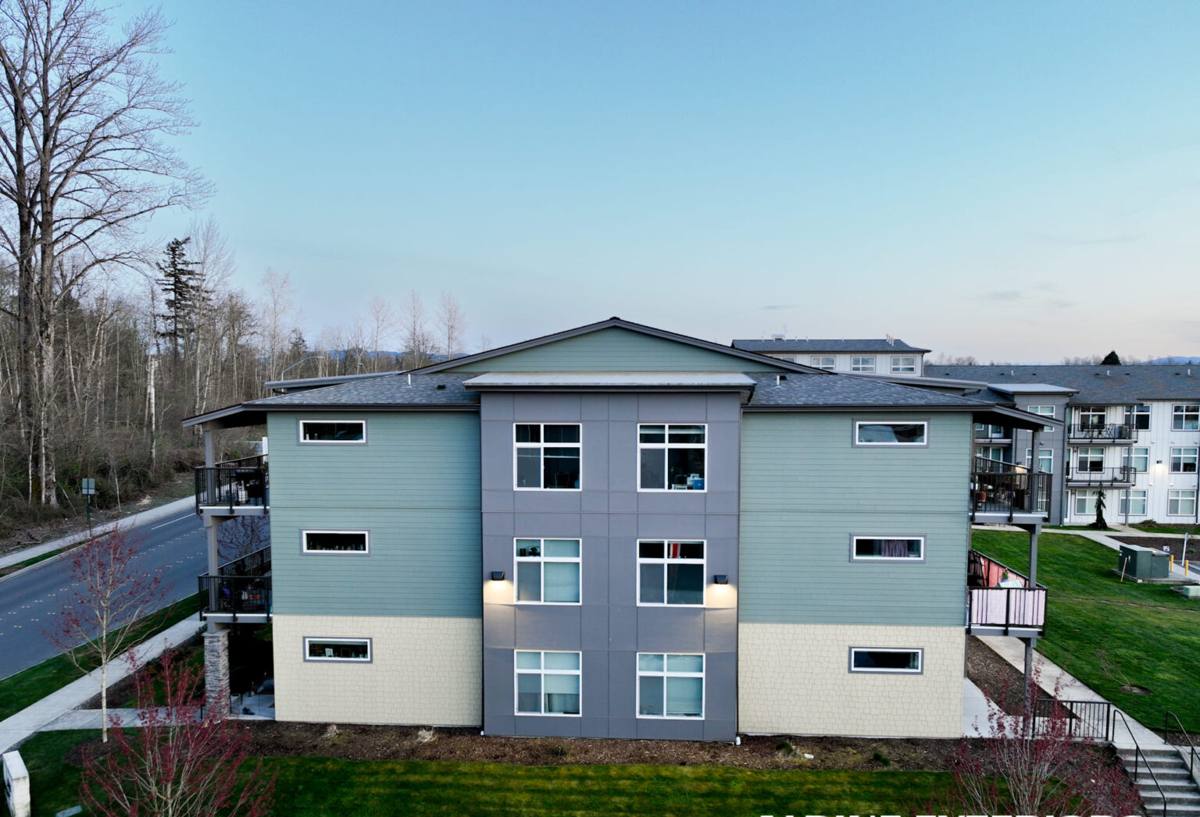
What Custer's Climate Actually Does to a Roof
Salt Air and Corrosion
Homes closer to the water in this part of Whatcom County deal with airborne salt that settles on every exposed metal surface — nail heads, flashing, gutter hardware, vent stacks. Over years, untreated or mismatched metals corrode faster here than they would 20 miles inland. This is the single biggest reason we're picky about fastener and flashing material on Custer roofs specifically.
Driving, Wind-Driven Rain
Rain here rarely just falls straight down. Wind off open fields pushes it sideways and up under laps, edges, and low-slope transitions that would stay dry in a calmer climate. That means underlayment coverage and flashing detail work matter more in Custer than they would on a similarly-pitched roof in a sheltered valley.
A Long Moss Season
Shade, moisture, and mild temperatures give moss and algae a long runway to establish on north-facing slopes and anywhere debris collects. Left alone, moss lifts shingle edges, holds water against the roof deck, and accelerates granule loss. In this climate, moss control isn't an optional add-on — it's part of doing the installation correctly.
What a Correct Installation Includes Here
A roof that's built for Custer's conditions isn't dramatically different in materials from a roof anywhere else in western Washington — the difference is in the details most contractors treat as optional:
- Full synthetic underlayment coverage, not just felt over the field, with extra courses at valleys and low-slope sections
- Ice-and-water shield membrane at eaves, valleys, and roof-to-wall transitions — not just for winter ice, but as a second line of defense against wind-driven rain
- Corrosion-resistant fasteners and flashing matched to the roofing material, sized correctly for wind exposure
- Balanced intake and exhaust ventilation so moisture from inside the home isn't adding to what's already landing on the roof from outside
- Moss-resistant shingle selection or zinc/copper strip installation at the ridge, planned in at install time rather than added later as a patch
Material Choices That Make Sense for Custer Homes
Most Custer homes land on one of three roofing paths. Each has a real place — the right one depends on your budget, your roof's exposure, and how long you plan to own the home.
| Material | Typical Lifespan Here | Moss/Algae Resistance | Salt Air Durability | Relative Cost |
|---|---|---|---|---|
| Architectural asphalt shingle | 25–30 years | Good with algae-resistant granules; needs periodic cleaning | Good with stainless or coated fasteners | Lower |
| Standing seam metal | 40–50+ years | Very good — moss struggles to grip smooth metal | Excellent when finish and fasteners are matched correctly | Higher |
| Synthetic/composite shingle | 30–40 years | Good to very good depending on product | Good; check manufacturer fastener specs | Mid-to-higher |
Architectural asphalt remains the most common choice in Custer, and for good reason — it's a proven, cost-effective product as long as algae-resistant granules and proper fastener corrosion resistance are specified up front. Metal roofing costs more to install but largely sidesteps the moss problem altogether, which matters on heavily shaded lots. Composite products split the difference and can be a good fit on homes where the look of a heavier shingle is wanted without the metal price tag.
What We Don't Recommend, and Why
We steer away from basic 3-tab shingles on Custer roofs. They're a lower up-front cost, but they carry no built-in algae resistance, their thinner profile holds less granule material to begin with, and in a climate with this much sustained moisture and wind exposure, they simply don't hold up as long as an architectural product for the modest savings. It's a maintenance-burden and longevity trade-off, not a defect in the product itself — it's just not the right tool for this climate.
Ventilation: The Part Homeowners Never See but Always Notice Later
An under-ventilated attic traps warm, moist household air against the underside of the roof deck. Combine that with a roof surface that's already dealing with near-constant outside moisture, and you get plywood delamination, premature shingle failure from the underside, and in bad cases, mold in the attic that has nothing to do with an actual roof leak. Correct installation means balancing intake (usually soffit vents) with exhaust (ridge vent or equivalent) so air actually moves through the attic space rather than stagnating. On a re-roof, this is the point where we check existing ventilation and fix it — not just re-cover it.
Our Installation Process
Every roof we install in Custer follows the same sequence, adjusted for the specific home:
- On-site inspection — current roof condition, decking, ventilation, and any problem areas identified before a number is put on paper
- Tear-off — complete removal of old roofing material down to the deck, so nothing is hidden underneath the new install
- Deck inspection and repair — any soft, delaminated, or water-damaged sheathing is replaced before anything goes back down
- Ice-and-water shield and underlayment — installed at eaves, valleys, and full-field coverage matched to the exposure of that roof
- Flashing and drip edge — new metal at every penetration, valley, and roof-to-wall transition; this is where most leaks actually originate on an older roof
- Roofing material installation — shingles, metal, or composite panels installed to manufacturer spec and correct nailing pattern for wind exposure
- Ventilation tie-in — ridge vent and intake vents installed or corrected as part of the job, not left as an afterthought
- Moss defense — zinc or copper strip installed at the ridge where appropriate for the home's shade and slope
- Cleanup and magnetic sweep for stray fasteners, followed by a final walk-through
Signs Your Custer Roof Needs Replacement, Not Just Repair
Not every roofing problem needs a full replacement. But in this climate, certain signs point toward a roof that's past the point where patching makes financial sense:
- Granules collecting heavily in gutters or at downspout outlets
- Shingles that are cupping, curling, or losing their flat profile
- Moss established thickly enough that it's lifting shingle edges, not just staining the surface
- Soft spots or visible sagging anywhere on the roof deck
- Daylight visible through the attic sheathing or recurring leaks in more than one location
- A roof already past 20–25 years old with no major work done since original install
- Flashing that's visibly rusted, separated, or was never properly integrated at the last repair
If you're only seeing one or two of these, a repair or a targeted moss treatment may still be the right call — we'll tell you that honestly during the inspection rather than pushing a full replacement you don't need yet.
Why It Matters That We Already Work in Custer
A roofing crew that's worked this specific area knows which fastener and flashing combinations actually hold up to the salt air here, which slopes in Custer tend to hold moss longest based on tree cover and shade patterns, and how Whatcom County's permitting and inspection process works for a re-roof. That's not a marketing point — it's the difference between a crew guessing at spec sheets and a crew that's already seen how a given material performs three winters into a Custer install. It also means we're not learning the county's inspection requirements on your job; we already know them.
What Affects the Cost of a New Roof in Custer
Every roof is priced individually, but the same handful of factors drive the cost up or down on almost every job we quote in this area:
| Factor | Why It Matters Here |
|---|---|
| Roof size and number of stories | More square footage and steeper access both increase labor time |
| Roof pitch and complexity | Multiple valleys, dormers, and roof-to-wall transitions all add flashing detail work |
| Decking condition | Water-damaged sheathing found during tear-off adds material and labor to replace |
| Material choice | Asphalt, composite, and metal carry different material and labor costs, as shown above |
| Existing ventilation | Adding or correcting ventilation during the re-roof is far cheaper than doing it as a separate project later |
| Moss/algae defense | Zinc or copper strip installation is a small add at install time versus an ongoing cleaning expense later |
We'll walk through which of these apply to your specific roof during the on-site inspection, so the number you get reflects your actual home rather than a generic per-square estimate.
Ready to Talk About Your Roof?
If your roof is showing its age, dealing with moss it can't shake, or you just want an honest read on how much life it has left, we're glad to come take a look. The estimate is free, there's no pressure to sign anything on the spot, and you'll get a straight answer about whether you need a full replacement or something less. Fill out the form below and we'll get in touch to schedule a time.