 Lynden Siding
 Why Birch Bay Roofs Take More Punishment Than Roofs Just a Few Miles Inland
Birch Bay sits right on the water, and that changes what a roof has to deal with. Homes a short drive inland in Lynden are dealing with the same Whatcom County rainfall totals, but Birch Bay adds salt-laden air, more direct wind exposure off the Strait of Georgia, and — because so many lots are shaded by mature evergreens and sit close to the water table — a moss season that runs longer than it does on drier, more open sites.
None of that means Birch Bay roofs are doomed to fail early. It means the materials, fastening, flashing, and ventilation choices that work fine on a typical inland roof need to be tightened up for this specific setting. We've replaced enough roofs in this immediate area to know which corners genuinely matter here and which are just upsells.
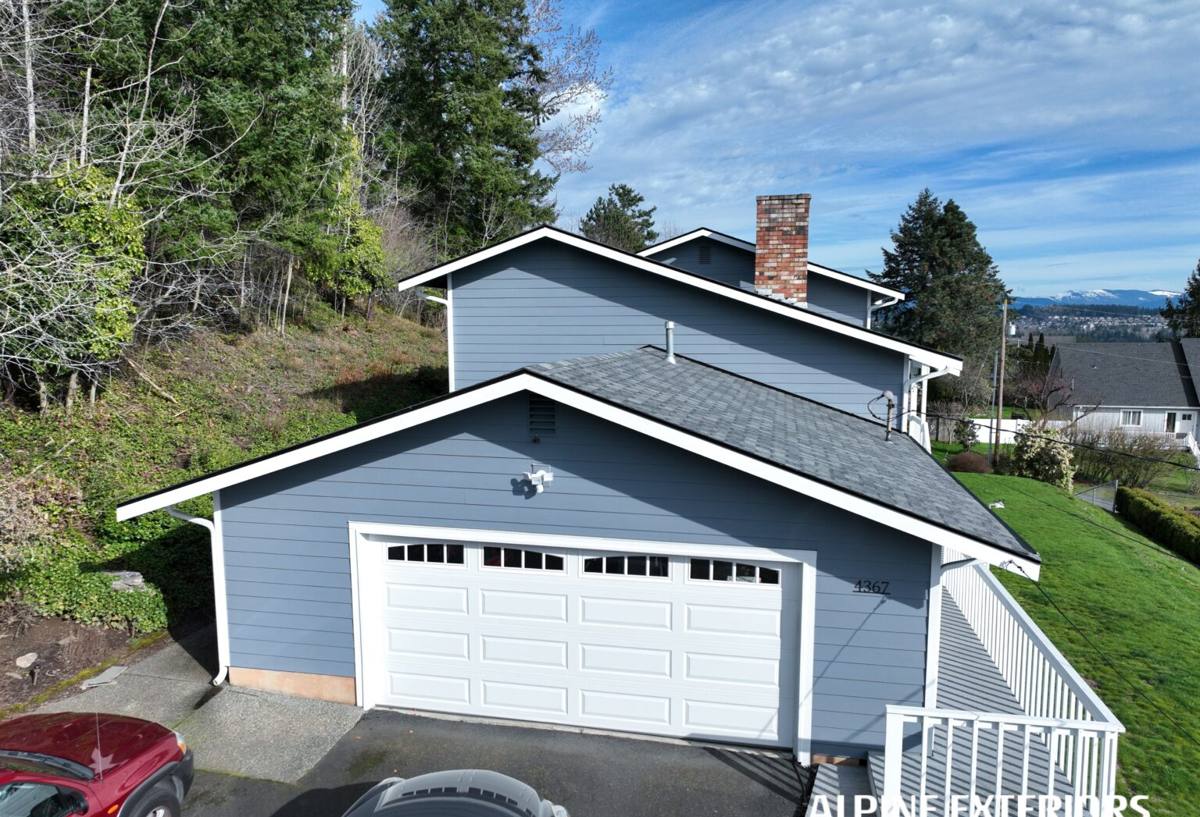
Signs a Birch Bay Roof Needs Replacement, Not Another Repair
A patch or a flashing repair is the right call plenty of the time. The trouble is knowing when you've crossed from "this roof needs a repair" to "this roof needs a repair every year from now on." A few honest signals:
Moss and Algae Staining That Keeps Coming Back
Some moss growth on a shaded slope is normal for this area and doesn't mean much on its own. What matters is how fast it returns after a cleaning, and whether it's tracking back toward valleys and butt joints where it can hold moisture against the shingle mat. If a roof is re-mossing within a season or two of being cleaned, the granule surface has usually thinned to the point where it can't shed water and debris the way it used to.
Granule Loss and Bald Spots
Granules are the sacrificial layer protecting the asphalt underneath from UV and moisture. Once you can see shiny, bald patches on a slope — especially south- or west-facing ones — that layer is gone in that spot, and the shingle underneath is aging faster there than everywhere else.
Soft or Spongy Decking
This is the one that turns a roofing job into something bigger. If plywood or board decking has been taking on moisture through failed flashing or worn-out shingles for a while, it softens. You'll sometimes feel this as a slight give when walking the roof, or see it from inside as sagging along a rafter line. Decking has to be replaced as part of the reroof — no underlayment or shingle fixes a rotten deck.
Repeated Flashing Leaks
Step flashing, valley flashing, and pipe boot flashing are usually where leaks start, not the field of the roof itself. If you've had the same chimney or valley re-flashed more than once, that's usually a sign the surrounding shingles are too far gone to hold a proper seal anymore, and a full replacement is the more honest fix.
What a Correct Roof Replacement Involves
A reroof done right in this area isn't just "old shingles off, new shingles on." A few steps matter more here than they would somewhere drier and calmer.
Full Tear-Off and Deck Inspection
We remove existing roofing down to the deck rather than layering over it. That's the only way to actually see the plywood or board sheathing, catch soft spots or delamination, and replace only the sections that need it instead of guessing.
Ice and Water Barrier at Eaves and Valleys
Self-adhering waterproof underlayment at eaves, valleys, and around penetrations gives the roof a backup seal in the exact spots where wind-driven rain and pooling water cause the most damage. In a coastal, high-rainfall area like this, we treat this as standard, not an add-on.
Underlayment Built for Wet Climates
Synthetic underlayment across the rest of the deck holds up better than older felt products when it sits under a wet roof for weeks at a time during install, and it resists the moisture cycling this climate puts it through over the life of the roof.
Flashing Details
New step flashing, counter-flashing, and pipe boots go in with the reroof — reusing old flashing is one of the most common shortcuts that leads to a callback a year or two later. Salt air accelerates corrosion on lower-grade metal, so flashing material selection matters more here than inland.
Ventilation
Balanced intake and exhaust ventilation keeps the attic close to outside temperature and moisture levels. Without it, warm moist air condenses against the underside of the deck, which rots sheathing from the inside and accelerates moss and algae growth on the shingles from below the surface up.
Fastening for Coastal Wind
Nailing pattern and fastener count matter more on an exposed waterfront lot than on a sheltered inland one. We follow manufacturer high-wind fastening specs on Birch Bay roofs as standard practice, not just when a homeowner asks for an upgraded wind warranty.
Choosing a Roofing Material for Salt Air and a Long Moss Season
There's no single "best" roofing material — the right choice depends on the roof's exposure, pitch, budget, and how much maintenance a homeowner wants to do. Here's how the common options actually compare for a Birch Bay property.
| Material | Moss Resistance | Salt Air Durability | Wind Performance | Typical Lifespan |
|---|---|---|---|---|
| Architectural asphalt shingles | Good with algae-resistant granules; needs periodic cleaning | Good — fiberglass mat and asphalt don't corrode | Strong when installed with high-wind nailing pattern | 25–30 years |
| Standing seam metal | Excellent — moss struggles to hold on smooth metal slopes | Depends heavily on coating quality and fastener metal | Excellent when properly seamed and fastened | 40–50+ years |
| Synthetic/composite shakes | Good, similar to architectural shingles | Good — synthetic core doesn't absorb moisture like wood | Strong with correct fastening | 30–40 years |
We're honest with homeowners about trade-offs rather than pushing one product. Metal costs more upfront and requires a crew experienced with its specific seaming and fastening details, but sheds moss better and lasts longest. Architectural asphalt is the most cost-effective option and performs well here as long as it's installed with the ventilation and flashing details above — it's not a lesser choice, just a different value proposition. We steer away from lower-grade three-tab shingles and old-style wood shakes on this coastline specifically because of how they hold moisture and how much upkeep they demand in a moss-heavy, salt-air environment — that's a maintenance and longevity call, not a knock on anyone who has them now.
Our Roof Replacement Process
- On-site inspection and estimate. We walk the roof, check the attic for ventilation and moisture signs, and give you a written scope and price — no pressure, no surprise add-ons sprung on you mid-job.
- Material selection. We talk through the options above based on your roof's exposure, your budget, and how long you plan to be in the home.
- Tear-off and deck inspection. Full removal of old roofing, with any soft or damaged decking replaced and documented before we cover it back up.
- Underlayment, ice/water barrier, and flashing installation. This is where the roof's real weather resistance gets built — not in the shingle itself.
- Ventilation check and correction. We confirm intake and exhaust are balanced for your attic's size, adding or adjusting vents where needed.
- Roofing installation to manufacturer specification, including wind-rated fastening.
- Cleanup and magnetic sweep for stray nails and staples around the property and driveway.
- Final walkthrough so you can see the finished work and ask questions before we consider the job done.
Why It Matters to Hire a Crew That Already Works Birch Bay
Roofing crews that mostly work drier, more sheltered inland neighborhoods sometimes treat wind-rated fastening, upgraded flashing, and full ventilation as optional upgrades. On a Birch Bay roof, we treat them as the baseline, because we've seen what happens when they're skipped on a lot this exposed. Knowing the local building department's permitting expectations, the realistic wind and rain exposure of a given street versus one a few blocks off the water, and which underlayment actually holds up through a wet install week here — that comes from working this area regularly, not from a general roofing background alone.
It also means we're a known, reachable local business if a question comes up two years after the job — not a crew that worked through the area for a season and moved on.
Keeping Your New Roof Ahead of Moss Season
A correctly installed roof still needs a little seasonal attention in this climate. A short annual routine goes a long way toward protecting the investment:
- Keep gutters clear so water doesn't back up under the eave edge during heavy rain
- Trim back overhanging branches to reduce shade and let slopes dry out between storms
- Have moss and algae growth treated before it spreads, rather than waiting for a heavy buildup
- Check attic ventilation isn't blocked by insulation or storage that's crept in over time
- Have flashing around chimneys, vents, and skylights visually checked each fall before the wet season sets in
- Address any interior ceiling staining right away — it's almost always cheaper to fix early than late
What Affects the Cost of a Birch Bay Roof Replacement
We don't think broad online price ranges are much use to a homeowner, since every roof on this stretch of coastline is a little different. What actually drives the number on your estimate:
| Factor | Why It Matters |
|---|---|
| Roof size and pitch | More surface area and steeper slopes both add material and labor time |
| Number of existing layers | Removing multiple layers of old roofing takes longer than a single-layer tear-off |
| Decking condition | Soft or rotten sheathing found during tear-off has to be replaced, which isn't always visible until the old roofing comes off |
| Material choice | Asphalt, metal, and synthetic products sit at different price points and install differently |
| Roof complexity | Valleys, dormers, chimneys, and skylights all add flashing work and time |
| Ventilation upgrades | Adding or correcting intake/exhaust venting is worth doing during a reroof rather than after |
We give a firm, itemized number after seeing the actual roof — not a phone-quote guess that changes once the tear-off starts.
If your roof is showing its age or you just want an honest read on how much life it has left, we're happy to take a look. The form below gets you a free, no-pressure estimate from a crew that already knows this stretch of coastline.