 Lynden Siding
 Building Decks for Birch Bay's Coastal Conditions
Birch Bay sits right up against the water, and that changes what a deck has to survive compared to one built a few miles inland in Lynden or Everson. Salt-laden air, wind-driven rain coming off the bay, and a shoulder season where everything stays damp and shaded long enough to grow moss all put extra stress on a structure that's otherwise just wood or composite boards sitting outside. A deck built to a generic spec will show its age here faster than the same deck built a short drive inland. Building one that lasts in Birch Bay means treating the coastal exposure as the starting design constraint, not an afterthought.
What Makes This Different From an Inland Deck Job
The core carpentry is the same everywhere — footings, framing, decking, railings, stairs. What changes in Birch Bay is the material selection, the hardware, and the detailing around every joint and fastener. Salt air accelerates corrosion on anything less than fully rated hardware, driving rain finds its way into ledger connections and end grain that would stay dry elsewhere, and the extra humidity and shade common near the water keep surfaces damp long enough for moss and algae to take hold. None of this is exotic — it's just Whatcom County's coastline doing what coastlines do — but it has to be planned for from the first footing dug.
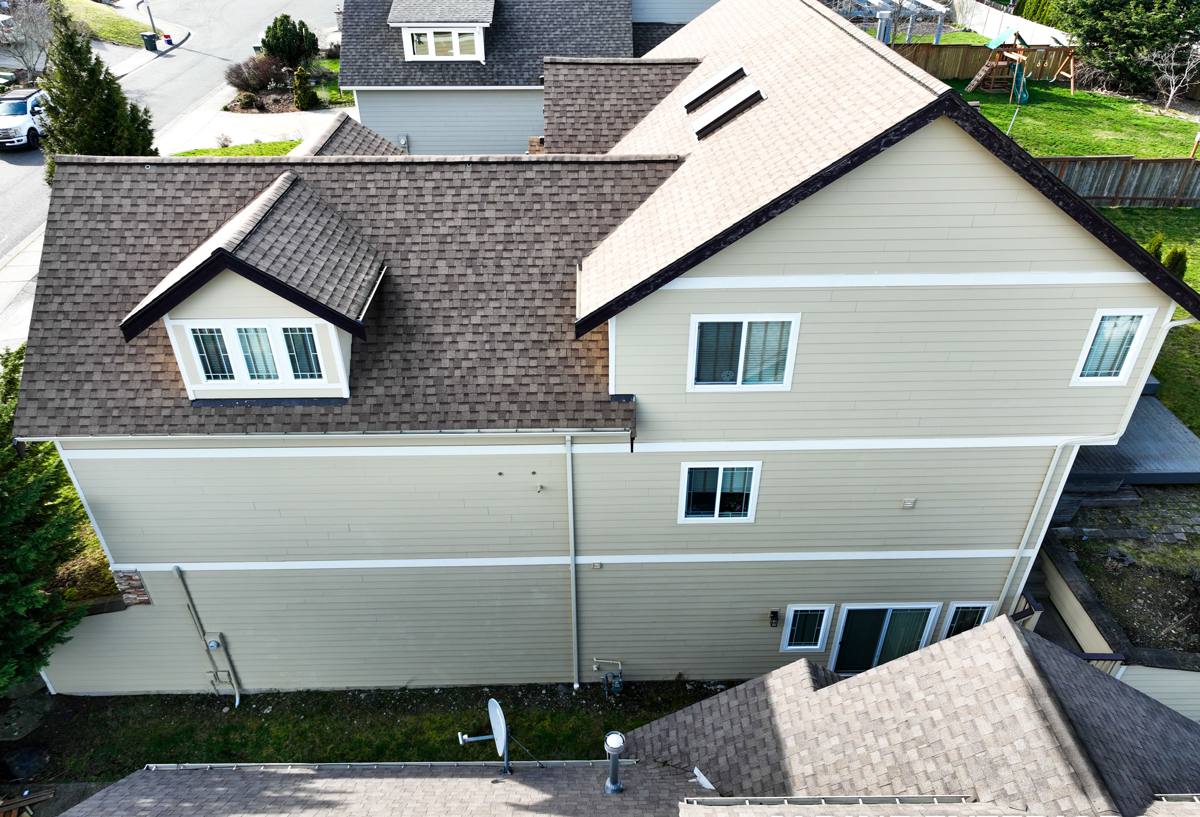
Salt Air, Driving Rain, and Moss: What Birch Bay Decks Are Up Against
Three things drive almost every deck failure we see in coastal Whatcom County neighborhoods like Birch Bay:
- Salt air corrosion — airborne salt accelerates rust on fasteners, brackets, and hinges that aren't rated for it, and it can pit lesser-grade metal within a few seasons.
- Driving rain — wind off the water pushes moisture sideways and upward under railings, into ledger connections, and behind fascia boards, not just straight down onto the decking surface.
- Extended moss season — shaded, north-facing, or tree-covered decks stay damp for months at a stretch, and moss and algae take hold on any surface that doesn't shed water and dry out reasonably fast.
Individually, each of these is manageable. Together, over years, they're what turns a deck with soft spots around the ledger, rusted-through joist hangers, or a slick, moss-covered surface into a safety concern rather than just a cosmetic one.
Choosing Decking Material for a Salt-Air, High-Moisture Site
There's no single "best" decking material for Birch Bay — there's a best material for a given budget, sun exposure, and how much upkeep the owner actually wants to do. Here's how the common options hold up under coastal conditions specifically:
| Material | Salt air / corrosion | Moss & algae resistance | Maintenance |
|---|---|---|---|
| Pressure-treated wood | Fine with stainless or coated fasteners; untreated hardware corrodes fast | Needs regular cleaning and sealing to resist growth | Annual cleaning, re-sealing every 1-2 years |
| Cedar | Naturally rot-resistant; hardware still needs to be corrosion-rated | Better natural resistance, but still grows moss in shaded/damp spots | Periodic cleaning and refinishing to hold color and grain |
| Composite decking | Board material unaffected by salt; fasteners and clips still need proper rating | Better resistance than wood, but surface film can still support algae in shade | Occasional washing; no staining or sealing required |
| PVC / capped polymer | Fully inert to salt exposure | Best resistance of the common options | Lowest — mainly periodic rinsing |
We'll walk through this table with actual homeowners against their budget and how much shade the deck sits in, rather than defaulting to one product across every job. A sun-exposed deck facing open water has different needs than one tucked under trees on a shaded lot.
Framing, Fasteners, and Hardware That Hold Up Near the Water
This is where a lot of decks quietly fail years before the decking boards themselves wear out. Standard galvanized fasteners and connectors are rated for general outdoor use, not sustained salt air exposure. In a Birch Bay build we spec:
- Stainless steel or heavy hot-dip galvanized fasteners and structural screws throughout, not just at the visible decking surface.
- Corrosion-rated joist hangers and structural connectors, since these are load-bearing and the hardest to inspect once the deck is finished.
- Pressure-treated or naturally durable framing lumber rated for ground contact where posts meet footings.
- Post bases that keep wood off the ground and out of standing water rather than embedding posts directly.
The difference in cost between standard and corrosion-rated hardware is small relative to the total project. The difference in how the structure looks and performs after five or ten winters of salt air is not.
Footings, Ledger Attachment, and Keeping Water Out of the Structure
Most of the moisture problems we find in existing decks trace back to two spots: the ledger board where the deck attaches to the house, and the footings supporting the posts.
Ledger Flashing
The ledger connection is where driving rain does the most damage, because wind pushes water up and behind the board instead of letting it run straight down. A proper ledger detail uses flashing that directs water out and away from the house structure, along with a water-resistant barrier between the ledger and the wall, so moisture can't wick into the framing over time.
Footings
Footing depth and design have to account for local soil and frost conditions, and in low-lying or sandier spots near the water, drainage around the footing matters as much as the footing itself. Standing water at the base of a post shortens its life regardless of what the post is made of.
Joist Protection
Joist tape over the top edge of framing lumber keeps rainwater from soaking directly into the wood grain through fastener holes — a small detail that meaningfully slows rot in a structure that's rained on for a large part of the year.
Permits and Code Requirements
Deck construction in Whatcom County, including Birch Bay, generally requires a building permit once a deck exceeds a certain size or height above grade, and always requires code-compliant guardrails, stair geometry, and structural connections regardless of size. Waterfront and shoreline-adjacent properties can also carry additional setback or environmental review requirements depending on proximity to the water. We handle the permit application and inspection process as part of the job rather than leaving it for the homeowner to sort out, and we build to the code requirements that apply at the time of construction rather than to whatever was acceptable when an older deck was originally built.
Our Deck Building Process
A typical Birch Bay deck project runs through the same core steps, with the coastal-specific decisions made up front rather than improvised mid-build:
- On-site assessment — sun exposure, shade pattern, drainage, and how exposed the site is to wind off the water.
- Material and layout selection — matched to the homeowner's budget, maintenance preference, and the site conditions above.
- Permit application — submitted and tracked through Whatcom County before work begins.
- Footings and framing — built with corrosion-rated hardware and proper drainage detailing from the start.
- Ledger and flashing installation — the step most responsible for long-term moisture protection.
- Decking, railing, and stair installation — finished to code with attention to how the surface will shed water and resist moss in its specific shade/sun exposure.
- Final walkthrough and inspection — confirming the structure passes and the homeowner understands what upkeep, if any, the chosen materials require.
Keeping a Coastal Deck in Good Shape
Whatever material a deck is built with, a little regular attention goes a long way in a salt air, high-moss environment. Homeowners can extend the life of a Birch Bay deck by keeping up with a short list:
- Rinse off salt residue and organic debris periodically, especially after storms with wind off the water.
- Sweep leaves and needles out of corners and against the house before they trap moisture against the ledger or fascia.
- Check and clear gaps between boards so water and debris don't build up underneath.
- Look for early moss or algae growth in shaded corners and clean it off before it spreads across the surface.
- Have fasteners, hangers, and railing connections inspected every couple of years, since corrosion problems often start below what's visible from the surface.
- Re-seal or refinish wood decking on the schedule appropriate to the species and product used.
Why Local Experience in Birch Bay Matters
A contractor who mostly builds decks inland can still build a structurally sound deck on paper, but the material choices, hardware ratings, and moisture detailing that actually matter in Birch Bay come from having seen how decks in this specific stretch of coastline age over time — which corners collect moss first, which hardware corrodes early, which ledger details hold up against wind-driven rain and which don't. That's the difference between a deck that's built to general code minimums and one that's built for the site it's actually going on. We work throughout Whatcom County, and Birch Bay's coastal exposure is one of the more demanding environments in our service area, which is exactly why we plan for it rather than treat it as an exception.
If you're planning a new deck or replacing one that's showing its age near the water, we're happy to take a look and talk through what makes sense for your site, your budget, and how much upkeep you want to take on. There's no cost or pressure to get an estimate — the form below is the easiest way to get started.