 Lynden Siding
 Birch Bay's Marine Climate Puts Real Stress on a Roof
Birch Bay sits right on the water, and that location cuts both ways. The views are part of why people love it there, but the same exposure that makes the setting special also makes it harder on a roof. Salt-laden air off the bay accelerates corrosion on fasteners, flashing, and any exposed metal. Driving rain, pushed sideways by wind coming off the water, finds every weak seam a roof has. And the long, wet Whatcom County shoulder seasons keep shingles damp for extended stretches, which is exactly the condition moss and algae need to take hold.
None of that means an asphalt shingle roof is a poor choice for Birch Bay. It remains one of the most practical, cost-effective roofing systems available, and it performs well here when it's specified and installed with this climate in mind. The problems we see in this area almost always trace back to a roof that was built to a generic standard rather than one built for a coastal Whatcom County exposure.
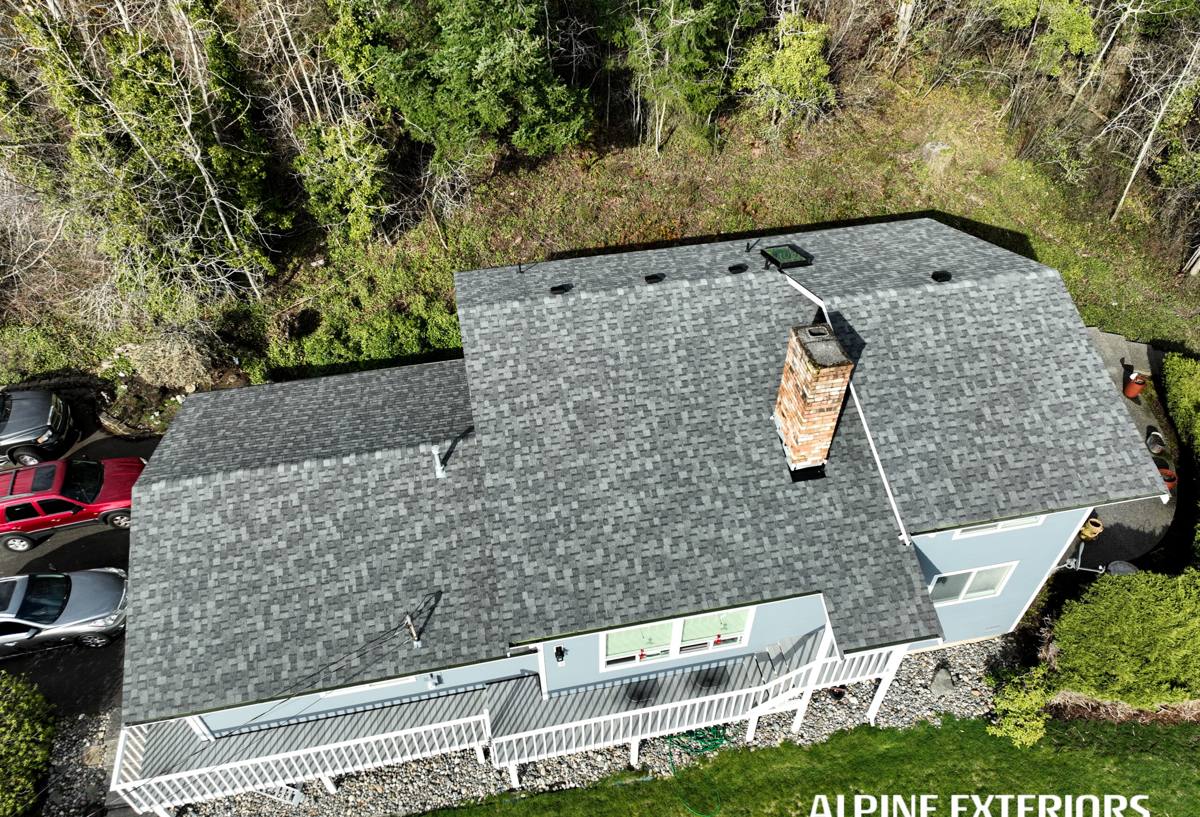
What a Correctly Built Asphalt Shingle Roof Needs Here
A roof that holds up in Birch Bay isn't just shingles nailed to a deck. It's a system, and every layer matters more here than it would on a drier, more sheltered lot further inland.
Underlayment and Water Protection
Standard felt underlayment is a minimum, not a goal. For a home exposed to wind-driven rain off the bay, we look at synthetic underlayment for its tear resistance and water-shedding performance, plus self-adhered ice-and-water membrane at eaves, valleys, and any low-slope transitions where wind can force water backward under the shingle courses. This is the layer that saves a roof deck when a shingle tab eventually lifts in a storm — and on an exposed waterfront lot, that's a matter of when, not if.
Ventilation That Actually Works
Poor attic ventilation is one of the most common defects we find on re-roofs in this area. Trapped moisture in the attic condenses against a cool roof deck, which rots sheathing from underneath and feeds the same moss and algae growth that's already fighting the shingles from above. A balanced system — intake at the soffits, exhaust at the ridge — needs to be sized to the actual attic, not just whatever vent came standard on the last job.
Flashing Details That Keep Water Out
Valleys, chimneys, skylights, and wall-to-roof transitions are where roofs fail first, long before the field shingles wear out. In a marine environment, we favor corrosion-resistant metal flashing over cheaper materials that pit and fail early from salt exposure, and we form and seal every transition individually rather than relying on caulk to bridge a bad detail.
Choosing a Shingle System for a Coastal Whatcom County Home
Not every asphalt shingle is built the same, and the right tier depends on how exposed your particular roof is to wind, rain, and shade. Here's how the common options compare for a Birch Bay application.
| Shingle Tier | Typical Lifespan | Wind Rating | Fit for Birch Bay |
|---|---|---|---|
| 3-tab / economy | 15-20 years | Lower | Workable on sheltered, low-exposure sections; not our first recommendation for a bay-facing roof |
| Standard architectural (laminate) | 25-30 years | Moderate to high, depending on install | Good baseline for most Birch Bay homes when installed with upgraded fastening |
| Premium / impact-rated architectural | 30+ years | Highest tier available | Best match for fully exposed, waterfront, or higher-wind lots |
Most major manufacturers — names like GAF, CertainTeed, and Owens Corning are common in this region — offer algae-resistant granules on their mid- and upper-tier products, usually backed by a limited warranty against algae staining. That warranty coverage is worth checking closely rather than assuming it's automatic, since it varies by product line and installation method.
Moss and Algae: The Long Season Nobody Talks About
Whatcom County's wet season runs long, and Birch Bay's shaded, north-facing slopes and constant humidity off the water stretch it even further. Moss doesn't just sit on top of a roof looking bad — its root structure lifts shingle edges and holds moisture directly against the granule surface, which shortens the life of the shingle underneath it. Black streaking from algae is mostly cosmetic, but it's a sign that moisture is sitting on the roof longer than it should.
Two things matter more than reactive cleaning: shingle selection with algae-resistant granules, and proper attention to trees and shade on the property, which we'll flag during an inspection if overhanging limbs are keeping a section of roof damp longer than the rest. We don't recommend pressure washing a shingle roof — it strips granules and shortens the shingle's life faster than the moss itself does. Manual removal with the correct tools, followed by a proper rinse, is the safer route when moss has already taken hold.
Our Process, Start to Finish
- On-site inspection. We walk the roof and the attic, not just look up from the ground, and check decking, ventilation, and flashing condition alongside the shingles themselves.
- Written estimate with options. You get a clear breakdown of shingle tier, underlayment package, and any decking or ventilation work, with the reasoning behind each recommendation — not just a single number.
- Tear-off and deck inspection. We remove the old roofing down to the deck so any hidden rot or soft spots are caught and repaired, not covered over.
- Underlayment, flashing, and ice-and-water installation. This is the layer that does the real work in a Birch Bay storm, and we don't shortcut it to save time.
- Shingle installation to manufacturer specification. Correct nailing pattern and exposure matter for both wind rating and warranty validity — a fast install that skips spec voids the coverage you're paying for.
- Ventilation check and adjustment. We confirm intake and exhaust are balanced before we close the job out, not just present at some level.
- Cleanup and final walkthrough. Magnetic sweep for nails, full debris cleanup, and a walkthrough so you know exactly what was done and why.
What Drives the Cost of a Birch Bay Roofing Job
Every roof is different, so a real number only comes from an on-site look. In general, a full tear-off and replacement on an average single-family home in this area often lands somewhere in the $9,000-$18,000+ range, with the spread driven by size, pitch, material tier, and how much of the deck and flashing system needs rebuilding rather than reusing. The factors below explain most of that spread.
| Factor | Why It Matters in Birch Bay | Effect on Cost |
|---|---|---|
| Tear-off vs. overlay | Overlaying traps moisture against old, salt-exposed layers and hides deck damage | Tear-off costs more upfront but is the only way to verify deck condition |
| Decking condition | Coastal moisture and poor prior ventilation lead to hidden rot more often here | Any sheathing replacement is priced as it's found, not guessed in advance |
| Ventilation upgrades | Undersized or unbalanced systems are common on older Birch Bay homes | Adding intake or exhaust capacity is a modest add compared to a full re-vent |
| Underlayment and flashing package | Wind-driven rain off the bay demands more than minimum-code underlayment | Upgraded synthetic and ice-and-water coverage adds cost but reduces long-term risk |
| Shingle tier | Algae-resistant, higher wind-rated shingles perform better in this exposure | Premium tiers cost more per square but extend service life |
Signs a Birch Bay Roof Needs a Closer Look
- Heavy granule buildup in gutters or at downspout outlets
- Moss establishing on shaded or north-facing slopes
- Shingle edges curling, cupping, or lifting at the tabs
- Soft or spongy spots when walking the roof (deck damage)
- Rusted, lifted, or gapped flashing around chimneys, valleys, or vents
- Daylight visible through the roof deck from inside the attic
- Musty smell or visible moisture staining in the attic
- Missing or torn shingles after a windstorm off the bay
Why Hiring a Crew That Already Works Birch Bay Matters
A roofer who mostly works drier, inland jobs will often spec a roof to general code minimums and call it done. That's not wrong, exactly — it's just not enough for a lot facing open water. A crew that regularly works Birch Bay knows which slopes hold moss the longest, which details fail first in wind off the bay, and which underlayment and flashing choices are worth the extra cost versus which ones are overkill for a given lot's exposure. That judgment only comes from doing the work here repeatedly, not from a manufacturer's install guide alone.
It also means fewer surprises during the job. We've seen what coastal moisture does to decking and fasteners over time, so we know where to look before a tear-off starts, and we price the likely scope more accurately from the first estimate.
If your roof is due for a look — whether it's showing moss, a storm just took a few shingles, or you're simply planning ahead — we're glad to come out for a free, no-pressure estimate and walk you through exactly what your roof needs and why. There's a form below to get started.