 Lynden Siding
 Fiber Cement Siding, Installed for What Bellingham's Climate Actually Does to a House
Bellingham sits right on the water, and that location shapes every exterior decision on a house here more than most homeowners realize until they're dealing with the damage. Salt-tinged marine air moves through the city on an ordinary day, not just during storms. Rain comes in sideways off Bellingham Bay and the Salish Sea more often than it falls straight down. And between the mild temperatures and the tree cover common in Bellingham's older neighborhoods, moss and mildew get a growing season that can run close to year-round on shaded walls. Fiber cement siding isn't the only product on the market that can survive this combination, but it's the one we've found actually does, which is why it's the only siding system we install on Bellingham homes.
This page is specifically about fiber cement siding for Bellingham properties: what the local climate demands of it, what a correct installation looks like, how our process runs from first estimate to final walkthrough, and why it matters to hire a crew that already works in this city rather than one bidding the job from out of the area.
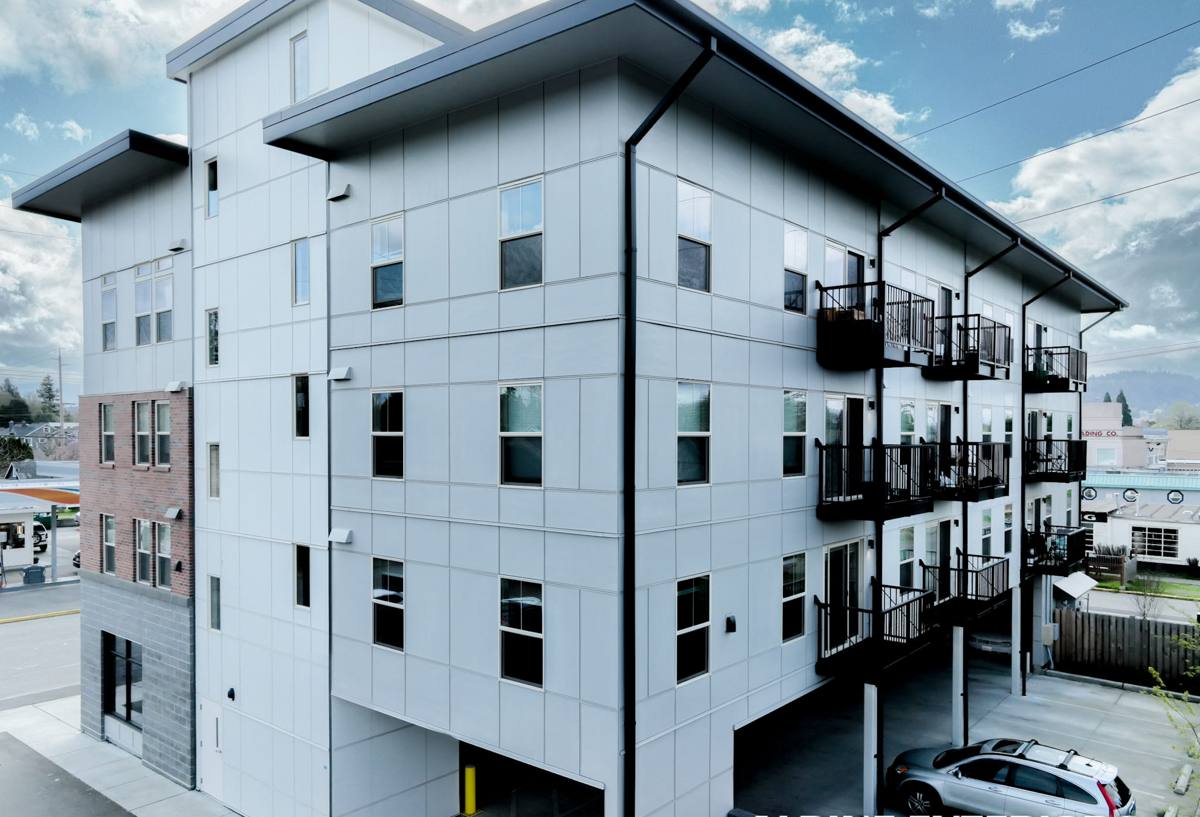
What Bellingham Homes Need From a Siding Material
Salt Air and Sustained Moisture
Bay-adjacent salt exposure works on exterior materials slowly and quietly. It's harder on fasteners, exposed trim edges, and any finish that isn't fully cured against moisture than an inland climate would be. A siding material that's even slightly porous gives that moisture somewhere to sit, and over years that shows up as swelling, corrosion streaks, or a finish that fails well ahead of schedule.
Wind-Driven Rain
Rain off the water rarely arrives straight down in Bellingham. Wind pushes it sideways into lap joints, trim seams, and the corners where one wall plane meets another. A siding system has to shed that water at the surface and, just as importantly, the house wrap and flashing behind it have to stop anything that gets past the surface from reaching the sheathing.
A Long Moss and Mildew Season
Shaded, north-facing walls in Bellingham's tree-covered neighborhoods can stay damp for months at a stretch. Any material that holds moisture against itself instead of shedding it becomes a growth surface for moss and mildew over time, and once that growth takes hold it tends to return quickly even after a homeowner cleans it off.
The Fiber Cement System We Install
We install James Hardie fiber cement exclusively, in the HZ5 formulation Hardie engineers specifically for regions with heavy sustained moisture and freeze-thaw cycling. That profile fits Bellingham's bay climate closely — it's not a generic national spec, it's built for exactly the conditions this city sees.
- HardiePlank lap siding: The most common choice for Bellingham homes, available in a range of textures and exposures to match traditional and modern styles alike.
- HardiePanel vertical siding: Used for modern facades or as an accent alongside lap siding, often paired with battens for a board-and-batten look.
- HardieShingle: A shingle-profile option for homes where that look fits the architecture, without the moisture sensitivity of real wood shingles.
- HardieTrim: Fiber cement trim boards around windows, corners, and rooflines, finished to match and hold up under the same conditions as the field siding.
Why the Factory Finish Matters
Hardie's ColorPlus finish is baked on in a controlled factory process, not brushed on at the job site. That matters in a marine climate specifically because factory-cured finishes resist fading, chalking, and moisture intrusion at the surface far longer than field-applied paint, which is exposed to Bellingham's UV and moisture cycles from day one with none of that factory curing behind it.
Why We Don't Install Other Fiber Cement or Wood-Based Alternatives
We don't install LP SmartSide, vinyl siding, Cemplank, Allura, primed spruce, or cedar. Those are legitimate products and plenty of homeowners are satisfied with them elsewhere. Our decision is a professional one, not a judgment on the products themselves: engineered wood siding is more sensitive to moisture at cut edges and fastener points than fiber cement; vinyl can warp or crack under sustained UV and temperature swings and gives wind-driven rain seams to work through; and painted wood species need an ongoing maintenance schedule that tends to slip in a climate this wet, which shortens their real-world service life well below what the material could otherwise achieve. We'd rather install and stand behind one system than offer a lower-cost option that quietly passes maintenance risk on to the homeowner.
What a Correct Fiber Cement Installation Actually Involves
Buying the right material only gets a Bellingham home halfway there. Fiber cement's real-world performance, and its warranty coverage, depends on installation that follows Hardie's published specifications, not shortcuts that look fine on install day and fail two or three wet seasons later.
| Installation Detail | Why It Matters in Bellingham |
|---|---|
| Fastener spacing and type | Incorrect fastening is a common cause of early panel movement and cracking under wind load off the bay |
| Clearance above grade and roofline | Insufficient clearance lets splash-back and roof runoff wick moisture into the bottom edge of the siding |
| House wrap and flashing integration | Wind-driven rain finds any gap in the water-resistive barrier behind the siding, not just the siding surface itself |
| Joint lapping and sealing | Improperly lapped or unsealed joints are a direct entry point for sideways rain |
| Field-cut edge sealing | Factory ColorPlus finish doesn't extend to a field cut; unsealed cut edges are a weak point for moisture intake |
Rushed or corner-cut installation is one of the most common reasons a good siding product develops problems on a house, and it's the step we treat as non-negotiable regardless of schedule pressure.
Our Process for a Bellingham Fiber Cement Project
Inspection and Estimate
We start by walking the actual house — current siding condition, any signs of trapped moisture, and how sun, shade, and wind exposure differ across walls facing the bay versus walls set back from it. That's what shapes the estimate, not a flat per-square-foot number.
Tear-Off and Substrate Check
Once the old siding comes off, we check the sheathing underneath for rot or soft spots before anything new goes up. Covering damaged sheathing with new fiber cement just hides a problem that keeps getting worse behind the wall.
House Wrap and Flashing
This is the step that's easiest to rush and hardest to inspect once siding is installed over it, so we treat the water-resistive barrier and flashing at every window, door, and wall penetration as the foundation of the whole job, not a formality before the visible work starts.
Installation to Manufacturer Spec
Fastening, clearances, joint sealing, and field-cut treatment all follow James Hardie's published installation guidelines. That's the baseline for every job, not an upgrade option.
Final Walkthrough
We walk the completed job with the homeowner, cover basic care and maintenance expectations, and confirm the finished work matches what was estimated.
Repair vs. Full Replacement
Not every issue on a Bellingham home's siding means a full tear-off. Isolated impact damage, a section that failed around a window, or trim that's come loose can often be repaired and matched into existing Hardie siding. But when moisture has been tracking behind the wall assembly for a while, or the siding on the house predates fiber cement and has simply reached the end of its service life, a patch usually just delays a bigger job by a season or two. We'll give you a straight answer about which situation you're actually looking at.
Signs a Bellingham Home's Siding Needs a Fiber Cement Look
- Moss or dark staining that returns quickly after cleaning, especially on shaded or north-facing walls
- Soft or spongy siding, particularly low on the wall or around window and door trim
- Peeling paint or visible warping, most common on older wood-based siding
- Cracked, buckled, or missing sections after a windstorm off the bay
- Rust staining running down from fasteners or trim hardware
- Musty odors or interior staining on walls that back up to exterior siding
- Siding older than 20-25 years with no documented replacement history
None of these automatically mean a full replacement, but each is worth a professional look before another wet season adds to the damage.
What Affects Fiber Cement Cost on a Bellingham Home
Every estimate is specific to the property, but a few factors consistently move the number: total square footage and number of stories, how much trim and detail work surrounds windows and rooflines, the condition of the sheathing once old siding comes off, site access on Bellingham's sloped and tree-covered lots, and which Hardie product line and color are selected. We walk through those factors during the estimate rather than quoting a number with no explanation behind it.
Why Hiring a Crew That Already Works in Bellingham Matters
A crew that's already working Bellingham job sites through every season has seen how this specific stretch of coastline behaves — which wall orientations stay wet longest, where extra flashing attention pays off around a bay-facing corner, and which install-day shortcuts turn into callbacks a couple of winters later. That's different from a bid based on a spec sheet and a drive-by look at the house. It also means that if a warranty question or a maintenance issue comes up years down the line, it's a call to a crew that's still working in the same city, not one that's moved on to a different market.
Checklist for vetting any fiber cement contractor in Bellingham:
- Do they install to James Hardie's published specifications, and can they explain fastener spacing and clearance requirements without hesitation?
- Do they check and repair sheathing damage before installing new siding, or just cover what's there?
- Do they pull their own permits and handle inspections as part of the job?
- Can they speak specifically to how they handle house wrap and flashing at windows and wall penetrations?
- Do they work in Bellingham regularly, or is this an occasional out-of-area job for them?
If your Bellingham home needs new siding, or you'd like an honest opinion on whether what's on the house now can be repaired instead of replaced, we're glad to take a look. Reach out using the form below for a free, no-pressure estimate.