 Lynden Siding
 Siding Replacement Built for Aldergrove's Climate
Aldergrove sits in that stretch of the Fraser Valley where marine air off the Salish Sea, long wet winters, and a moss season that never really ends all combine to work on a house year-round. Siding here doesn't fail because homeowners neglect it. It fails because most siding products simply weren't engineered for this combination of salt-tinged air, driving horizontal rain, and months of shade and moisture that keep exterior walls damp long after a storm has passed.
We're based just across the line in Lynden, Whatcom County, and this climate is our home climate too. The weather pattern that hits Aldergrove is the same weather pattern that hits us — which is exactly why we standardized on one siding product instead of offering a menu of options that all behave differently once the rain starts.
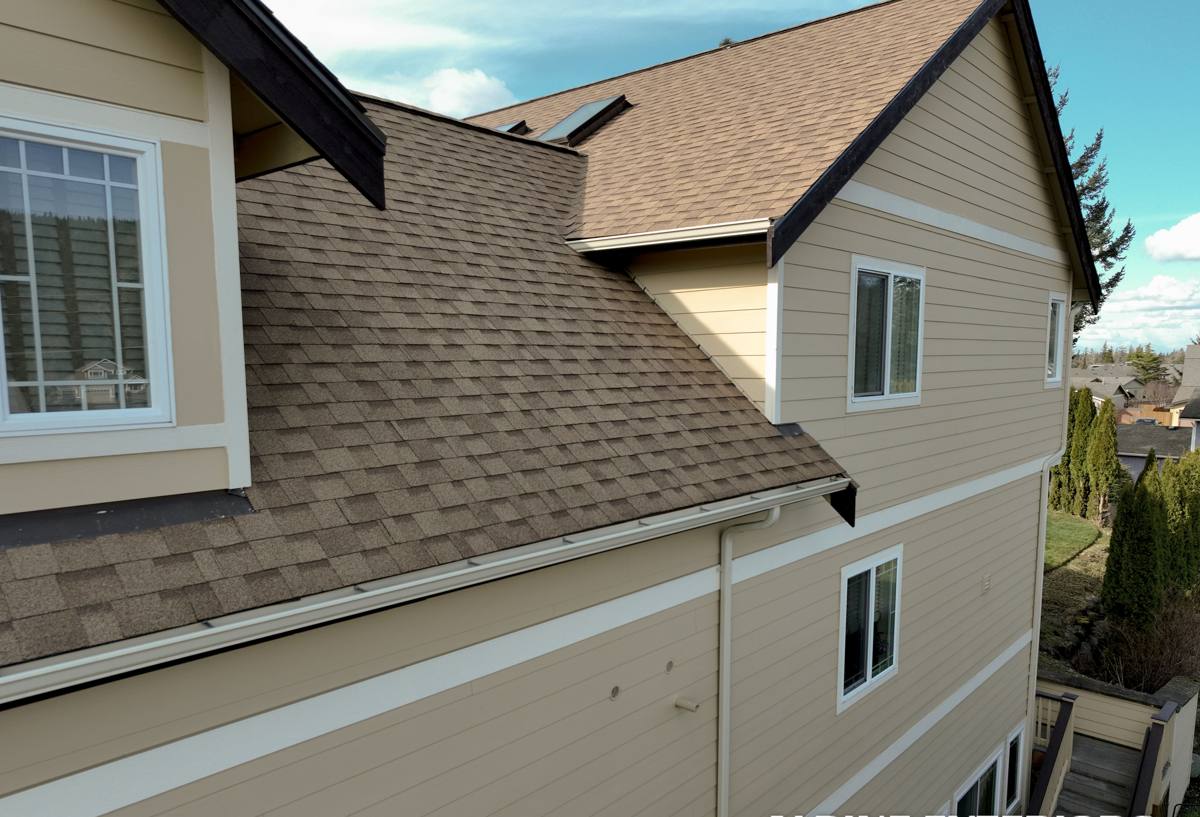
What This Climate Actually Does to Siding
Salt Air and Corrosion
Homes closer to the coast and the Strait deal with airborne salt that settles on exterior surfaces. Over years, that salt content accelerates the breakdown of fasteners, coatings, and any siding material that relies on paint film alone for protection. Once a coating starts to chalk or crack, the material underneath is exposed to moisture cycling every time it rains — which, in this region, is often.
Driving Rain and Wind-Driven Moisture
This isn't gentle vertical rainfall. Storms here regularly push rain sideways into wall assemblies, forcing water into every gap, seam, and unsealed joint. Siding systems that depend on caulk and paint to stay watertight lose that fight eventually — it's a question of when, not if.
The Long Moss Season
Shaded north walls, tree cover, and persistently damp conditions mean moss and algae get a foothold on siding for much of the year, not just a few weeks in spring. Porous or fibrous materials give moss something to grip and feed on. Once established, moss holds moisture directly against the siding surface, which is exactly the wrong thing for any material sensitive to swelling or rot.
Signs Aldergrove Homeowners Should Watch For
- Soft or spongy spots when you press on siding, especially near the bottom courses and corners
- Paint that's peeling, bubbling, or chalking faster than it used to
- Visible moss or dark streaking that comes back within a season of cleaning
- Gaps opening up at seams, butt joints, or where siding meets trim and windows
- Warping, cupping, or boards that no longer sit flat against the wall
- Rising energy bills that suggest moisture or air infiltration behind the siding
- Visible rot at the bottom edge of boards or around penetrations like hose bibs and vents
Any one of these on its own might be minor. Two or three together, especially on a wall that takes the brunt of the weather, usually means the siding is past patching and into replacement territory.
Why We Install Only James Hardie Fiber Cement
We get asked why we don't offer vinyl, LP SmartSide, or cedar as options. The honest answer: we've seen how this specific climate treats each of them, and we'd rather stand behind one product we trust completely than sell homeowners something we know will need attention again in a few years.
Fiber cement is made from cement, sand, and cellulose fibers — there's no wood content to feed rot or attract moss the way organic sheathing products do, and no vinyl to warp or crack in temperature swings. James Hardie's ColorPlus finish is baked on at the factory under controlled conditions, which holds up to salt air and UV far longer than field-applied paint. Their HZ5 product line is engineered specifically for climates like this one — freeze-thaw cycling, sustained moisture, and coastal exposure.
| Factor | James Hardie Fiber Cement | Vinyl Siding | Wood / LP SmartSide |
|---|---|---|---|
| Moisture resistance | Excellent — cement-based, won't rot | Good until seams fail | Vulnerable at cut edges and joints |
| Moss/algae resistance | Strong with factory finish | Moderate, prone to staining | Weak — organic content feeds growth |
| Salt air / coastal durability | Engineered for it (HZ5) | Can become brittle over time | Coatings degrade faster in salt air |
| Fire performance | Non-combustible | Combustible, can melt | Combustible |
| Finish longevity | Factory-baked, long-lasting | Color molded in, can fade | Field-applied paint, needs recoating |
We're not saying vinyl or wood siding is junk — plenty of it is installed correctly and performs fine in drier climates. We're saying that for what Aldergrove and the surrounding Fraser Valley throw at a house, we'd rather install the one product engineered to handle it.
What a Correct Siding Replacement Job Involves
Replacing siding isn't just swapping old boards for new ones. The parts nobody sees matter more than the parts everyone sees.
Tear-Off and Wall Inspection
We remove the old siding down to the sheathing and actually look at what's underneath — soft sheathing, hidden rot around windows, or compromised framing needs to be addressed before anything new goes up. Covering a moisture problem with new siding just hides it for a while longer.
Water Management Layer
A weather-resistant barrier and properly integrated flashing at every window, door, and penetration is what actually keeps wind-driven rain out of the wall assembly. This step is invisible once the job is done, but it's the difference between siding that lasts decades and siding that fails from the inside out.
Installation to Manufacturer Spec
James Hardie publishes specific fastening patterns, clearances, and gapping requirements for a reason — installed wrong, even the best material underperforms. Proper clearance from grade, decks, and roof lines keeps splash-back and standing moisture away from the bottom edge of the siding, which is where most failures start in wet climates.
Trim, Caulking, and Finish Details
Corners, trim boards, and joints get sealed with products rated for the exposure, not just whatever's on the shelf. Small details here are what keep moss and moisture from finding a way in over the following winters.
Our Process for Aldergrove Projects
Working across the border adds a logistics step most siding crews in this region don't deal with, but it's routine for us. We schedule material delivery and crew time so a project isn't held up by customs or paperwork, and we walk homeowners through what to expect on timing before work starts — no surprises mid-project.
- On-site assessment of current siding, wall condition, and problem areas specific to the home's exposure
- A written scope covering tear-off, sheathing repair if needed, water management upgrades, and the Hardie product line and profile that fits the house
- A clear timeline and cost estimate before any work begins
- Tear-off, inspection, and correction of anything found underneath the old siding
- Installation to manufacturer specification, including proper clearances and flashing details
- Final walkthrough so the homeowner understands what was done and how to maintain it
What Drives Cost on an Aldergrove Siding Replacement
| Factor | Why It Matters |
|---|---|
| Home size and wall complexity | More corners, gables, and dormers mean more cutting, flashing, and labor time |
| Condition of the sheathing underneath | Rot or moisture damage found during tear-off adds repair scope before new siding can go on |
| Siding profile and finish selected | Lap width, board texture, and ColorPlus color all affect material cost |
| Access and site conditions | Tight lots, slopes, or limited equipment access affect labor time |
| Trim and detail work | Window and door trim, corner boards, and fascia detailing add to scope |
We won't quote a number without seeing the house — condition underneath the old siding is the single biggest variable, and it's not visible until tear-off begins. What we can promise is a written estimate with no vague allowances before work starts.
Why Hire a Crew That Already Works This Area
A siding crew that mainly works inland or in drier climates may not think twice about clearance heights, flashing details at grade, or how aggressively moss establishes itself on a shaded wall here. Those are the details that separate siding that lasts twenty-plus years from siding that needs attention again in five.
We work this specific stretch of the border region — Lynden, Whatcom County, and communities like Aldergrove just across the line — regularly enough that we're not guessing at how this climate behaves. We know which walls on a typical home take the worst of the wind-driven rain, where moss tends to establish first, and what installation details actually hold up here versus what looks fine on day one and fails by year five.
Maintaining Your New Siding
- Rinse siding annually, focusing on shaded and north-facing walls where moss establishes first
- Trim back vegetation and tree cover that keeps walls damp and shaded
- Check and re-seal caulking at trim and penetrations every few years
- Keep gutters clear so overflow doesn't run down the siding face
- Address any impact damage or cracked boards promptly rather than waiting
James Hardie's factory finish means you're not repainting on the schedule that field-applied coatings demand, but a little seasonal attention keeps moss and moisture from ever getting a foothold.
If your Aldergrove home's siding is showing its age, we're glad to take a look. We'll walk the exterior with you, point out what we find, and put together a straightforward, no-pressure estimate — just fill out the form below to get started.