 Lynden Siding
 Roofing in Aldergrove, BC: A Different Set of Demands
Aldergrove sits close enough to the Lynden-Aldergrove border crossing that homes on both sides of the line face nearly identical weather — but that doesn't mean every roofing crew understands what this specific corner of the Pacific Northwest does to a roof over time. Between the marine air pushing in from the Strait of Georgia, long stretches of driving rain off the Pacific, and a moss season that can run most of the year in shaded, tree-covered lots, a roof here is working harder than one inland or in a drier climate.
A new roof installed for Aldergrove needs to be built with those three things in mind from the first layer up: salt-tinged moisture that corrodes weak metal, wind-driven rain that finds every gap in flashing and underlayment, and moss that holds water against shingles and shortens their life if the roof isn't designed to shed it.
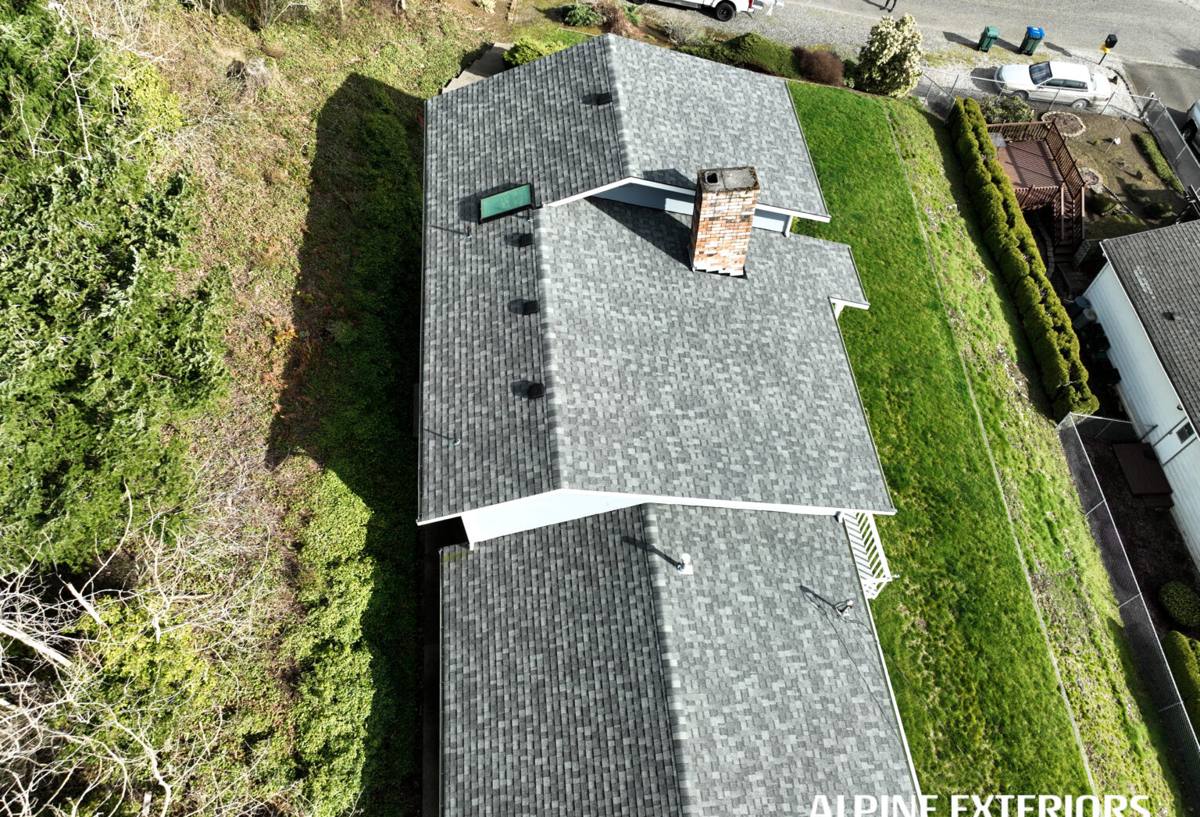
What Salt Air Actually Does to a Roof
Homes in and around Aldergrove aren't oceanfront, but the region still carries enough salt-laden moisture inland to matter, especially on exposed metal components. Cheap or under-spec'd flashing, fasteners, and vent caps corrode faster than they would in a dry inland climate. Once a fastener starts rusting, it loses its grip on the decking, and that's how small leaks start years before a homeowner notices a stain on the ceiling.
This is why material selection for flashing, drip edge, and fasteners matters as much as the shingle or panel choice itself. We spec corrosion-resistant metals and fasteners as a standard, not an upgrade, on installations in this area.
Where Corrosion Shows Up First
- Valley flashing and step flashing around chimneys and dormers
- Nail heads and fastener penetrations, especially on older roofs with mismatched hardware
- Gutter hangers and drip edge along the eaves
- Vent boots and pipe collars, which are often the weakest point on any roof
Driving Rain and the Parts of a Roof Homeowners Never See
Whatcom County and the border region both get sustained, wind-pushed rain rather than just straight-down showers, and that changes how a roof has to be built. Driving rain doesn't just land on shingles — it gets pushed sideways and upward under laps, into valleys, and around penetrations. A roof that looks fine from the ground can still be letting water in at the details.
The parts of the job that actually determine whether a roof stays dry in a real coastal storm are the ones a homeowner rarely sees once the crew leaves:
- Underlayment — a synthetic, water-resistant underlayment across the whole deck, not just felt paper, gives a real second line of defense if wind ever drives water past the shingles.
- Ice-and-water membrane at vulnerable points — valleys, eaves, and around chimneys and skylights get self-adhering membrane, since these are where driving rain concentrates.
- Proper overlap and nailing pattern — shingles installed with the correct exposure and fastener placement resist wind uplift far better than a rushed install with the same materials.
- Flashing integration — flashing has to be woven into the underlayment correctly, not just caulked on top, so water is always directed down and out rather than trapped.
Moss: The Slow Damage Most Homeowners Underestimate
Moss season in this part of the Pacific Northwest isn't a brief nuisance — on shaded, north-facing, or tree-covered roofs it can be a near year-round condition. Moss itself doesn't just sit on top of shingles; its root structure lifts shingle edges, holds moisture against the roof deck, and accelerates granule loss. A roof that would otherwise last two decades can lose several years of life to unmanaged moss growth.
A new roof installation is the best opportunity to build in moss resistance from the start, rather than fighting it after the fact:
- Zinc or copper strips installed near the ridge, which release trace metals that inhibit moss growth as rain washes over them
- Shingle products with algae- and moss-resistant granules built in
- Attention to roof ventilation, since a warmer, drier attic and deck reduce the moisture moss needs to establish
- Trimming recommendations for overhanging branches that keep sections of the roof shaded and damp longer than the rest
Comparing Roofing Materials for This Climate
There's no single "best" roofing material for every home — the right choice depends on the roof's pitch, the amount of tree cover, the home's style, and the homeowner's budget and maintenance tolerance. Here's how the common options perform against the specific conditions Aldergrove homes face:
| Material | Driving Rain / Wind Performance | Moss Resistance | Typical Lifespan | Maintenance |
|---|---|---|---|---|
| Architectural asphalt shingle | Very good with proper underlayment and fastening | Good with algae-resistant granules; needs periodic cleaning | 20-30 years | Low to moderate |
| Standing-seam metal | Excellent — sheds wind-driven rain and resists uplift | Excellent; moss struggles to grip smooth metal | 40-60 years | Low |
| Synthetic/composite shingle | Very good, similar to asphalt when installed correctly | Good to very good depending on product | 30-50 years | Low |
| Cedar shake (natural) | Good, but more installation-sensitive around flashing | Poor without diligent maintenance; holds moisture | 20-30 years with upkeep | High |
We'll walk through which of these fits your roof's pitch, sun exposure, and budget honestly — including telling you when a lower-maintenance option will save you more over time than the cheaper upfront choice.
What a Correct New Roof Installation Actually Involves
A new roof is more than laying shingles over what's already there. Done right, the process includes:
- Full tear-off — removing old roofing down to the deck so it can be inspected, rather than layering over hidden problems.
- Deck inspection and repair — replacing any soft, rotted, or delaminated sheathing before anything new goes down.
- Ventilation check — confirming intake and exhaust venting are balanced, which affects both moss growth and how long shingles last from the underside.
- Underlayment and ice-and-water membrane installation — the moisture barrier layer described above.
- Flashing at all penetrations, valleys, and roof-to-wall transitions.
- Field installation of the chosen roofing material to manufacturer spec and correct fastening pattern.
- Ridge, hip, and vent detailing, including moss-inhibiting strips if the site calls for them.
- Final walk-through and cleanup, including a magnetic sweep for stray fasteners.
Cost Factors for a New Roof
Every home is different, and we won't quote a number without seeing the roof, but these are the factors that most often move an estimate up or down:
| Factor | How It Affects the Estimate |
|---|---|
| Roof size and number of facets | More square footage and more valleys/hips mean more material and labor |
| Pitch and access | Steep or hard-to-access roofs take longer and require more safety setup |
| Deck condition | Rotted or soft sheathing found during tear-off adds repair cost |
| Material choice | Asphalt, synthetic, and metal carry different material and labor costs |
| Layers to remove | Tearing off multiple existing layers adds disposal and labor time |
| Moss/ventilation upgrades | Adding zinc strips or improving venting is a modest add versus a bare re-cover |
Signs Your Roof Needs Replacing, Not Just Repair
Not every roof problem calls for a full replacement — but in a climate that drives rain sideways and grows moss year-round, small issues compound faster than homeowners expect. Watch for:
- Shingles that are cupping, curling, or losing granules in patches
- Moss buildup that returns quickly after cleaning, even in the same season
- Dark streaking or staining on interior ceilings near exterior walls or valleys
- Soft or spongy spots when walking the roof (a sign of deck rot underneath)
- Visible rust on flashing, vent caps, or fasteners
- A roof over 20 years old that hasn't had a full tear-off inspection
- Daylight visible through the attic decking or noticeable drafts in the attic
Why It Matters That We Already Work the Aldergrove-Lynden Area
The Aldergrove-Lynden border crossing puts this community close enough to our home base in Whatcom County that we're not learning the local climate on your roof. We already know how the moss season behaves on shaded lots in this area, which flashing details fail first under sustained coastal rain, and how to spec a roof that holds up to salt-tinged air without over-building or overcharging for materials that don't add real value here.
A crew that's unfamiliar with cross-border logistics, local permitting, or the specific weather pattern of this stretch of the Pacific Northwest is more likely to either under-spec a roof for the conditions or pad the job with upgrades that don't matter for this climate. We'd rather tell you plainly what your roof actually needs.
Our Process, Start to Finish
Every new roof installation follows the same honest sequence: an on-site inspection and measurement, a written estimate that explains the material and cost factors specific to your roof, a clear timeline before work begins, the installation itself with daily cleanup, and a final walk-through where we point out exactly what was done. We don't pressure homeowners into upgrades they don't need, and we're straightforward about trade-offs between material options rather than steering everyone toward the same product.
If your roof is showing its age or you just want an honest read on its condition, we're glad to take a look. Use the form below to request a free, no-pressure estimate — there's no obligation, and you'll get a clear answer about what your roof actually needs.