 Lynden Siding
 Fiber Cement Siding for Aldergrove, BC Homes
Aldergrove sits just across the border from Lynden, close enough that our crew treats it as home territory rather than an out-of-town job. That short distance doesn't mean the climate is any easier on a house. Homes on both sides of the Aldergrove border crossing deal with the same weather system: damp Pacific air, long stretches of driving rain, and a moss season that can run most of the year on shaded or north-facing walls. Siding choices that hold up fine in a drier climate tend to show their weaknesses here within a handful of years. This page focuses on one product, fiber cement siding, and what it takes to get a fiber cement job right on an Aldergrove-area home.
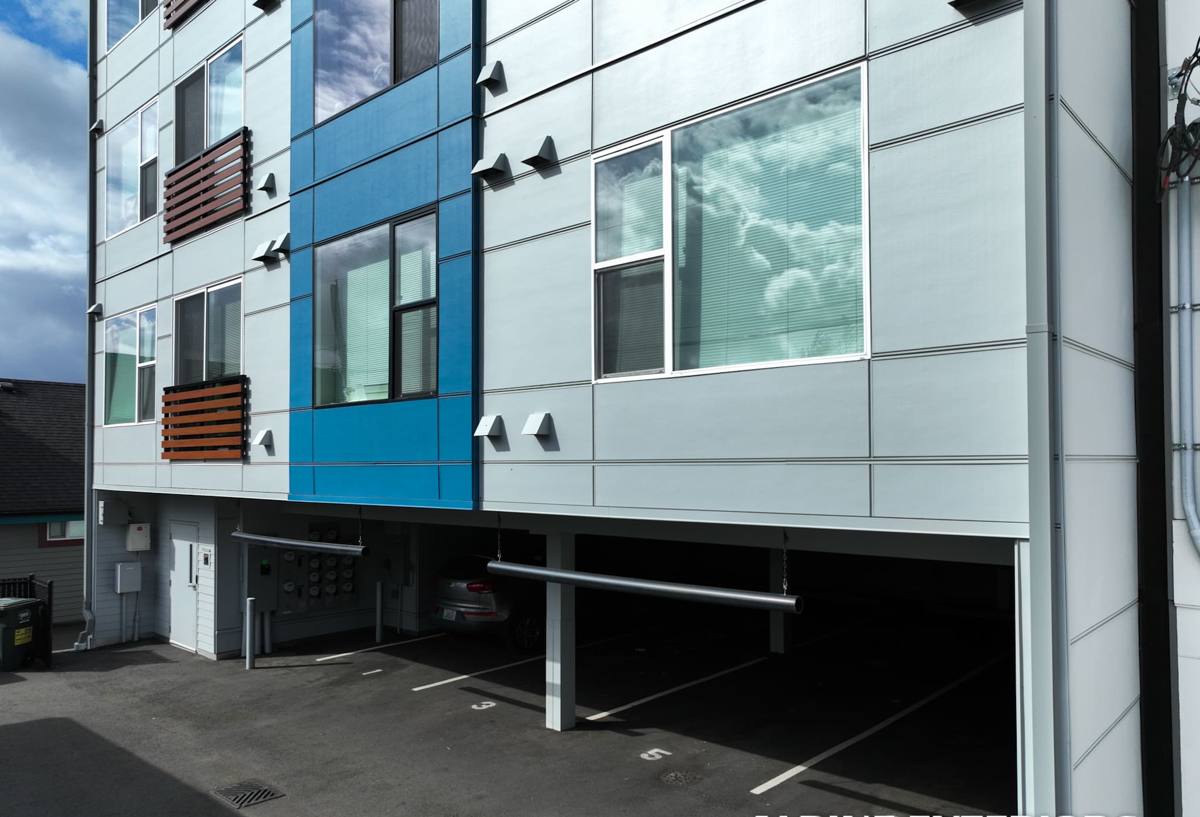
What This Climate Actually Does to a House
Whatcom County and the Fraser Valley share weather, not just a border. That matters more than most homeowners realize when they're picking a siding material.
Salt Air and Marine Moisture
Aldergrove isn't a coastal town, but it's close enough to Georgia Strait and the Salish Sea that damp, salt-tinged air still reaches inland on a regular basis, especially with the prevailing westerly weather patterns that move through the region. Add in the humidity that sits in low-lying farmland around Aldergrove, and siding materials that depend on a painted surface film to stay waterproof are working overtime for most of the year.
Driving Rain and Wind-Driven Moisture
Fall and winter storms here rarely come straight down. Wind pushes rain sideways into wall assemblies, which means the water management behind the siding, not just the siding itself, decides whether a wall stays dry. A house can have attractive, intact siding and still have a moisture problem building underneath it if the flashing and drainage details were never done right.
A Long Moss Season
Shaded lots, tree cover, and the mild, wet winters typical of this corridor give moss an unusually long growing season. It's common to see moss established on north and east-facing siding by late fall and still thriving into early summer. Moss holds moisture against a wall surface, which accelerates whatever damage the underlying material is already prone to.
Why Fiber Cement Is the Right Fit Here
We install James Hardie fiber cement exclusively, and it's not a brand-loyalty thing — it's a climate-fit decision. Fiber cement is dimensionally stable in wide humidity swings, doesn't feed moss and mildew the way wood-based products can, and is manufactured as non-combustible, which matters as wildfire smoke and dry-season fire risk have become a bigger regional concern even in wetter counties. James Hardie's ColorPlus factory finish is baked on and warrantied, rather than relying on a field-applied paint job to hold up against years of driving rain.
| Material | Moisture Behavior in This Climate | Typical Maintenance | Where It Struggles |
|---|---|---|---|
| James Hardie fiber cement | Dimensionally stable; won't rot or swell from moisture | Occasional wash; factory finish holds color | Requires correct installation to perform as designed |
| Vinyl siding | Waterproof itself, but expands/contracts with temperature swings | Low, but panels can warp or fade over time | Can crack in cold snaps; seams are visible up close |
| Cedar | Absorbs moisture readily; needs a finish to slow it | Recoating/refinishing on a repeating cycle | Moss, rot, and insect risk in shaded, damp spots |
| Primed wood/spruce panel | Prone to swelling and paint failure at joints | Frequent repainting and caulk maintenance | Edge and seam failure is common in this climate |
We're not saying every one of those products is a bad product in every climate. We're saying that after years of doing exterior work in this specific corridor, fiber cement is the one system we're comfortable standing behind long-term — which is why it's the only siding we put on homes.
What a Correct Fiber Cement Installation Actually Involves
Water Management Behind the Siding
The siding is the visible layer, but the drainage plane behind it — weather-resistant barrier, properly lapped flashing at every window, door, and horizontal transition, and a drainage gap where the assembly calls for one — is what actually keeps wind-driven rain out of the wall. Skipping or shortcutting this step is the single biggest reason a fiber cement job fails early, and it's invisible once the siding goes up, which is exactly why it matters who's doing the work.
Fastening, Clearances, and Cuts
James Hardie publishes specific fastener patterns, minimum clearances from grade, roofing, and decks, and field-cut edge treatment requirements. Field-cut edges need to be sealed before installation; ignoring that step lets moisture into the cut end of the board, which defeats the point of a moisture-stable material.
Caulking and Trim Details
Fiber cement holds paint and caulk well, but caulk is a maintenance item, not a substitute for correct flashing. A job done right uses caulk at the joints it's meant for and relies on flashing and laps for the actual water shedding.
Our Process for an Aldergrove-Area Project
- On-site walkthrough of the existing siding, trim, and any visible moisture or moss damage.
- Assessment of what's underneath — sheathing condition matters more than the siding's cosmetic condition when we're scoping a tear-off.
- A written estimate that separates material, labor, and any repair work found once old siding comes off.
- Scheduling that accounts for the wetter months here, since fiber cement installation needs reasonably dry working conditions for proper sealing and finishing.
- Final walkthrough covering trim, caulk lines, and paint touch-up before we call the job done.
Because Aldergrove is a cross-border project relative to our Lynden base, there are a few extra logistics involved — building permits for BC properties go through the Township of Langley rather than a Washington jurisdiction, and quoting typically gets handled in the currency and payment method that's simplest for the homeowner. None of that changes the installation standard; it just means we walk through those details up front during the estimate instead of leaving them as a surprise.
Choosing the Right James Hardie Line and Style
James Hardie makes climate-specific product lines, and matching the right one to this region is part of doing the job correctly rather than just installing whatever's on the truck.
- HZ5 vs. HZ10: Hardie's HZ product lines are engineered for different climate zones; the right one for this corridor is chosen based on moisture and freeze-thaw exposure, not just what's cheapest to stock.
- Lap siding: The most common style in this region — horizontal boards with a clean shadow line, straightforward to maintain.
- Board and batten: A vertical style that reads more modern or farmhouse, popular on newer builds and additions in this area.
- ColorPlus finish: A factory-applied, baked-on finish backed by its own warranty — no field paint job trying to hold up against this climate on its own.
Cost Factors on an Aldergrove-Area Home
| Factor | Why It Moves the Price |
|---|---|
| Home size and story count | More square footage and higher wall sections mean more material and labor, plus added scaffolding or lift needs |
| Tear-off vs. new construction | Removing old siding, especially if there's hidden moisture or sheathing damage, adds labor and sometimes repair costs |
| Trim and detail complexity | Multiple gables, window casings, and transitions take more cutting, fitting, and caulking time |
| Siding style | Board and batten and mixed-material facades generally run more labor-intensive than straight lap siding |
| Site access | Tight lots, fencing, or landscaping that limits equipment access can add time |
We give a written, itemized estimate rather than a single lump number, so homeowners can see what's driving the cost before deciding anything.
Signs Your Current Siding Is Already Losing the Fight
- Soft or spongy spots when you press on the siding, especially near the bottom courses or under windows
- Paint that's bubbling, peeling, or chalking heavily rather than just fading evenly
- Persistent moss or algae growth that comes back within weeks of cleaning
- Visible gaps, warping, or separation at seams and corner boards
- Rising energy bills that aren't explained by anything else, which can point to a compromised weather barrier
- Interior signs like musty smells or discoloration on walls that share an exterior wall with heavy siding damage
Any one of these on their own isn't necessarily an emergency, but a few showing up together is usually a sign the siding is past the point where cleaning or spot repair solves the problem.
Why a Crew That Already Works This Corridor Matters
Aldergrove and Lynden share a border crossing, not a set of building codes, inspection processes, or supply chains — and a contractor who only works one side of that line is guessing at the other. We're set up to handle the practical differences that come with a cross-border project while holding the same installation standard we'd use on any Whatcom County home: correct water management, correct fastening, and one product line we trust enough to warranty. That local familiarity is worth something when the weather doesn't care which side of the border a house sits on.
If you're weighing a siding project on an Aldergrove-area home, we're happy to walk the property, look at what's there now, and put together a straightforward, no-pressure estimate — no obligation, just a clear look at what the job actually involves.