 Lynden Siding
 Roof Repair Built for Acme's Conditions, Not a Generic Checklist
Acme sits further into the wooded foothill country east of Lynden, in Whatcom County, and that changes what a roof actually deals with day to day. Lynden's more open valley lots get plenty of rain and moss pressure of their own, but homes out in Acme tend to sit closer to mature trees and denser tree cover, which means more shade on the roof, more needle and leaf debris working into valleys and gutters, and slower drying between storms. The same marine-influenced weather system that soaks this whole corner of Washington reaches Acme too — the driving rain and long moss season aren't unique to the coastline — but the tree canopy here adds its own wear pattern on top of that.
Lynden Siding Company repairs roofs, siding, windows, and decks across Whatcom County, and roof repair calls from Acme follow a pattern we see often: a roof that isn't old or badly built, but has a specific problem — a lifted shingle after a windstorm, a slow leak that took months to show up on a ceiling, moss that's held moisture against a shaded slope long enough to cause real damage. Most of those situations call for a targeted repair, not a full tear-off, and getting that call right the first time is most of what a good roof repair job actually is.
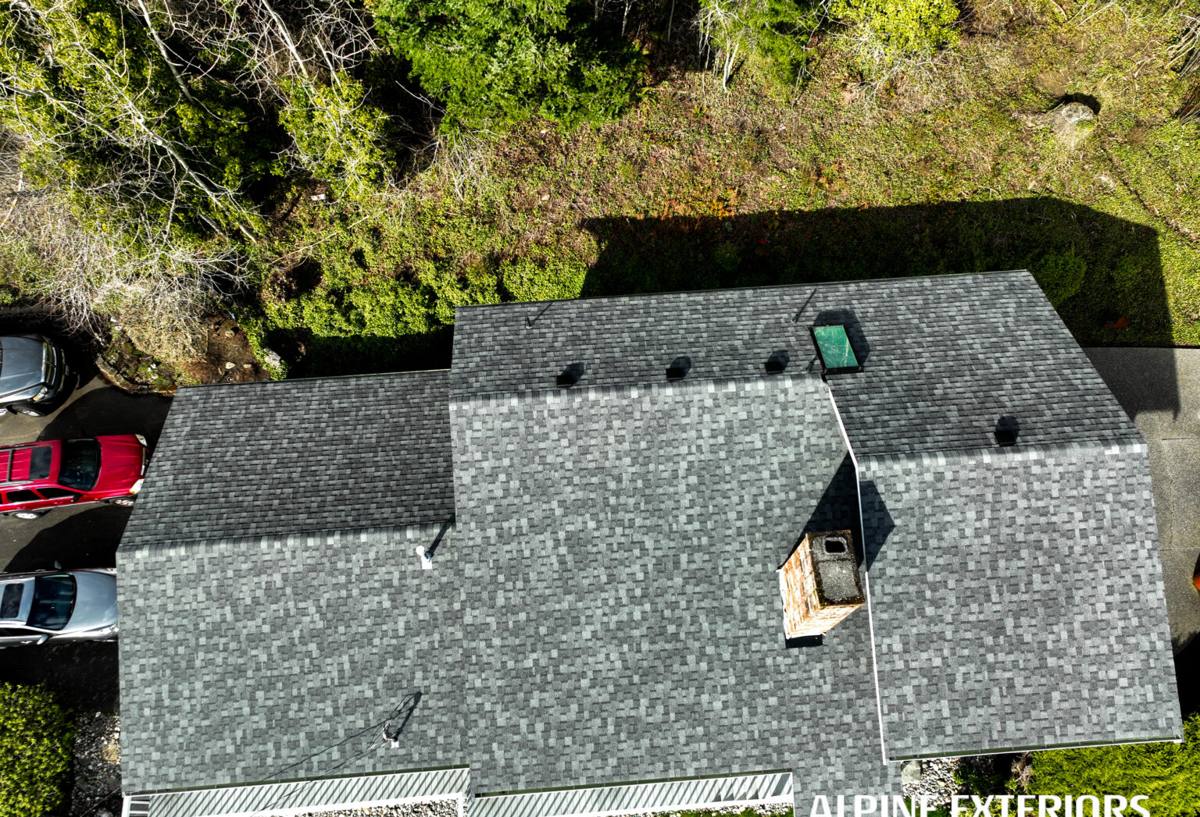
What Heavy Tree Cover Does to a Roof Over Time
Shaded Slopes and Extended Moss Growth
Any roof plane that stays shaded for a large part of the day dries out slower after rain, and slower drying is exactly what moss and algae need to establish and spread. In a more open Lynden lot that might affect one north-facing slope; on a wooded Acme property it can affect most of the roof, especially where the tree line sits close to the house. Moss doesn't just look bad sitting on shingles — it holds a film of moisture against the roofing material and works its way under shingle tabs and around fasteners, and over a few wet seasons that moisture retention is what actually degrades the roofing, not the moss itself.
Needle and Leaf Debris Load
Roofs near dense tree cover collect far more organic debris than roofs in open, sunlit yards. That debris settles into valleys, behind chimneys, and in gutters, and it does two things: it holds water against the roof surface longer, and it clogs drainage paths so water backs up instead of running off. A valley packed with needles during a heavy rain event is a common, preventable cause of the interior leaks we get called out for in this area.
Falling Debris and Impact Damage
Beyond the slow moisture damage, roofs under mature trees also take occasional direct hits — a dropped branch, cones, or debris kicked loose in a windstorm. A single impact can crack or dislodge a shingle without an obvious sign from the ground, and that's often where a small, contained leak starts.
Signs an Acme Roof Needs a Repair Call
Most roof repair situations in this area show a warning sign well before serious damage happens. Worth a professional look if you notice any of the following:
- Moss that keeps returning to the same shaded slope shortly after cleaning
- Needle or leaf buildup sitting in valleys or gutters that doesn't clear on its own
- A shingle or section that looks lifted, curled, or missing after a windstorm
- Water staining on an interior ceiling or wall, especially near a chimney or roof-to-wall transition
- A soft or spongy spot when the roof is walked, which usually points to deck damage underneath
- Flashing around a chimney, skylight, or vent pipe that looks rusted, lifted, or missing sealant
- Daylight visible through the roof deck from inside the attic
None of these automatically mean a full replacement. Caught early, almost all of them are a straightforward, contained repair.
What a Correct Roof Repair Actually Involves
Finding the Real Source, Not Just the Visible Damage
The spot where water shows up inside a house is often not where it's getting in. Water can travel along the underside of the roof deck or down a rafter before it finally stains a ceiling, so a repair that only patches the visible damage without tracing it back to the actual entry point tends to leak again, sometimes in a different-looking spot the next season. A correct repair starts with tracing the path, not just covering the symptom.
Flashing and Underlayment Done Right
A large share of the repair calls we handle come down to flashing — around chimneys, valleys, vent pipes, and anywhere a roof plane meets a wall. Flashing that's improperly lapped, under-sealed, or corroded lets water in even when the shingles around it look fine. Underlayment matters too: if the section being repaired had marginal or damaged underlayment underneath, replacing just the visible shingles without addressing what's beneath them leaves the same weak point in place.
Matching Materials and Ventilation
A repair should blend into the surrounding roof as closely as possible in material, color, and fastening pattern, and it needs to preserve the roof's ventilation path rather than blocking it. Sealing a repair up tight without airflow can trap moisture in the roof assembly and cause problems that show up months later, somewhere else on the roof.
Repair or Replace? How We Actually Decide
We don't default to recommending a full replacement when a repair will genuinely hold. The decision comes down to a few honest factors:
| Factor | Points Toward Repair | Points Toward Replacement |
|---|---|---|
| Roof age | Well within its rated lifespan | At or past the end of its expected service life |
| Extent of damage | Localized to one section or slope | Spread across multiple slopes or the majority of the roof |
| Roof deck condition | Solid, no soft spots found | Soft, rotted, or moisture-damaged decking |
| Repair history | First or second repair on this roof | Repeated repairs to the same area over recent years |
| Moss/moisture pattern | Contained to a small shaded area | Widespread moss tied to long-term moisture retention |
We'll walk the roof, explain what we actually find, and lay out the honest option — including telling you plainly when a repair is the right call and a replacement would be spending more than the situation calls for.
Our Roof Repair Process
- Inspection. We walk the roof and the attic where accessible, trace suspected leak paths, and check flashing, valleys, and any shaded or debris-prone areas.
- Written scope. You get a clear explanation of what's actually wrong, what the repair involves, and a straightforward estimate before any work starts.
- Repair work. We remove and replace only the damaged materials, correct any underlying flashing or underlayment issue we found, and match the surrounding roofing as closely as possible.
- Debris and moss cleanup. Where moss or heavy debris contributed to the problem, we clear it from the repaired area and the surrounding roof so the fix isn't undone by the same conditions a season later.
- Final check. We confirm the repair is sound, drainage paths are clear, and ventilation hasn't been blocked before calling the job done.
Why a Crew That Already Works in Acme Matters
Roof repair around heavy tree cover is a different skill set than repair on an open, sun-exposed roof. A crew that's spent time on roofs in this kind of setting knows to check for debris packed into valleys before assuming a leak is a flashing problem, recognizes which moss patterns point to deeper moisture damage versus surface staining, and doesn't apply a one-size-fits-all repair approach to a shaded, wooded lot. That local familiarity with how this specific setting wears on a roof is what keeps a repair from turning into a second service call.
Lynden Siding Company handles siding, windows, and decks in addition to roofing, and the same climate and tree-cover conditions that wear on an Acme roof wear on the rest of the exterior too. If a roof repair turns up related damage at a wall-to-roof transition, aging trim, or nearby siding, we can address it in the same conversation instead of sending you to track down a second contractor.
Keeping a Repaired Acme Roof Working
A repair holds up longer with a little routine attention, especially on a wooded lot. Between service visits, it helps to:
- Clear needles and leaf debris from valleys and gutters at least once or twice a year, more often under heavy tree cover
- Trim back branches that overhang or brush against the roof where it's safe to do so
- Watch shaded slopes for returning moss and have it removed before it spreads or thickens
- Check the attic for daylight, staining, or musty odor after major storms
- Keep gutters and downspouts flowing freely so water doesn't back up under the roof edge
If your roof in Acme has a leak, storm damage, or moss buildup that's gone on too long, we're glad to take a look and give you a straightforward, honest read on what it needs. Reach out using the form below to schedule a free, no-pressure estimate.