 Lynden Siding
 Siding Repair for Abbotsford, BC Homes
Abbotsford sits in the Fraser Valley just across the border from Lynden, and homes here take a steady beating from the same weather system that shapes siding problems throughout Whatcom County and the surrounding region: salt-tinged marine air, driving rain that comes in sideways during winter storms, and long stretches of overcast, damp weather that keep moss and algae established on north-facing walls for months at a time. Siding doesn't fail all at once in this climate. It fails at the edges first — a cracked panel here, a gap at a butt joint there, a soft spot low on a wall where splash-back has been soaking into the material for years. Left alone, small damage becomes a bigger, more expensive problem. Caught early, most siding repair is straightforward, affordable, and buys years of extra life out of a wall system that's otherwise sound.
This page covers what siding repair actually involves for homes in and around Abbotsford, BC, what we look for during an inspection, and how we decide between a targeted repair and a section replacement.
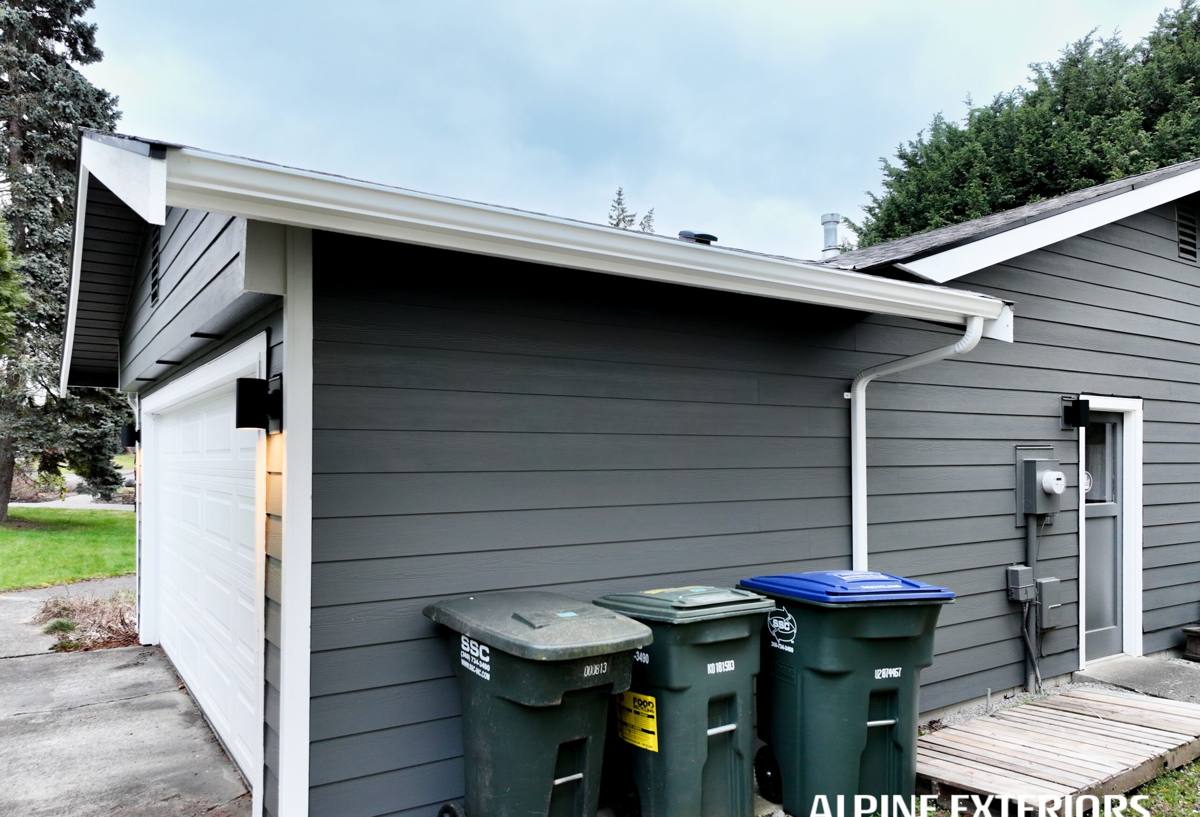
Why Repair Timing Matters in This Climate
The Pacific Northwest's wet season isn't a single storm — it's months of near-continuous moisture exposure. Any opening in a home's siding, whether it's a cracked lap, a popped fastener, or a gap where caulking has failed, gives water a path behind the cladding. Once moisture gets behind siding, it doesn't dry out quickly in this climate. It sits against sheathing and framing, and that's when a cosmetic problem turns into a structural one.
Moss and Algae Aren't Just Cosmetic
Moss holds moisture directly against the siding surface far longer than open air would. On shaded or north-facing walls, a moss colony that's been left to grow for a season or two can keep a section of siding damp almost continuously, which accelerates paint failure, softens wood-based products, and, on any siding with exposed seams, increases the odds of water tracking behind the panel.
Salt Air and Fastener Corrosion
Homes closer to the water pick up salt-laden air that speeds up corrosion on exposed metal — nail heads, trim flashing, and fastener systems that weren't rated for coastal exposure. Rust streaking below a nail or screw is a reliable sign that the fastener underneath has already started to fail, and that's a repair issue even if the siding panel itself looks fine.
Driving Rain and Lap Exposure
Wind-driven rain hits siding at an angle instead of running straight down, which pushes water up under laps and into joints that were designed for gravity drainage, not lateral pressure. This is why butt joints, corner boards, and window/door transitions are usually the first places repair issues show up — they're the spots most exposed to wind-driven moisture.
Signs Your Siding Needs Repair
Most homeowners notice siding problems during a routine walk-around or after a storm. Here's what we recommend checking twice a year, especially heading into or coming out of the wet season:
- Cracked, split, or visibly warped panels, especially near corners and window trim
- Soft or spongy spots when you press on the siding, particularly near the bottom of walls
- Peeling or bubbling paint, which often points to moisture trapped behind the surface
- Dark streaking, staining, or persistent moss and algae growth that keeps returning
- Gaps or separation at butt joints, corners, or where siding meets trim, windows, and doors
- Rust streaks below nail or screw heads
- Visible fastener heads (siding that's "backing out") or panels that flex when touched
- Any interior sign of a wall problem — a musty smell, discoloration on interior drywall, or a spike in heating bills tied to one side of the house
What Causes Most Siding Damage We See
Repair calls in this region generally trace back to a handful of root causes, and identifying the actual cause is what separates a repair that lasts from one that fails again in a year or two.
| Cause | Typical Symptom | Why It Happens Here |
|---|---|---|
| Failed caulking or sealant | Gaps at trim, corners, window flashing | UV and freeze-thaw cycling break down sealant faster than in drier climates |
| Impact damage | Cracked or dented panels | Storm debris, lawn equipment, ladders |
| Moisture intrusion | Soft spots, staining, warping | Long wet season, driving rain, poor original flashing detail |
| Fastener failure | Rust streaks, loose or popped panels | Salt-influenced air, incorrect original fastener spec |
| Moss and algae buildup | Discoloration, accelerated paint failure | Shaded, north-facing walls with limited sun exposure |
| Original installation errors | Recurring leaks, uneven panels, gaps | Missing house wrap laps, wrong fastener placement, poor caulking |
How We Decide: Repair or Replace
Not every damaged section needs to come off the wall, and not every repair is worth doing if the underlying material or installation is compromised. We look at three things during an inspection:
1. What's Behind the Siding
If water has been getting behind the cladding for a while, the sheathing and house wrap underneath need to be checked before anything gets patched back over. Repairing the visible siding without addressing damaged sheathing just hides the problem for another season.
2. How Much of the Wall Is Affected
A cracked panel or two, a failed joint, or a section with impact damage is a clean, contained repair. Widespread cupping, chronic moisture staining across multiple walls, or a pattern of recurring failures usually points to a systemic issue — often original installation quality — that a spot repair won't fix long-term.
3. What the Siding Is Made Of
This matters more than most homeowners expect. Fiber cement holds its shape and takes a color-matched repair cleanly. Vinyl is often discontinued or faded beyond matching within a few years of installation, which turns a small repair into a "replace the whole wall" problem. Wood-based products like LP SmartSide or primed spruce can look fine on the surface while the substrate underneath has already started breaking down from years of moisture cycling, which means a cosmetic patch may not hold.
Why We Repair With James Hardie Fiber Cement
We install and repair exclusively with James Hardie fiber cement siding, and that standard matters as much for repair work as it does for full installs. Fiber cement doesn't absorb moisture the way wood-based composite panels can, doesn't rot, and isn't a food source for the moss and mildew that thrive in this climate. When a panel does need to be replaced, Hardie's ColorPlus factory finish is engineered for consistent color matching across production runs, which means a repaired section is far more likely to blend in rather than stand out as an obvious patch. Hardie's HZ5 product line is also engineered specifically for climates like ours — freeze-thaw cycling, sustained moisture exposure, and coastal-influenced air — which is a large part of why we don't install alternatives that trade that durability for a lower upfront cost.
If your current siding is vinyl, LP SmartSide, cedar, or another wood-based product, we'll still give you an honest assessment of what a repair involves. In some cases a targeted fix on non-Hardie siding is the right call. In others, especially where moisture damage is already present, we'll walk you through why a full or partial re-side with fiber cement is the more durable long-term answer rather than repeatedly patching a material that's fighting the climate.
What a Correct Repair Job Involves
A repair that actually lasts through another wet season involves more than swapping a damaged panel. Our process on a typical siding repair includes:
- On-site inspection of the damaged area and the surrounding wall, including a check of what's happening behind the siding where damage suggests moisture intrusion
- Identifying the root cause — impact, failed sealant, fastener corrosion, or a flashing/detail issue — so the fix addresses the cause, not just the symptom
- Removing damaged material without disturbing more of the surrounding siding than necessary
- Repairing or replacing any compromised house wrap, flashing, or sheathing found underneath
- Installing new material with correct fastener placement, joint spacing, and sealant appropriate for our climate
- Color-matching the repair as closely as the existing siding and its age allow
- A final walk-through so you know exactly what was done and what to watch for going forward
Why a Crew That Already Works Abbotsford, BC Matters
Siding behaves differently depending on a wall's exposure, shading, and orientation to prevailing weather, and that's something you learn by working on homes in a specific area over time, not from a general repair checklist. A crew that regularly works Abbotsford and the greater Lynden area already has a sense of which wall orientations tend to hold moss the longest, where driving rain does the most damage, and which original installation shortcuts show up most often in homes of a given age in this region. That local pattern recognition shortens the inspection, sharpens the diagnosis, and means less guesswork about whether a repair will actually hold.
It also means straightforward scheduling and a crew that's genuinely nearby rather than dispatched from across the region, which matters when a damaged section is exposing your wall to an active wet-season forecast.
What Influences Repair Cost
Every repair is priced based on the actual scope, but a few factors consistently drive cost up or down:
| Factor | Effect on Cost |
|---|---|
| Size of the damaged area | Larger, contains a single wall — lower cost per panel; scattered damage across multiple walls costs more |
| Underlying moisture or sheathing damage | Increases cost — repair extends beyond the visible siding |
| Color and material matching | Older or discontinued siding can be harder to match, sometimes pushing toward a wider replacement |
| Accessibility | Second-story or hard-to-reach walls add labor time |
| Root cause complexity | A simple caulk or fastener fix costs less than correcting a flashing or detail error |
We won't give you a number without seeing the wall, but we will give you a straight answer about whether you're looking at a modest repair or something bigger, and why.
Get an Honest Assessment
If you're seeing cracked panels, soft spots, persistent moss, or staining on a home in Abbotsford, BC, it's worth having it looked at before another wet season sets in. We'll give you a clear, no-pressure read on what's actually going on, what it will take to fix it right, and whether a targeted repair or a broader re-side makes more sense for your home. Fill out the form below for a free estimate.