 Lynden Siding
 Why Abbotsford, BC Homes Need Siding Built for This Climate
Abbotsford sits in the Fraser Valley just north of the Whatcom County line, close enough to the Salish Sea that homes here deal with a steady mix of damp marine air, long stretches of driving rain, and — especially on the shaded, north-facing walls so common in this valley — a moss season that can run most of the year. That combination is hard on exterior materials. Wood siding absorbs moisture and swells. Vinyl can crack in a hard freeze and never really sheds the green film that grows in constant shade. Even siding that looks fine from the street can be trapping water behind it, doing damage that doesn't show up until the trim starts to soften or the paint starts to bubble.
We install James Hardie fiber cement siding exclusively, and the reason ties directly back to this climate. Hardie's HZ5 product line is engineered for exactly the freeze-thaw, high-moisture conditions that define the Pacific Northwest — including the Lynden-to-Abbotsford corridor we work in every week. A siding decision made for a drier climate simply doesn't hold up the same way out here.
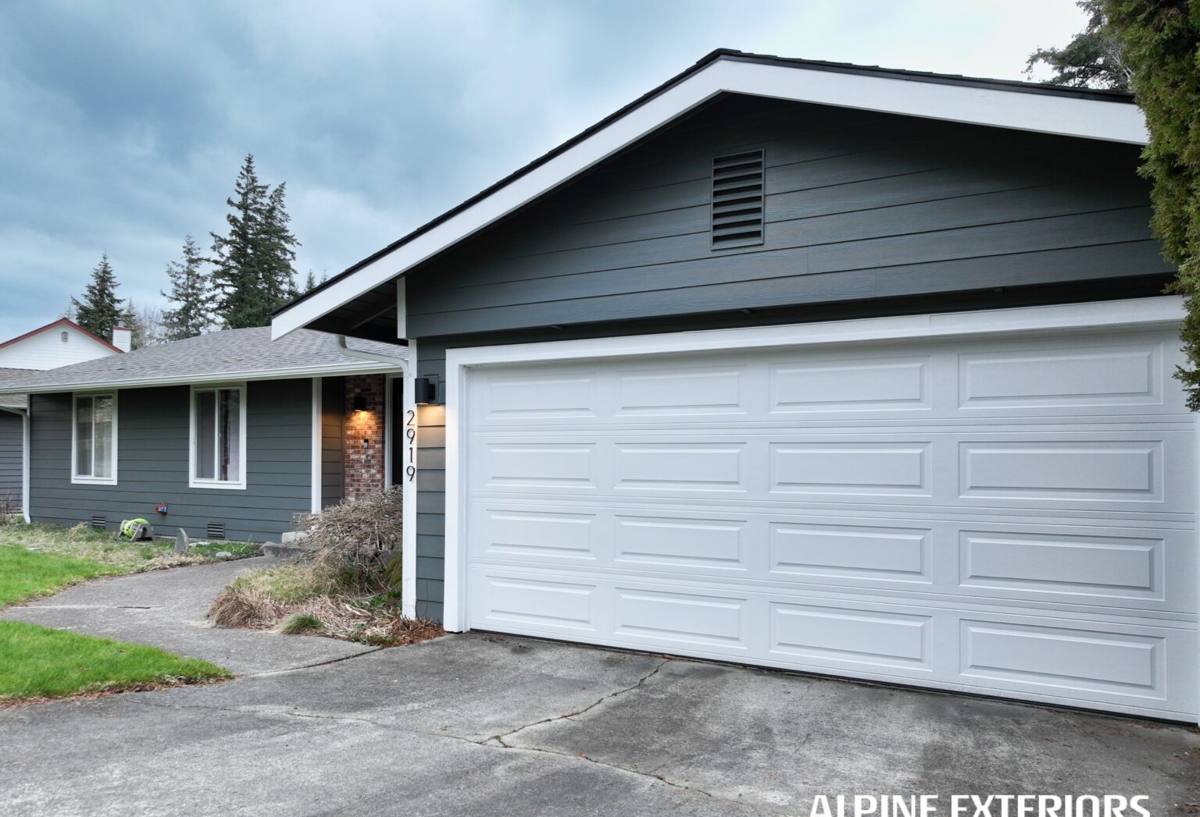
What James Hardie Siding Solves for This Area
Engineered for Wet, Moss-Prone Conditions
James Hardie's HZ5 formulation is built specifically for regions like ours, where homes see extended periods of rain, humidity, and freeze-thaw cycling. Fiber cement doesn't absorb water the way wood or wood-composite products do, and it won't rot, delaminate, or feed mold and moss the way organic materials can. That matters on shaded elevations — the north and east walls of a lot of Abbotsford homes rarely get direct sun, which is exactly where moss and mildew take hold fastest on the wrong material.
The ColorPlus Factory Finish
Most siding failures we see aren't the substrate — they're the paint. Field-applied paint on wood or fiber cement starts breaking down within a handful of years in a climate this wet, and once the finish goes, moisture gets underneath it. James Hardie's ColorPlus finish is baked on at the factory in multiple coats under controlled conditions, which gives it a much longer service life than anything applied on-site with a brush or sprayer, and it comes backed by its own finish warranty separate from the product warranty on the siding itself.
Choosing the Right Product Line
James Hardie makes several distinct profiles, and picking the right one matters as much as the installation itself. HardiePlank lap siding is the most common choice for traditional home styles and handles this climate's rain patterns well when lapped and flashed correctly. HardiePanel vertical siding suits modern designs and accent walls. HardieShingle gives a cedar-shake look without cedar's moisture and moss problems. We walk through which profile fits your home's architecture and exposure before recommending one — a shaded, rain-exposed wall doesn't always call for the same product as a sheltered, south-facing one.
What a Correct Installation Actually Involves
Siding is only as good as the water management behind it. A lot of siding problems in this region trace back not to the material but to how it was put on. A correct James Hardie installation includes:
- Inspecting and repairing the sheathing and house wrap before any new siding goes up — covering over rot or a compromised weather barrier just locks the problem in.
- Installing a proper weather-resistive barrier and, where called for, a rainscreen gap so any moisture that does get behind the siding can drain and dry instead of sitting against the wall.
- Flashing every window, door, and horizontal transition correctly, so water is directed out and down rather than into the wall assembly.
- Maintaining Hardie's specified clearances — typically at least 6 inches above grade, roof lines, and hard surfaces — so siding isn't sitting in standing water or snowmelt.
- Fastening according to Hardie's published pattern and using the correct nail type and spacing, not just what happens to be fast.
- Caulking and sealing joints, corners, and penetrations with a product rated for the exposure, not whatever's left over from the last job.
Skip any one of these steps and the siding can look right for a year or two before problems start showing at the seams, corners, and butt joints — usually right where moisture collects.
James Hardie vs. Other Siding Options for This Climate
We get asked fairly often why we don't install vinyl, LP SmartSide, cedar, or other fiber cement brands. Here's how they generally compare for a climate like ours:
| Material | Moisture/moss resistance | Maintenance | Typical lifespan here |
|---|---|---|---|
| James Hardie fiber cement | Non-combustible, doesn't absorb water or feed rot; factory finish resists moss staining far longer than field paint | Occasional wash; repaint only when the homeowner chooses a color change | 30+ years with correct installation |
| Vinyl | Won't rot, but traps moisture behind it if not detailed correctly; can crack in hard freezes | Low, but panels can warp or fade and aren't repairable — full sections get replaced | 20-30 years, shorter in direct sun exposure |
| LP SmartSide (engineered wood) | Treated to resist moisture, but still a wood-based product — edges and cut ends are vulnerable if not sealed and maintained | Requires ongoing caulk and paint upkeep to protect exposed wood fiber | 15-30 years, heavily dependent on maintenance |
| Cedar | Absorbs moisture, prone to moss, mildew, and rot in constant shade without diligent upkeep | High — regular sealing, staining, and moss treatment | 15-25 years with consistent maintenance |
Every one of these products has a legitimate place somewhere. In a climate that stays wet as long as this one does, though, we've standardized on James Hardie because it holds up with the least ongoing intervention from the homeowner.
What It Costs — Factors That Drive the Number
Every home is different, so we don't quote pricing sight-unseen, but these are the main factors that move the number up or down:
| Factor | Why it matters |
|---|---|
| Tear-off vs. new construction | Removing and disposing of existing siding, and repairing whatever sheathing or framing is found underneath, adds labor and material cost |
| Home size and number of stories | More square footage and taller walls mean more material, more staging or lift equipment, and more crew time |
| Siding profile (lap, shingle, panel) | Shingle-style and mixed-material designs take longer to install than a straight lap job |
| Trim and detail work | Window and door trim, corner boards, and fascia detailing add labor even on an otherwise simple elevation |
| Access and site conditions | Steep lots, tight setbacks, or limited driveway access can require extra equipment or staging time |
| Color and finish selection | Standard ColorPlus colors are generally more economical than premium or custom-matched finishes |
Our Process, Start to Finish
Our process is the same whether the job is a small elevation repair or a full re-side:
- A no-pressure on-site walkthrough where we look at your current siding, trim, and sheathing condition and talk through what your home actually needs
- A written estimate that spells out material, prep work, and any repairs found along the way — no surprise change orders for problems we should have caught up front
- Careful removal of old siding with sheathing and moisture inspection before anything new goes up
- Installation to James Hardie's published specifications, including proper flashing, clearances, and fastening
- A final walkthrough with you before we consider the job done
Why a Crew That Already Works the Lynden–Abbotsford Corridor Matters
Siding installed to spec in a dry climate can still fail here if the crew doesn't understand what this specific stretch of the Pacific Northwest throws at a house. We work in Whatcom County and across the border into the Fraser Valley regularly, which means we already know which elevations on a typical Abbotsford lot stay shaded and damp longest, how much rainscreen detail actually gets used correctly versus skipped, and what winter freeze-thaw cycling does to a poorly flashed corner. That local pattern recognition is the difference between a crew that follows a generic install checklist and one that knows where this climate actually finds the weak points.
It also means straightforward logistics — material delivery, scheduling around this region's long rainy stretches, and follow-up — from a crew that's already established in the area rather than one traveling in for a single job and moving on.
Maintaining Your Hardie Siding After Installation
James Hardie siding is low-maintenance, not no-maintenance. A little attention keeps it performing for decades:
- Rinse siding annually with a garden hose to clear pollen, road grime, and the early stages of moss or algae before they take hold
- Check caulking around windows, doors, and trim every year or two and re-caulk any joints that have cracked or pulled away
- Keep gutters clear so overflow isn't running down the siding face or pooling at the base of a wall
- Trim back landscaping and tree branches so shaded walls get at least some airflow and sun exposure
- Watch for any spots where paint is chipping down to bare substrate and have them touched up before moisture gets a foothold
- Have a professional check flashing and clearances if you notice soft trim, peeling paint in one isolated spot, or a musty smell near an exterior wall
If you're weighing your siding options for a home in Abbotsford, BC or anywhere along the Lynden corridor, we're happy to take a look and walk you through what your specific home needs — no pressure, no obligation. Fill out the form below to schedule a free estimate.