 Lynden Siding
 Siding Installation Built for Wiser Lake's Climate
Wiser Lake sits in a part of Whatcom County where the weather doesn't do a home's exterior any favors. Homes here deal with a marine-influenced air mass carrying fine salt and moisture, long stretches of driving rain that comes in sideways more often than straight down, and shaded, damp conditions that keep moss and algae active for most of the year. Siding that would hold up fine in a drier inland climate can start failing years early out here if it isn't installed correctly for these conditions.
We install siding for homes around Wiser Lake regularly, which means we already know which walls take the worst weather exposure, how the tree cover and lake humidity affect drying time after a storm, and where builders commonly cut corners on flashing and clearances in this specific area. That local pattern recognition matters as much as the siding material itself.
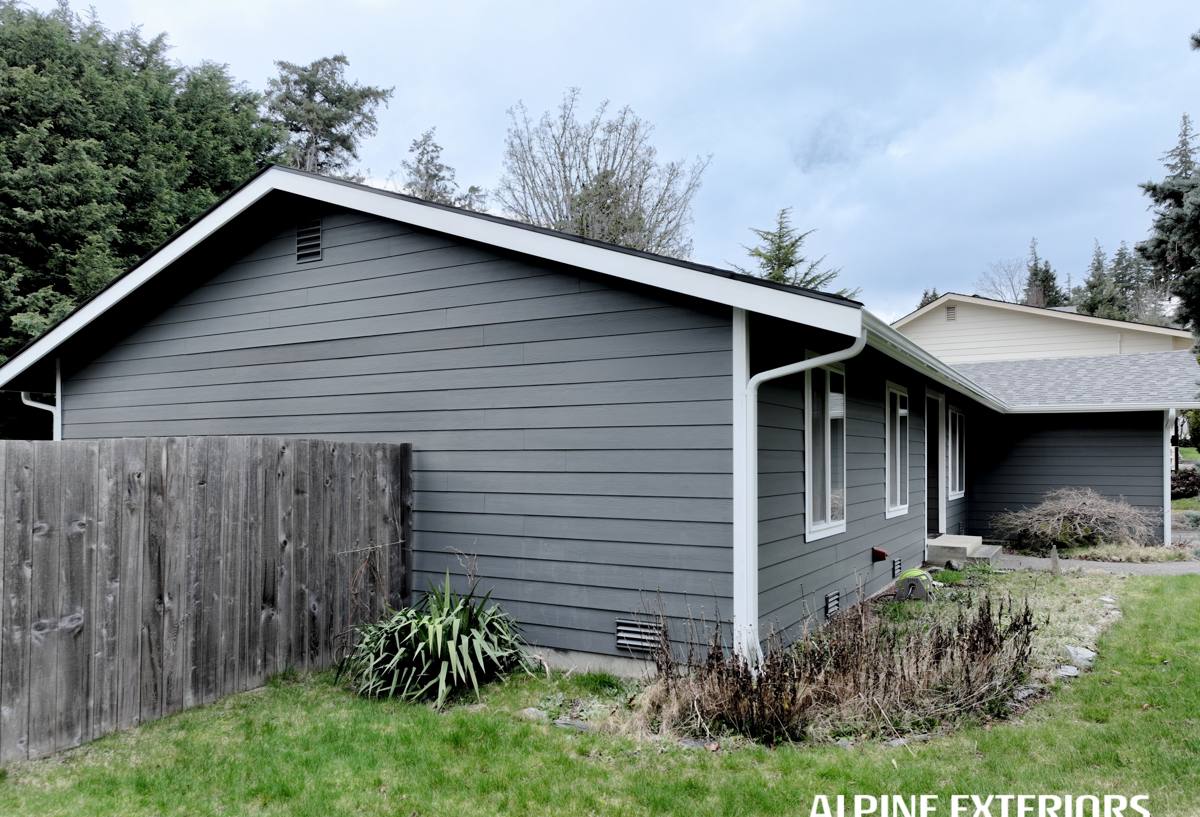
Why Wiser Lake Is Tough on Exterior Siding
A few things stack together here that don't always get flagged on a generic siding estimate:
- Salt-laden air: Whatcom County's proximity to the Salish Sea means airborne salt reaches inland properties, including those around Wiser Lake. Over years, that salt content accelerates corrosion of fasteners and metal trim that aren't rated for it, and it degrades cheap paint finishes faster than a dry climate would.
- Driving rain: Wind-driven storms push water sideways into siding laps, seams, and trim joints instead of letting it just run down the face of the wall. A wall assembly that isn't detailed for wind-driven rain will eventually let moisture behind the cladding, no matter how good the siding itself looks from the street.
- Long moss season: Tree cover, lake humidity, and mild winters around Wiser Lake give moss, algae, and mildew a long growing window — often close to year-round on north-facing and shaded walls. Siding with a weak factory finish will show green and black staining faster here than almost anywhere drier in the state.
- Slow drying cycles: Shaded lakefront and near-lake lots don't get the sun exposure that dries out wall surfaces quickly after rain. Materials or installations that trap moisture instead of shedding it stay wet longer, which is exactly the condition that rot, swelling, and paint failure need to take hold.
What a Correct Siding Installation Actually Involves
Siding installation is often sold as a cosmetic upgrade, but the material you see is the last layer of a system. In a climate like this one, the layers underneath matter more than the color on top.
The Weather-Resistive Barrier
A properly lapped and sealed water-resistive barrier goes on before any siding. In a driving-rain environment, gaps, tears, or improperly overlapped seams in this layer are one of the most common causes of hidden water intrusion — long before the siding itself ever shows a problem.
Flashing at Every Penetration
Windows, doors, hose bibs, vents, and any other wall penetration need proper flashing that directs water back out, not behind the siding. This is one of the details most likely to get skipped or rushed on a fast production install, and it's one of the most expensive mistakes to fix after the fact.
Clearances and Drainage
Siding needs the correct clearance from grade, roof lines, decks, and patios so water has somewhere to go and air can circulate to dry the wall assembly. Too little clearance traps moisture against the bottom of the siding — a slow, quiet way to start rot at the point of the wall you can't easily see.
Fastening Specific to the Product
Fiber cement siding has manufacturer-specified nailing patterns, fastener types, and embedment depth. Installed loose, over-driven, or with the wrong fastener, it can crack, lose its wind rating, or void the warranty — even if the product itself is excellent.
Why We Install Only James Hardie Fiber Cement
We made the decision to install James Hardie fiber cement siding exclusively, and we don't install vinyl, LP SmartSide, or other fiber cement alternatives. In a climate like Wiser Lake's, that decision comes down to how materials actually behave over time, not marketing:
- Non-combustible: Fiber cement doesn't feed a fire the way some engineered wood products can.
- Moisture-stable: Hardie's fiber cement doesn't swell, delaminate, or absorb water the way engineered wood siding products can when a wall assembly stays wet longer than it should — which, around a lake, it will.
- Factory-cured finish: ColorPlus factory finish is baked on under controlled conditions, giving it better fade and moisture resistance than field-applied paint, which matters directly for how well a wall resists moss staining and color loss.
- Climate-engineered product lines: Hardie builds region-specific HZ formulations, and the Pacific Northwest HZ5 product line is engineered for exactly the kind of wet, moss-prone conditions common around Wiser Lake.
- Warranty backing: A strong, transferable manufacturer warranty is only meaningful if the product and the installation both hold up to make a claim moot in the first place.
We're not going to pretend other products don't have their own strengths — they do, and homeowners should understand those trade-offs. But once we saw how differently materials aged on homes in this exact climate, we standardized on one system we can stand behind fully.
Our Installation Process
- On-site assessment: We walk the exterior, check the current siding and sheathing condition, and note trouble spots — trim, window flashing, grade clearance, shaded walls with moss buildup.
- Scope and product selection: We go over Hardie product lines, panel or lap style, and color options, and put together a written scope so there's no ambiguity about what's included.
- Tear-off and substrate check: Old siding comes off and we inspect the sheathing underneath for rot or hidden moisture damage before anything new goes on — this is often where climate damage that wasn't visible from outside shows up.
- Weather barrier and flashing: We install and properly lap the weather-resistive barrier and flash every penetration before the first piece of siding goes up.
- Siding installation to spec: Panels or lap siding go up following James Hardie's fastening, clearance, and joint-treatment specifications for our region.
- Final walkthrough: We review the completed work with the homeowner, including caulking, trim details, and paint touch-up at seams.
Comparing Siding Approaches for a Wiser Lake Property
| Factor | James Hardie Fiber Cement | Engineered Wood / Vinyl Alternatives |
|---|---|---|
| Moisture behavior in wet, shaded conditions | Stable, does not swell or delaminate | Can absorb moisture or warp if wall stays wet |
| Moss/algae staining resistance | Factory ColorPlus finish resists staining longer | Field-applied or thinner finishes stain faster |
| Fire resistance | Non-combustible | Varies; wood-based products are combustible |
| Salt air / coastal durability | Engineered HZ5 line for PNW conditions | Not always regionally engineered |
| Long-term maintenance | Occasional wash and caulk check | May need more frequent repainting or repair |
What Drives the Cost of a Siding Installation
Every Wiser Lake property is different, but the same handful of factors move the price up or down on most jobs:
| Cost Factor | Why It Matters |
|---|---|
| Home size and wall complexity | More corners, gables, and dormers mean more cutting, trim, and labor time |
| Tear-off and substrate repair | Rotted sheathing found during tear-off adds material and labor before new siding can go on |
| Siding profile and accessories | Lap width, panel style, trim boards, and soffit details affect material cost |
| Site access | Lakefront lots, slopes, and limited driveway access can add setup time and equipment needs |
| Color and finish selection | Standard ColorPlus colors versus custom field painting affect both cost and long-term durability |
We give a written, itemized estimate before any work starts, so there are no surprise line items once the crew is on-site.
Signs Your Wiser Lake Home May Need New Siding
Before scheduling an estimate, it helps to know what to look for. This checklist covers the signs we see most often on lake-area homes:
- Persistent moss or black streaking on shaded or north-facing walls that returns shortly after cleaning
- Soft or spongy spots when pressing on siding near the base of the wall or under windows
- Paint that's peeling, bubbling, or chalking faster than it should for its age
- Visible gaps, cracks, or warping at panel seams and trim joints
- A musty smell or visible staining on interior walls near exterior corners
- Siding that was installed with little to no clearance from grade, decking, or roofing
If more than one of these applies to your home, it's worth having someone look at the wall assembly, not just the surface.
Why Hire a Crew That Already Works Wiser Lake
Siding installation done right depends on understanding the specific conditions a wall will face, not just following a generic install manual. A crew that already works homes around Wiser Lake knows which walls take the worst wind-driven rain, how much moss pressure to expect on shaded sides, and where past installations in this area have failed early — usually at flashing, clearance, or fastening, not at the siding material itself. That local pattern recognition is difficult to replace with a crew that's never worked this specific stretch of Whatcom County.
It also means faster, more accurate estimates. We're not guessing at how the marine air and lake humidity will affect a job — we've already seen how it plays out on similar homes nearby.
Get a Free, No-Pressure Estimate
If your Wiser Lake home needs new siding or you're planning ahead for a project, we're happy to take a look and walk you through what we find — no pressure, no obligation. Fill out the form below to schedule a free estimate.