 Lynden Siding
 Wiser Lake's Climate Is Harder on Siding Than Most Homeowners Realize
Wiser Lake sits in a pocket of Whatcom County where several tough conditions stack on top of each other. You've got moisture rolling in off the water, salt-tinged air moving inland from the Salish Sea, tree cover that keeps north- and east-facing walls shaded for most of the year, and a wet season that stretches far longer here than it does in drier parts of the state. Any one of those on its own is manageable. Combined, they create a microclimate that's genuinely tough on exterior building materials, and siding takes the brunt of it because it's the layer standing between your home and the weather every single day.
Homes around Wiser Lake tend to sit closer to grade, closer to trees, and closer to standing moisture than homes in more open parts of Lynden. That means more splash-back from rain, more shade that slows drying, and more organic debris — leaves, needles, pollen — settling against the siding and holding water against the surface. If your siding can't shed that moisture and dry out quickly between storms, it's going to show it, whether that's paint failure, swelling, soft spots, or moss creeping up from the bottom courses.
Why "Lake-Adjacent" Isn't Just a Real Estate Term Here
Proximity to water changes how a house dries. Wind patterns near the lake keep humidity elevated longer after a storm passes, and morning dew tends to linger on north-facing walls well into the day. Combine that with mature tree canopy shading large sections of the exterior, and you get walls that simply don't get the sun exposure needed to dry out the way a siding manufacturer's lab testing assumes they will in an "average" installation. That gap between lab conditions and real Wiser Lake conditions is exactly why material choice and installation detail matter more here than they would on an open, sun-exposed lot elsewhere in Lynden.
What This Climate Does to the Wrong Siding Material
We've walked enough homes in this part of Whatcom County to see the pattern repeat. Wood-based sidings — cedar, primed spruce, engineered wood products like LP SmartSide — depend on a factory or field-applied coating to keep moisture out of the wood fiber underneath. In a climate with this much sustained dampness and shade, any gap in that coating (a hairline crack, a poorly sealed cut end, a fastener that wasn't sealed) becomes an entry point. Once moisture gets into wood-based substrate, it doesn't just sit there — it swells the material, and swollen wood fiber doesn't shrink back to its original shape when it dries. That's how you end up with telegraphing seams, soft corners, and eventually rot, usually starting at the bottom courses and around window trim where water collects.
Vinyl siding has the opposite problem. It doesn't absorb water, but it isn't rigid, and in a coastal-influenced climate with real wind events it can warp, buckle, or blow off at the edges over time. It also doesn't hold paint, which means the color you install is the color you're stuck with as it fades — and vinyl fades unevenly on shaded, moss-prone walls versus sun-exposed ones, which is a cosmetic problem you can't easily fix.
Moss deserves its own mention because it's not just cosmetic here — it's a maintenance and moisture issue. On shaded, north-facing walls near the lake, moss and algae can establish within a couple of seasons on any surface that stays damp for extended periods. On a wood-based product, moss growth right at the surface keeps moisture in constant contact with the coating, accelerating whatever failure was already starting underneath.
Why We Install Only James Hardie Fiber Cement
We made a decision, as a company, to install James Hardie fiber cement siding exclusively — not LP SmartSide, not vinyl, not Cemplank or Allura, not primed cedar or spruce. That's not a marketing position, it's a standard we hold because of what we've seen play out on homes in exactly this kind of environment. Fiber cement is made from cement, sand, and cellulose fiber, which means it doesn't rely on an intact coating to resist swelling the way wood-based products do, and it doesn't warp or become brittle in cold, damp conditions the way vinyl can.
ColorPlus Factory Finish
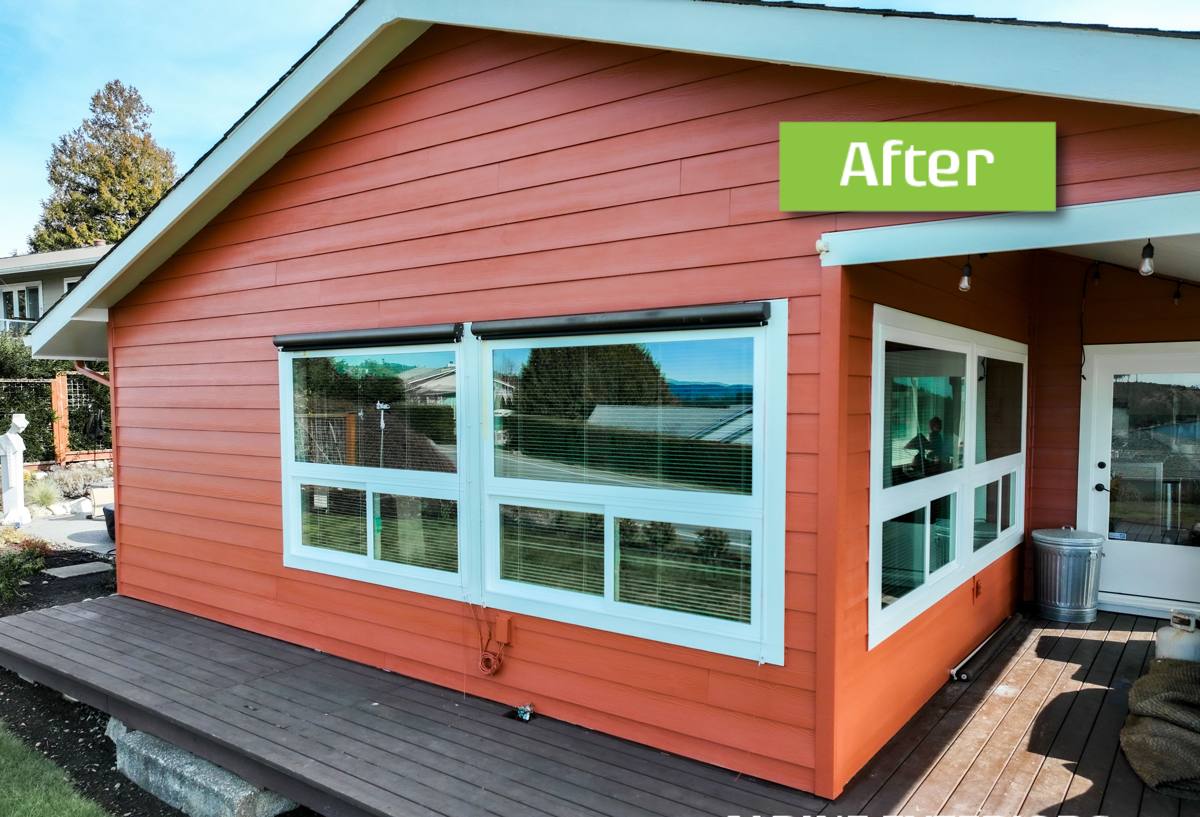
James Hardie's ColorPlus finish is baked on at the factory in multiple coats under controlled conditions, rather than sprayed or brushed on-site or at a lumber yard. That matters directly for Wiser Lake homes: a factory finish holds up more consistently against sustained moisture and UV exposure than field-applied paint, and it comes with its own finish warranty separate from the product warranty. You're not depending on perfect site conditions on install day to get a durable finish.
HZ5 Engineered for This Climate
James Hardie makes region-specific product lines, and the HZ5 line is engineered for the kind of cold, wet, moisture-heavy climate zones that include Western Washington. It's formulated and tested for freeze-thaw cycling and sustained moisture exposure — the exact conditions Wiser Lake sees for a good chunk of the year. Choosing a climate-matched product line isn't a minor spec detail; it's the difference between a product engineered for your actual weather and one engineered for a different part of the country.
Siding Options Compared for Wiser Lake Conditions
| Factor | James Hardie Fiber Cement | Vinyl | Wood-Based (Cedar / LP) |
|---|---|---|---|
| Moisture response | Does not swell or rot; engineered for wet climates (HZ5) | Doesn't absorb water, but can warp or crack in cold, damp swings | Absorbs moisture through any coating gap; swells and can rot |
| Moss/algae resistance | Non-organic surface; resists sustained moisture growth better | Can host algae in shaded, damp spots | Organic material; more prone to moss and mildew when shaded |
| Finish durability | Factory-baked ColorPlus finish, separately warrantied | Color is molded in; fades unevenly, cannot be refinished easily | Depends entirely on paint/stain upkeep and reapplication schedule |
| Fire resistance | Non-combustible core material | Combustible; can melt or deform near heat sources | Combustible |
| Typical upkeep | Periodic washing and caulk inspection | Low upkeep but limited repair options if damaged | Regular repainting/staining and moisture monitoring |
This isn't about any one product being universally "bad." It's about which material is built for this specific set of conditions — shade, standing moisture, salt-tinged air, and a long wet season — and holding up on that basis before we put it on a home.
What a Correct Installation Actually Involves
Fiber cement performs the way it's designed to only when it's installed correctly. A rushed or generic install can undercut even the best siding material, especially in a moisture-heavy environment like Wiser Lake. There are a handful of details that make the real difference between a job that lasts decades and one that causes problems in a few years.
Drainage Plane and Rain Screen
Correct installation starts behind the siding, not at the surface. A proper water-resistive barrier and drainage gap let any moisture that does get behind the siding find its way back out instead of sitting against the wall sheathing. In a climate that sees this much sustained rain, that drainage detail is not optional — it's the difference between water passing through harmlessly and water becoming a hidden problem behind the wall.
Fastening, Clearances, and Sealant
James Hardie publishes specific fastener patterns, minimum clearances from grade, roof lines, and decks, and joint treatment requirements. Skipping these — nailing too close to panel edges, leaving cut ends unsealed, running siding too close to the ground where splash-back hits it constantly — is how installation errors turn into warranty-voiding problems down the road, regardless of how good the material itself is.
- Cut ends sealed before installation, not after
- Manufacturer-specified clearance maintained from grade, roofing, and decking
- Correct fastener type and placement per Hardie's published fastening schedule
- Drainage plane and weather-resistive barrier installed behind the siding, not skipped
- Joints and penetrations sealed with a compatible, durable sealant
- Flashing installed at windows, doors, and any horizontal trim intersections
Any contractor can hang siding. Getting these details right consistently, especially on a home exposed to Wiser Lake's conditions, is what separates a job that needs attention again in five years from one that doesn't.
How Our Process Works on Wiser Lake Homes
We start with a walk-around assessment of the specific exposure your home has — which walls get shade, where moisture tends to collect, what condition the existing siding and any underlying sheathing are in. That assessment shapes the plan before we ever talk about color or trim style. From there, we remove the old siding, inspect and repair the sheathing and drainage plane underneath (this is often where hidden problems from the old siding show up), and install the James Hardie system to manufacturer spec, including trim, flashing, and caulking. We clean up thoroughly and walk the finished job with you before we consider it done.
Every home near the lake is a little different depending on how much shade it gets and how close it sits to the water, so we adjust product line and detailing recommendations accordingly rather than applying a one-size-fits-all spec.
Living With a Long Moss Season
Even with the right siding, a little upkeep goes a long way in this environment. Keeping gutters clear so water isn't overflowing directly onto siding below, trimming back branches that keep specific wall sections in constant shade, and doing a periodic gentle wash on north-facing walls where moss is most likely to establish will keep James Hardie siding looking and performing the way it's meant to for the long haul. Because the ColorPlus finish is factory-cured, a simple rinse handles most seasonal grime without the repainting cycle wood siding demands.
Why Hiring a Crew That Already Works This Area Matters
Manufacturer specs are written for a national range of conditions. Knowing how to apply them specifically to a shaded, lake-adjacent lot in Whatcom County — where to add extra attention to drainage, which walls need closer moss monitoring, how local wind and rain patterns affect fastening and flashing choices — comes from doing this work on homes in this exact area, not from a spec sheet alone. That local pattern recognition is part of what you're hiring when you choose a contractor who already works Wiser Lake and greater Lynden regularly, not just whoever happens to answer the phone first.
If you're weighing a siding replacement or repair on a Wiser Lake home, we're happy to take a look and walk you through what your specific home needs. Reach out for a free, no-pressure estimate using the form below.