 Lynden Siding
 Why Wiser Lake Puts Extra Demands on a Shingle Roof
Wiser Lake sits in a pocket of Whatcom County where moisture doesn't clear out the way it does on an open, sun-exposed lot closer to town. The lake itself keeps humidity higher at ground level, mature trees around lakefront and near-lake properties hold shade on parts of the roof for most of the day, and moist marine air moving in from the Salish Sea adds to the load. Add driving rain off Pacific storm systems each fall and winter, and you get a roof that dries out slower than a comparable roof a few miles inland on open ground. That combination is exactly what shortens the life of an asphalt shingle roof when it isn't installed and maintained with the local conditions in mind.
None of this means asphalt shingles are a poor choice for a Wiser Lake home. They remain one of the most cost-effective, widely available, and repairable roofing materials for this climate. It means the details of the installation matter more here than they would in a drier region, and cutting corners on underlayment, ventilation, or shingle selection shows up faster in moss growth, granule loss, and premature aging than it would elsewhere in the county.
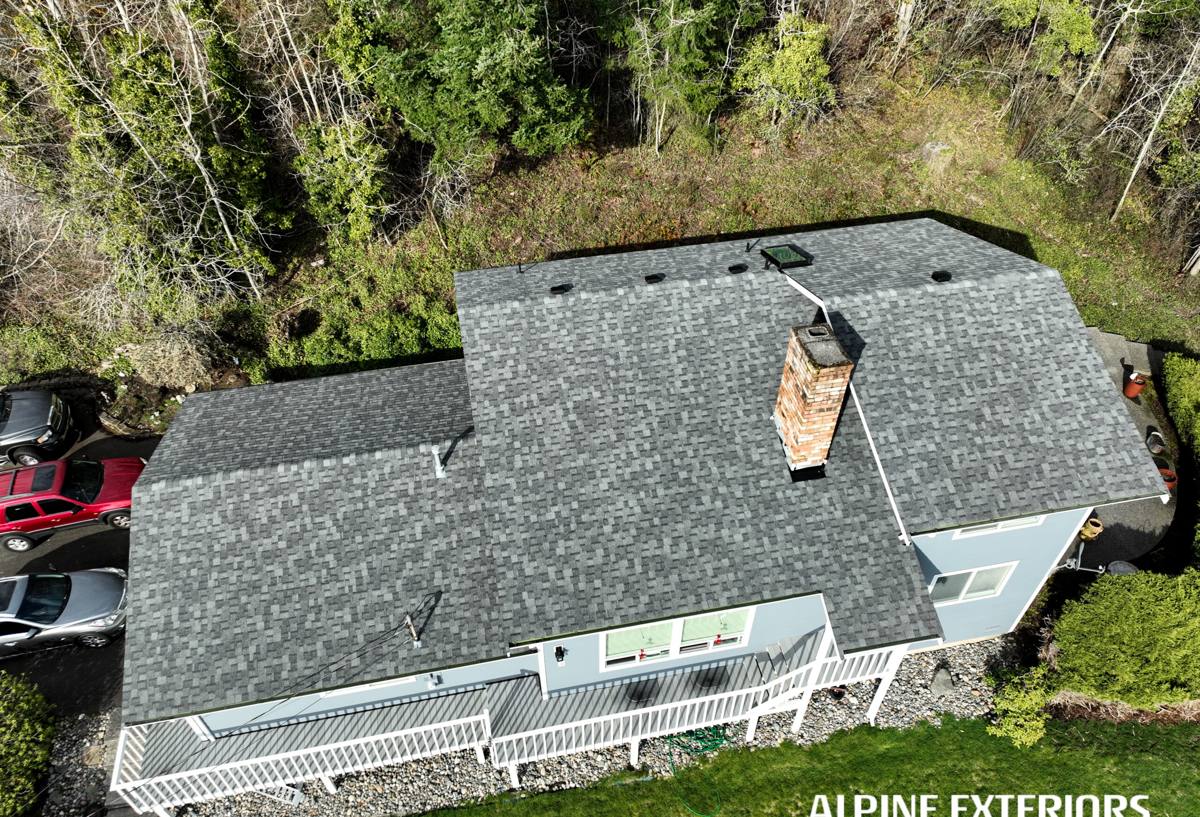
What a Correct Installation Looks Like in This Climate
A properly done asphalt shingle roof on a shaded, moisture-heavy property near Wiser Lake goes well beyond nailing shingles to a deck. A handful of details either extend or shorten the roof's working life by years.
Underlayment and Water Barriers
Synthetic underlayment across the full roof, with self-adhering ice-and-water membrane at eaves, valleys, and around penetrations, gives the deck a second line of defense when wind-driven rain gets under the shingle tabs — which it will, repeatedly, over a Whatcom County winter. That's not an upsell; it's the difference between a leak staying contained above the underlayment and a leak reaching the roof deck and framing underneath.
Ventilation Matters More Near Shade and Water
A roof that stays damp longer also needs to breathe better. Balanced intake at the soffits and exhaust at the ridge keeps air moving under the deck, which helps shingles dry out between rain events and reduces the trapped moisture that feeds moss and mildew growth. On heavily shaded lake-area roofs, we check existing ventilation as a standard part of any shingle project rather than assuming what's already there is adequate.
Shingle Selection for Moss and Algae Resistance
Standard asphalt shingles grow moss and streak with algae faster under tree cover and lake-area humidity than they would on an open, sun-exposed roof plane. Algae-resistant shingles, which use metal-infused granules to slow that growth, are worth the modest upgrade cost on most Wiser Lake homes — especially on north-facing slopes and sections shaded by trees for much of the day.
Warning Signs Worth Acting On
Because moisture and shade accelerate wear here, a Wiser Lake roof can go from "keep an eye on it" to "needs a repair" faster than homeowners expect. Watch for:
- Moss patches, especially along the shaded side of the roof or where limbs overhang
- Dark streaking or discoloration that doesn't wash off with rain
- Granules collecting in gutters or piling up at downspout outlets
- Shingle edges that are curling, cupping, or lifting
- Soft or spongy spots underfoot, which can mean deck damage below
- Water stains on interior ceilings or in the attic after a hard rain
- Daylight visible through the roof deck from inside the attic
Any one of these on its own may just mean a repair. Several together usually mean it's time for a full inspection before a small problem turns into a deck replacement.
Our Asphalt Shingle Roofing Process
We run the same disciplined process on every shingle roof, adjusted for the specific shading, pitch, and access conditions of the property.
- Inspection and estimate. We walk the roof, check the attic for ventilation and moisture signs, and give you a written scope before any work starts.
- Tear-off. Old shingles and underlayment come off down to the deck so we can see the actual condition of the wood, not guess at it.
- Deck repair. Any soft, rotted, or delaminated sheathing gets replaced before a single new shingle goes down. Roofing over bad decking just hides the problem.
- Underlayment and water barriers. Ice-and-water membrane at vulnerable areas, synthetic underlayment across the field.
- Ventilation check and correction. We confirm intake and exhaust are balanced, and add or adjust venting where the existing system falls short.
- Shingle installation. Installed to manufacturer nailing patterns and exposure specs — not shortcuts that void warranty coverage.
- Flashing and detail work. Valleys, chimneys, skylights, and wall transitions are where most leaks actually originate, so these get particular attention.
- Cleanup and walkthrough. Magnetic sweep for nails, hauling of old material, and a final walkthrough so you know exactly what was done.
Choosing the Right Shingle Tier for a Lake Property
Not every Wiser Lake home needs the top-tier product, but the cheapest option often costs more over time once you factor in moss treatment, earlier repairs, and a shorter service life in a damp, shaded setting. Here's how the common tiers generally compare for this specific climate:
| Shingle Tier | Algae/Moss Resistance | Wind Rating | Typical Performance Here | Best Fit |
|---|---|---|---|---|
| 3-Tab (economy) | Low unless upgraded | Lower | Wears faster under heavy shade | Budget-driven projects, minimal tree cover |
| Architectural / Laminate | Good with algae-resistant option | Higher | Solid, reliable with proper ventilation | Most Wiser Lake homes |
| Premium / Designer | Best available in asphalt | Highest | Longest-performing asphalt option | Heavily shaded lots, longer hold periods |
For most properties around Wiser Lake, a mid-tier architectural shingle with an algae-resistant option strikes the right balance between upfront cost and how well it stands up to the moss and moisture this area produces.
What Drives Cost on a Wiser Lake Roofing Project
Every estimate is specific to the house, but the same handful of factors move the price up or down on most projects in this area.
| Factor | Why It Matters |
|---|---|
| Roof pitch and access | Steeper roofs and lots with limited staging room near trees or the shoreline take more time and safety equipment |
| Number of existing layers | Tear-off of multiple old layers adds labor and disposal cost compared to a single-layer roof |
| Deck condition | Rotted or delaminated sheathing found during tear-off adds material and labor to replace correctly |
| Shingle tier selected | Economy, architectural, and premium products carry different material costs and warranty terms |
| Ventilation upgrades | Adding or correcting intake/exhaust venting is a smaller add-on when bundled into a full reroof |
| Roof complexity | Valleys, dormers, chimneys, and skylights each add flashing detail and labor time |
We walk through these factors on-site so the estimate reflects your actual roof and its actual condition, not a generic square-footage number.
Timing a Reroof Around the Wet Season
When a reroof happens matters almost as much as how it's done. Shingle adhesive strips need a stretch of warm, dry weather to properly seal, and underlayment installed in a downpour doesn't perform the way it does when it goes down on a dry deck. Late spring through early fall generally gives the most reliable working windows in this part of Whatcom County, though a well-run crew can still complete quality work outside that stretch by working around forecasted breaks in the weather rather than pushing through rain.
If your roof is already showing moss or granule loss heading into the wet months, it's worth getting on a schedule before the weather closes the good install windows down — waiting until an active leak forces the issue usually means less flexibility on timing and, occasionally, interior repair on top of the roofing work.
Keeping a Wiser Lake Roof Healthy Between Replacements
A well-installed shingle roof still needs upkeep in this environment. A few habits go a long way:
- Clear gutters and valleys of needles and debris at least twice a year, more often under heavy tree cover
- Have moss treated or removed before it spreads under shingle tabs and holds moisture against the deck
- Trim back overhanging limbs to reduce shade, falling debris, and physical wear on the shingle surface
- Schedule a roof check after any major windstorm, not just when a leak already shows up inside
Catching small issues on this kind of schedule is far cheaper than waiting for a ceiling stain to tell you something's wrong.
Why It Matters That We Already Work in the Wiser Lake Area
A crew that has worked lakeside and near-lake properties around Lynden knows what to expect before the ladders go up: where shade holds moisture longest on a given roof orientation, how tree-heavy lots change staging and cleanup, and how Whatcom County's wet season affects install scheduling and drying time for underlayment and adhesive seal-down. That familiarity shows up as fewer surprises mid-project and a roof system specified for the conditions it will actually face, not a generic install pulled from a drier climate zone.
It also means straightforward communication about what your roof actually needs versus what it doesn't. Not every Wiser Lake home needs the premium shingle tier, and not every roof needs full ventilation work — we tell you which is which, and why, in plain terms, before you commit to anything.
If your roof is showing moss, granule loss, or you'd simply like an honest read on how many years it has left, we're glad to take a look. Reach out for a free, no-pressure estimate using the form below.