 Lynden Siding
 Siding Installation Built for the Acme Area's Climate
Homes in the Acme area, part of our greater Lynden and Whatcom County service territory, take a steady beating from weather that doesn't let up for long. Salt-laden air moving in off the Salish Sea, driving rain that comes sideways during winter storms, and a moss season that can stretch from October well into spring all put real stress on exterior siding. A siding installation done right here isn't a cosmetic upgrade — it's a functional system that has to manage water, resist corrosion, and shrug off the fungal growth that thrives in our damp, mild winters.
We install siding specifically for this climate, not a generic national spec. That means paying close attention to water management details that matter more here than they would in a dry inland region, and choosing a base material that won't absorb moisture, swell, or feed mold and mildew growth over time.
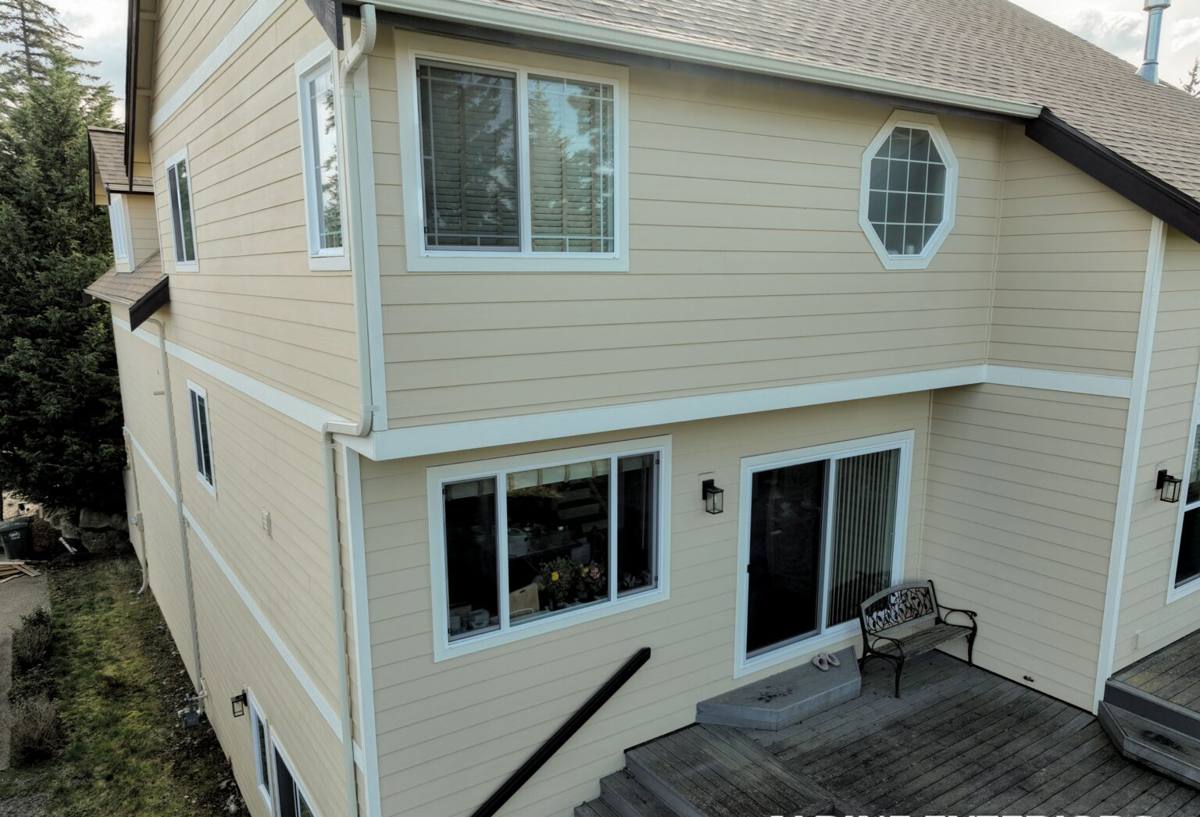
What Local Homes Actually Need From Their Siding
Moisture Management First
Whatcom County's marine climate means siding spends a large part of the year damp. Rain doesn't just fall straight down — wind-driven rain gets pushed up under laps and into gaps that would stay dry in calmer climates. Correct installation depends on a continuous water-resistive barrier behind the siding, properly lapped and taped, with flashing that directs water back out rather than trapping it against the wall sheathing.
Standing Up to Salt Air
Proximity to the Salish Sea means airborne salt finds its way onto exterior surfaces, even well inland. Salt air accelerates corrosion on fasteners, trim flashing, and any hardware that isn't rated for it. It also breaks down cheaper paint films faster, which is part of why finish quality matters as much as the base material.
Living With Moss
Shaded, north-facing walls and anything close to trees or fences stay damp longer, and that's exactly where moss and algae take hold. Siding that absorbs moisture gives moss something to grow on and hold onto; siding that stays dimensionally stable and doesn't wick water gives it a lot less to work with.
Why We Install Only James Hardie Fiber Cement
We made a deliberate decision to install James Hardie fiber cement siding exclusively — not vinyl, not LP SmartSide, not cedar or primed spruce, and not composite cement products from other manufacturers. That's not a brand preference; it's a response to what actually holds up in this climate over decades, not just the first few years.
Fiber cement is non-combustible, which matters for wildfire-adjacent rural properties as much as it does for standard fire code. It doesn't absorb water the way wood-based products can, so it isn't a food source for the rot and moss that a damp climate encourages. James Hardie's ColorPlus factory finish is baked on under controlled conditions, which gives it better fade and chip resistance than field-applied paint — an advantage that shows up specifically in salt-air, high-UV-cycling climates like ours. And Hardie's HZ5 product line is engineered for regions that see freeze-thaw cycling and sustained moisture exposure, which describes a typical Whatcom County winter.
We won't pretend other products don't have upsides — vinyl is inexpensive and low-maintenance in mild climates, and cedar has a look some homeowners genuinely prefer. But we've seen enough of what driving rain, salt air, and moss do to those materials locally that we don't put them on homes anymore. We'd rather install one system well than offer several and let a homeowner unknowingly pick the wrong one for this climate.
Our Siding Installation Process
- On-site assessment. We inspect existing siding, sheathing, and any trouble spots — especially around windows, deck ledgers, and grade-level areas where moisture problems usually start.
- Tear-off and sheathing check. Old siding comes off and we inspect the sheathing underneath for rot or soft spots before anything new goes up. Water damage found here gets repaired, not covered over.
- Water-resistive barrier installation. A continuous weather barrier goes on with correct shingle-lap sequencing, taped seams, and integrated flashing at every penetration and transition.
- Flashing and trim details. Windows, doors, roof-to-wall intersections, and butt joints get flashed to shed water outward, not into the wall assembly.
- Hardie siding installation. Panels or planks go up to manufacturer spec — correct fastener type and spacing, proper nailing zones, and clearances from grade, roofing, and decks that keep the bottom edge out of standing water and splash-back.
- Caulking and finish work. Only the joints that should be sealed get sealed; we don't caulk over places that need to drain or breathe.
- Final walkthrough. We review the finished work with the homeowner and point out anything worth knowing for long-term care.
What Drives the Cost of a Siding Installation
Every home is different, but the same handful of factors drive most of the cost variation we see on Acme-area projects. This isn't a quote — it's a guide to what to ask about when comparing bids.
| Cost Factor | What Drives It | Why It Matters Here |
|---|---|---|
| Tear-off scope | Layers of existing siding, hidden rot repair | Damp climates hide moisture damage behind old siding longer |
| Water barrier detailing | Amount of taping, flashing, transitions | Driving rain punishes shortcuts here faster than in dry climates |
| Siding profile | Lap width, panel vs. plank, trim style | Affects both labor time and finished look |
| Fastener and hardware grade | Corrosion-resistant fasteners and flashing metal | Salt air accelerates corrosion on standard-grade hardware |
| Color and finish | Factory ColorPlus finish vs. field-painted | Factory finish holds up better against UV and salt exposure |
| Home complexity | Stories, rooflines, dormers, wall penetrations | More transitions mean more flashing detail to get right |
Signs Your Current Siding Needs Replacing
Not every siding problem means a full replacement, but these are the signs we take seriously when we walk a property in the Acme area:
- Soft or spongy spots when you press on the siding, especially near the bottom courses
- Persistent moss or dark streaking that comes right back after cleaning
- Paint that's peeling or bubbling rather than just fading
- Visible gaps, warping, or buckling between boards or panels
- Rot or discoloration at corners, window trim, or anywhere siding meets a roofline
- Rising energy bills that suggest the wall assembly isn't sealing the way it should
- Siding that's original to a home built more than 20-25 years ago
If you're seeing more than one or two of these, it's worth having someone look at what's happening behind the siding, not just at the surface.
Why a Crew That Already Works the Acme Area Matters
Siding installation is a trade where local experience actually changes the outcome, not just the sales pitch. A crew that regularly works Whatcom County jobs already knows how aggressively rain gets driven under laps in an open exposure, how much clearance to leave at grade given how wet the ground stays, and which details tend to fail first on homes exposed to salt-carrying wind. That's knowledge you build by doing the work here repeatedly, not by following a national installation manual to the letter.
Local crews are also easier to hold accountable. If a flashing detail was missed or a seam wasn't sealed correctly, a contractor based in the region is the one who comes back to fix it — not a crew that finished the job and moved on to a different state. For a system that's supposed to last decades, that kind of accountability is worth as much as the material itself.
Maintenance and Warranty After Installation
One of the practical advantages of James Hardie fiber cement is how little ongoing maintenance it asks for compared to wood-based siding. It doesn't need repainting on the schedule that field-finished wood does, and it isn't a food source for rot the way untreated wood products can be. That said, no siding is maintenance-free in this climate — an occasional gentle rinse to knock back algae and moss buildup, and a quick visual check of caulking and trim after major storms, goes a long way toward protecting the investment.
James Hardie backs its products with a strong transferable warranty, which matters both for your own peace of mind and for resale value down the line. We stand behind our installation work as well, because a warranty on the material doesn't mean much if the installation underneath it wasn't done to spec.
Ready to Talk About Your Siding?
If you're weighing a siding replacement for a home in the Acme area or anywhere in the greater Lynden area, we're happy to take a look and walk you through what we see — no pressure, no hard sell. Fill out the form below for a free estimate and straight answers about what your home actually needs.