 Lynden Siding
 Ferndale Roofs Fight a Different Kind of Weather
Ferndale sits close enough to Bellingham Bay and Puget Sound that salt-laden air is a constant, low-grade stress on every exterior surface in town, roofs included. Add in the driving rain that rolls through Whatcom County off the Pacific through the fall and winter, plus a moss season that can run eight months or more under the shade and moisture this part of Washington gets, and you have a roof environment that's genuinely harder on materials than what you'd find twenty miles inland. A roof that would hold up fine in a dry, low-wind climate can start showing problems in Ferndale within a few seasons if it wasn't installed with these specific conditions in mind.
That's the frame we bring to every new roof installation in Ferndale: not "install a roof," but "install a roof that's built to take what this specific stretch of Whatcom County throws at it, year after year."
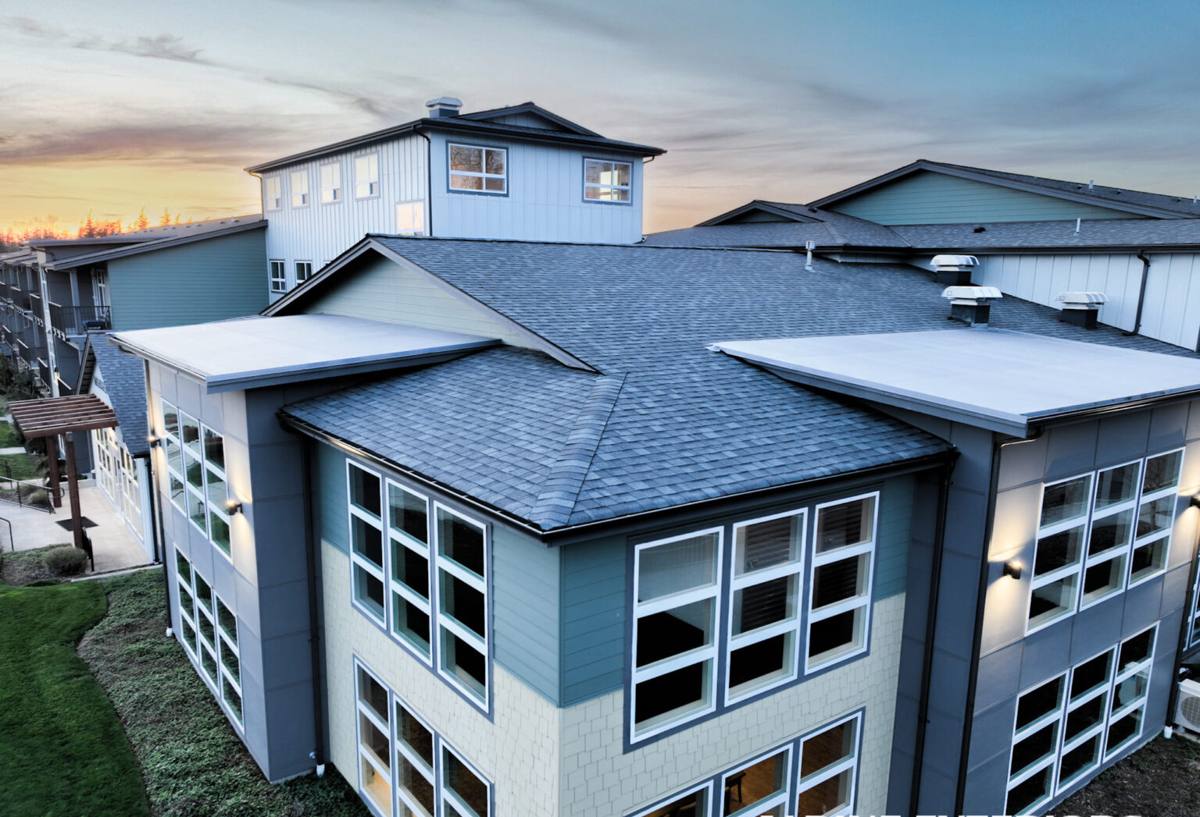
What Salt Air, Rain, and Moss Actually Do to a Roof
Each of these stressors attacks a roof differently, and a correct installation accounts for all three at once, not just one.
Salt Air
Airborne salt accelerates corrosion on anything metal — fasteners, flashing, vent stacks, gutter hardware. Cheap or mismatched metal components corrode faster near the coast than they would further inland, and a corroded fastener or flashing seam is one of the most common places a roof starts leaking. This is why fastener and flashing choice matters more in Ferndale than it would in a landlocked town.
Driving Rain
Wind-driven rain doesn't just fall straight down onto a roof — it gets pushed sideways and upward under shingle edges, around vent penetrations, and into any gap in the flashing detail. A roof that's watertight in calm rain can still leak in a Whatcom County windstorm if the underlayment and flashing weren't installed with wind-driven rain specifically in mind.
Moss
Moss holds moisture against the roof surface far longer than the surface would otherwise stay wet, which softens shingles, degrades granule adhesion, and works its way under shingle tabs and around penetrations over time. On shaded, north-facing slopes especially, moss growth can outrun a homeowner's ability to keep it cleared by hand.
What a Correct New Roof Installation Actually Involves
A new roof is more than laying shingles over the old ones or even over a bare deck. Done right, it's a system, and skipping any layer of that system is where problems start.
Starting From the Deck Up
Full tear-off lets us actually see the roof deck, which is the only way to know if there's rot, soft spots, or old damage hiding under the existing roofing. Any compromised sheathing gets replaced before anything new goes down — installing new roofing over a weak deck just guarantees a shorter lifespan and voided warranty coverage.
The Layers That Do the Real Work
- Ice-and-water shield at eaves, valleys, and around every penetration — the areas most exposed to driving rain and moss-related standing moisture
- Synthetic underlayment across the full field, which holds up to wind and moisture exposure far better than old-style felt paper
- Corrosion-resistant flashing and fasteners at every wall intersection, chimney, and vent, sized and installed for wind-driven rain, not just vertical rainfall
- Balanced intake and exhaust ventilation so the attic isn't trapping the moisture that feeds moss and rot from underneath
- Field material installed to the manufacturer's nailing pattern and exposure spec, not "close enough"
Every one of these steps is invisible once the roof is finished, which is exactly why it matters who's doing the work and how carefully they're doing it.
Choosing a Roofing Material for This Climate
There's no single "best" roofing material for every home — it depends on the roof's slope, shade exposure, and the homeowner's priorities on cost, maintenance, and lifespan. Here's how the common options actually compare for a coastal Whatcom County property.
| Material | Moss Resistance | Salt Air Durability | Maintenance | Typical Lifespan |
|---|---|---|---|---|
| Standard asphalt composition shingle | Moderate — needs periodic cleaning on shaded slopes | Good, with corrosion-resistant fasteners and flashing | Low to moderate | 20–30 years |
| Algae-resistant (AR) composition shingle | Better — copper-infused granules slow moss and algae growth | Good, same flashing requirements apply | Low | 25–30 years |
| Standing-seam metal | Excellent — moss struggles to hold on a smooth, steep metal surface | Requires marine-grade coatings and fasteners near the coast | Low | 40–50+ years |
| Cedar shake | Poor without diligent upkeep — a natural moss magnet in this climate | Moderate; hardware corrosion is a real concern | High | 20–25 years with upkeep |
For most Ferndale homes, an algae-resistant composition shingle strikes the best balance of upfront cost and moss resistance. Standing-seam metal costs more up front but earns that cost back in decades of reduced maintenance, particularly on steep or heavily shaded roofs where moss is a constant fight. We don't push cedar shake as a default choice in this climate — not because it's a bad-looking product, but because the upkeep it demands to stay moss-free and watertight here is more than most homeowners want to sign up for.
Ventilation: The Step That Gets Overlooked Most
A roof can have great shingles and flashing and still fail early if the attic underneath it can't breathe. In a climate as wet as Whatcom County's, trapped attic moisture condenses on the underside of the roof deck, which rots sheathing from below and feeds moss growth from the inside out — the opposite direction homeowners usually expect a roof problem to come from. Correct ventilation balances intake (usually soffit vents) with exhaust (ridge or roof vents) so air actually moves through the attic space instead of just sitting there. This is one of the most common gaps we find on older Ferndale roofs during a tear-off, and it's cheap to fix while the roof is already open — expensive to ignore.
Our Process for a Ferndale Re-Roof
- On-site assessment. We walk the roof, check the attic for ventilation and moisture issues, and look at slope, shade exposure, and drainage patterns specific to your property.
- Written scope and material recommendation. You get a clear explanation of what material fits your roof and why, along with an honest cost range — no pressure toward the most expensive option.
- Permitting. We handle the paperwork required for the job in Ferndale and Whatcom County so you don't have to chase it down yourself.
- Weather-aware scheduling. We plan tear-off and dry-in around the forecast, not just the calendar, because an open roof deck and a Pacific storm system don't mix.
- Full tear-off and deck inspection. Old roofing comes off completely so we can verify deck condition before anything new goes down.
- System installation. Underlayment, flashing, ventilation, and field material go in as a complete system, not a stack of individual products.
- Final walkthrough. We review the finished roof with you, cover basic maintenance expectations, and answer any questions before we consider the job done.
Why It Matters That This Crew Already Works Ferndale
A roofing crew that only occasionally works this stretch of Whatcom County has to relearn the same lessons every job: how far driving rain actually pushes under an eave in a coastal windstorm, how fast moss regrows on a shaded north slope here versus a drier region, which flashing and fastener grades hold up against years of salt air instead of just looking fine on install day. A crew that already works Ferndale and the surrounding Lynden area has already learned those lessons on other roofs, which means fewer surprises and fewer callbacks on yours. Local permitting familiarity and a standing relationship with area material suppliers also mean fewer delays getting your project scheduled and finished.
What to Expect During and After Installation
A new roof installation is disruptive for a few days — expect noise, a dumpster or debris trailer in the driveway, and crew activity from morning to late afternoon. Here's what a well-run job should look like from the homeowner's side:
- A clear start and estimated completion date, communicated before work begins
- Protection laid down for landscaping, walkways, and anything below the work area
- Daily cleanup of debris and stray fasteners, not just a cleanup at the very end
- A magnetic nail sweep of the property before the crew leaves for the day and at final completion
- A final walkthrough where the crew points out anything you should know about your new roof
After installation, plan on an annual check of gutters and valleys for debris buildup, and keep an eye on shaded slopes for early moss regrowth — catching it early with a gentle treatment is far easier than dealing with an established moss mat two or three years down the road.
Getting a Straight Answer on Cost
Roofing cost depends on roof size, slope, current layer count, deck condition, and material choice, so any number given without seeing the actual roof is a guess. What we can say honestly: a standard composition shingle re-roof typically costs less up front than standing-seam metal, but metal's much longer lifespan and lower maintenance burden can make it the better value over 30-plus years, especially on a moss-prone, shaded roof. The only way to get a real number for your home is a look at the actual roof and attic, not a phone estimate.
If you're planning a new roof in Ferndale, we're happy to take a look and give you a straight, no-pressure estimate — just fill out the form below and we'll get in touch.