 Lynden Siding
 Roof Replacement in Maple Falls: A Different Set of Conditions
Maple Falls sits up in the Whatcom County foothills, out past the open farmland around Lynden and closer to the tree line heading toward Mount Baker. That change in setting matters more than most homeowners expect when it comes to roofing. Lots up here tend to be more heavily wooded, sit at a higher elevation, and stay shaded and damp longer after a storm passes than a roof out in open country. Add in the driving rain and long moss season that shape roofing across this whole part of Whatcom County, and you get a roof that ages differently than one closer to town.
Lynden Siding Company works Maple Falls regularly, not as an occasional trip out of our service area. That matters for a job like a full roof replacement, where getting the site logistics, timing, and material choice right the first time saves the homeowner real money over the life of the roof. This page covers what a Maple Falls roof actually needs, what a correct replacement involves, and how our process handles the parts of the job this kind of property tends to complicate.
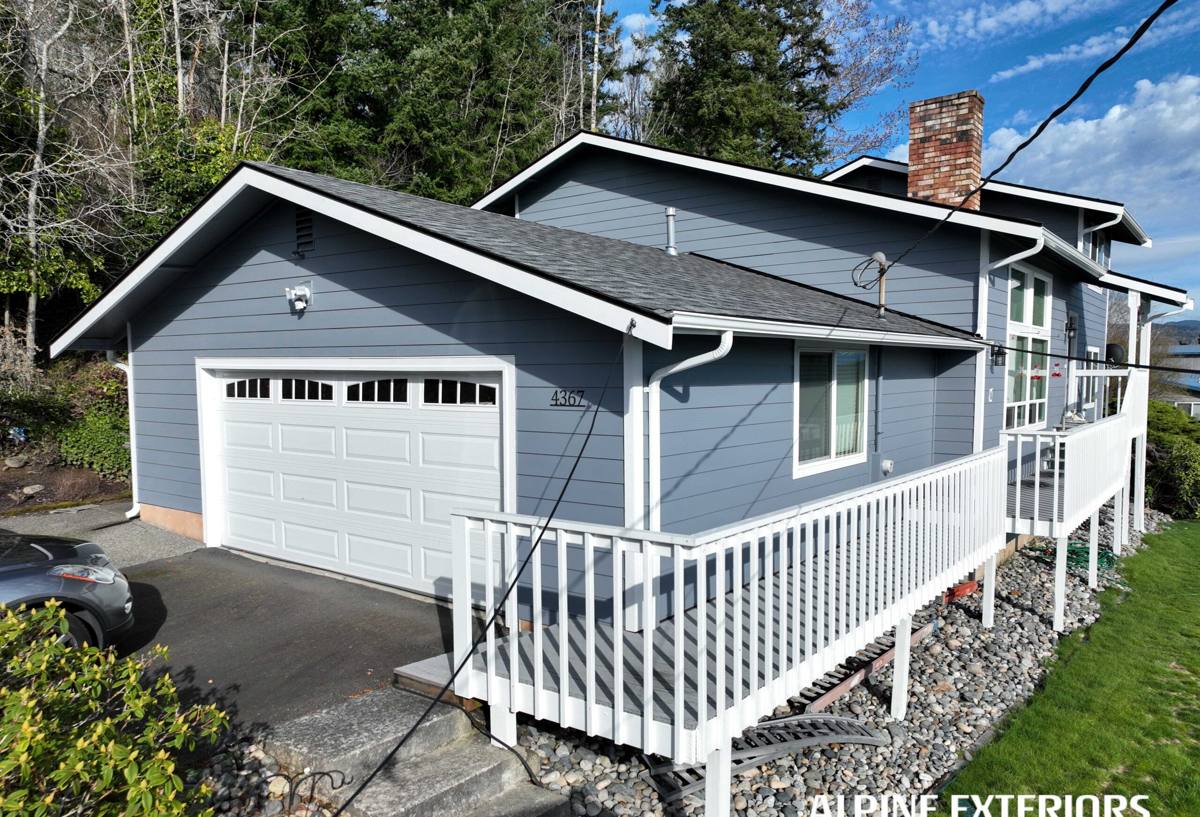
What This Climate Does to a Maple Falls Roof
Heavy Tree Cover and a Long Moss Season
A roof under a stand of conifers stays wet longer than one out in the open, simple as that. Shade slows drying time after every rain, needles and cone debris collect in valleys and behind chimneys where they hold moisture against the roofing material, and moss gets a head start on north-facing and shaded slopes that can run most of the year. Left alone, moss doesn't just look bad — it works under shingle edges, holds water against the deck, and can lift or loosen roofing over time.
Driving Rain, Elevation, and Wind
Rain moving through this part of Whatcom County — from the coastline inland toward the foothills — rarely falls straight down. Wind pushes it sideways into valleys, around penetrations, and up under lapped shingles or loose flashing. The higher elevation around Maple Falls also means more precipitation overall and, in a harder winter, occasional wet snow load that a roof built for a milder valley climate isn't necessarily ready for. None of this is exotic weather, but it's a heavier and more directional moisture load than an annual rainfall number suggests, and it's exactly where a marginal roof starts to leak first.
Signs a Maple Falls Roof Needs Full Replacement, Not Just a Repair
Not every problem roof needs to come off. An isolated leak, a section of storm-damaged shingles, or a flashing failure around one penetration can often be repaired and buy real time. But repeated repairs on an aging roof under heavy shade usually means you're fighting a losing battle against moisture the roof has already lost. These are the signs worth taking seriously:
- Granule loss showing bare asphalt in valleys or on sun- and wind-exposed slopes
- Moss mats thick enough to lift shingle edges, not just surface staining that wipes off
- Soft or spongy decking underfoot when a roofer walks the surface
- Water stains or daylight visible in the attic near valleys, chimneys, or skylights
- Shingles that are curling, cracking, or going missing after wind events
- A roof at or past its material's rated lifespan, combined with any of the above
If your roof is showing two or more of these, a full replacement is usually the more honest recommendation — and the more cost-effective one over time compared to chasing repairs on a roof that's already lost the moisture battle.
What a Correct Roof Replacement Actually Involves
Tear-Off and Deck Inspection
We tear off down to bare decking rather than laying a new layer over the old one. That's the only way to actually see what's underneath — and on a shaded, moisture-heavy lot, it's common to find soft or rotted sheathing in valleys or around old flashing that needs to be replaced before any new material goes down. Covering a compromised deck just hides the problem for a few more years.
Underlayment and Ice-and-Water Protection
Synthetic underlayment goes down across the whole field, with self-adhered ice-and-water membrane at eaves, valleys, and around every penetration. On a property that sees wind-driven rain and occasional wet snow at elevation, this layer is doing real work — it's the backup that keeps the deck dry if wind ever forces water past the roofing material itself.
Ventilation
Balanced intake and exhaust ventilation matters more under heavy tree cover than most homeowners realize. Trapped attic moisture accelerates deck rot from underneath and can encourage moss and mildew growth that has nothing to do with the roofing surface itself. We size ridge vent and soffit intake to work together, not just add vents for the sake of it.
Flashing and Valley Detail
Step flashing at walls and chimneys, correctly formed valleys, and kick-out flashing at roof-to-wall transitions are where most roof leaks actually start — not in the field of the roof. This is the detail work that separates a roof that holds up for decades from one that starts leaking within a few wet seasons, and it's where corners get cut most often on a rushed job.
Choosing a Roofing Material for This Property
There's no single right material for every home — it depends on how shaded the lot is, the roof's pitch, and how long you plan to own the house. Here's how the common options actually perform under heavy shade and moisture:
| Material | Moss & Moisture Behavior | Typical Lifespan | Maintenance |
|---|---|---|---|
| Architectural asphalt shingle | Algae-resistant (AR) shingles cut down staining, but shade still gives moss an opening if ventilation and gutters aren't kept up | 25-30 years, manufacturer-rated (less under constant shade and debris) | Periodic moss removal and gutter clearing |
| Standing seam metal | Smooth surface sheds water and needle debris fast and gives moss less to anchor to | 40-50+ years | Minimal; occasional fastener and sealant check |
| Cedar shake | Absorbs and holds moisture more than the other two options; highest moss and rot risk on a consistently shaded lot without diligent upkeep | Highly dependent on maintenance and shade exposure | Regular treatment and inspection required |
We'll walk you through these trade-offs honestly rather than steering you toward whatever's easiest to install. On a heavily shaded Maple Falls lot specifically, we're usually recommending an AR-rated architectural shingle or standing seam metal over cedar shake, simply because of how much upkeep cedar needs to perform well in constant shade — that's a maintenance-burden call, not a knock on cedar as a product.
Our Roof Replacement Process, Start to Finish
- On-site inspection and an honest assessment of whether the roof needs repair or full replacement
- Written estimate walking through material options and what each one means for this specific property
- Permitting through Whatcom County and material ordering once the scope is agreed on
- Delivery and site protection, with staging planned around driveway access and landscaping
- Tear-off to bare deck, with old material hauled off the site
- Deck repair where needed, before anything new goes down
- Installation of underlayment, flashing, ventilation, and the new roofing material
- Cleanup, including a magnetic nail sweep and full debris haul-off
- Final walkthrough and warranty paperwork
Why Local Maple Falls Experience Matters
Foothill properties around Maple Falls often come with narrower or gravel driveways, longer setbacks from the road, well and septic systems that need to be worked around, and mature trees that limit where a dumpster or material can realistically sit. A crew that already works this area plans staging and delivery correctly the first time instead of improvising on site. We also know the Whatcom County permitting process for this kind of work and pay attention to weather windows — getting a roof torn off and dried in before the next system moves through matters more out here than it does in a milder stretch of the county.
Keeping a New Roof Ahead of Moss Season
Even a correctly installed roof still needs upkeep in this environment. Keep gutters and valleys clear of needles and leaves, especially from fall through winter when debris builds up fastest. Trim back overhanging limbs where you reasonably can to cut down on shade and debris load. Plan on a soft wash or manual moss removal every year or two depending on how shaded the roof is — never an aggressive pressure wash, which strips granules and shortens the roof's life. North-facing slopes are almost always the first place moss comes back, so that's where to check first.
What Affects the Cost of a Maple Falls Roof Replacement
Most full roof replacements land somewhere in the five-figure range, and where a given job falls in that range comes down to a handful of factors rather than a flat per-square rate:
- Roof size and pitch — steeper roofs take longer and require more safety setup
- Number of existing layers that need to be removed
- Condition of the decking underneath, and how much needs to be replaced
- Material choice — asphalt shingle, metal, or another option
- Site accessibility, including driveway conditions and how close equipment can get to the house
- Any ventilation or flashing upgrades needed beyond a straight material swap
We give a written estimate that breaks these factors down for your specific roof rather than a vague ballpark, so you know exactly what you're paying for and why.
If your Maple Falls roof is showing its age or you just want an honest opinion on repair versus replacement, we're happy to walk it with you. Reach out below for a free, no-pressure estimate.