 Lynden Siding
 Windows Built for Laurel's Weather, Not Just Any Weather
Laurel sits close enough to the water and low enough in the Nooksack valley that its houses take a different kind of beating than homes twenty minutes inland. Salt-tinged air off the Strait works into aluminum hardware and steel fasteners. Wind-driven rain off the Pacific systems that roll through Whatcom County doesn't just fall on windows — it gets pushed sideways into every gap in the flashing. And the long gray stretch from October through April keeps everything damp long enough for moss and algae to take hold on sills, trim, and anything with a north-facing exposure. A window that would hold up fine in a drier climate can start failing here in half the time if it wasn't installed with this specific weather in mind.
This page is about one job, done right, in one place: replacing or installing windows on homes in and around Laurel. Not a general overview of every siding or roofing service we offer — just what your windows actually need to survive this corner of Whatcom County, what a correct installation looks like, and how we handle it.
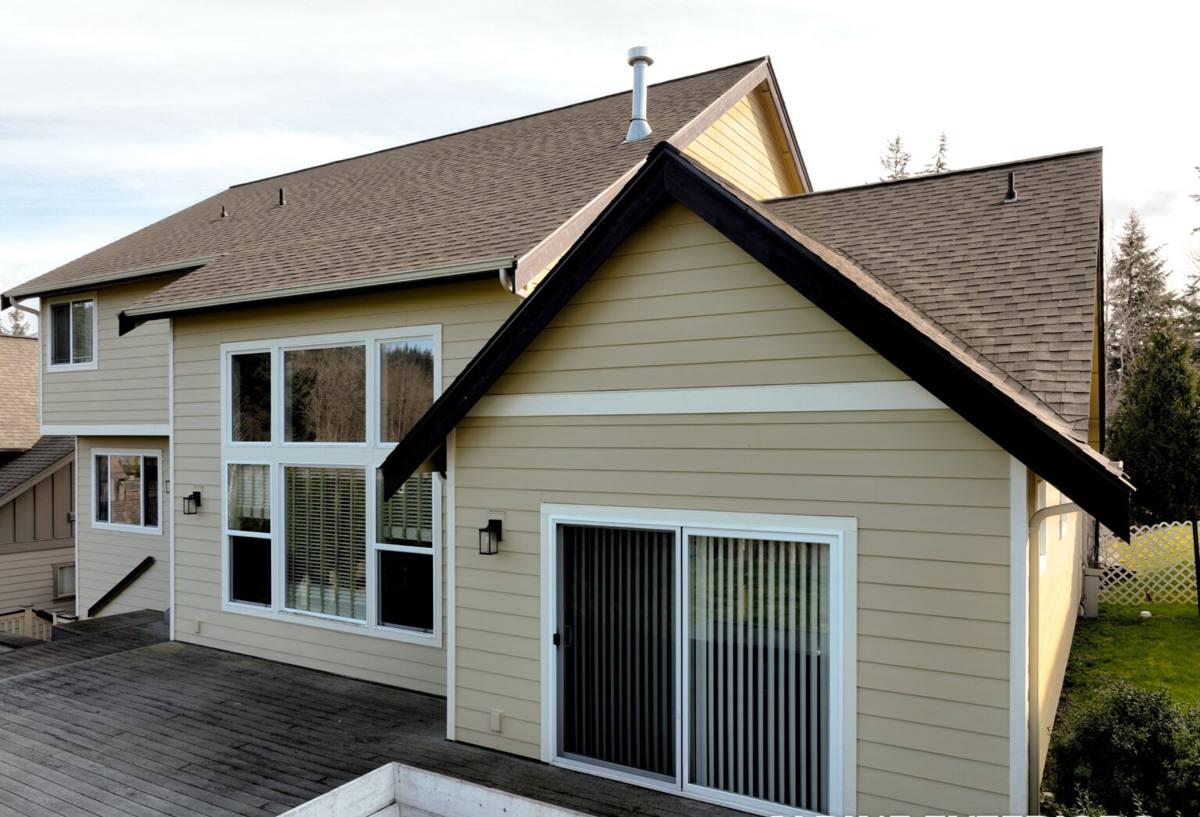
What This Climate Does to Windows Over Time
Wind-driven rain and water intrusion
Most window failures we see in this area aren't glass failures — they're water management failures. Rain pushed sideways by wind finds its way behind trim and siding through gaps that were never properly flashed, or through sealant that's dried out and cracked. Once water gets behind a window frame, it doesn't evaporate quickly in our climate. It sits, it soaks into sheathing, and it eventually shows up as soft trim, stained drywall, or a musty smell in the room.
Moss, algae, and constant dampness
Laurel's tree cover and the region's long wet season mean moss and algae aren't just a roof problem. They colonize window sills, the tops of trim boards, and anywhere water sits instead of draining. Left alone, that growth holds moisture against wood and paint far longer than open air would, accelerating rot at exactly the point where a window meets the wall.
Salt air and hardware corrosion
Homes closer to Bellingham Bay and the Strait deal with a slow, steady corrosion problem on window hardware — hinges, locks, and screws — that homeowners further inland rarely think about. Cheaper hardware finishes and unprotected steel fasteners break down faster here, which is one of the reasons hardware and fastener choice matters as much as the window unit itself.
Temperature swings and condensation
Whatcom County winters aren't extreme, but the combination of cool, damp air outside and heated air inside creates condensation on and around older, poorly sealed windows. Persistent condensation on glass or frames is often the first visible sign that a window's seal or insulation has already started to fail.
Signs a Laurel Home Needs Window Attention
- Fogging or moisture trapped between panes — the seal on the insulated glass unit has failed
- Visible daylight or a noticeable draft around the frame when it's windy
- Soft, discolored, or spongy trim and sill wood, especially on north- or west-facing walls
- Moss or dark algae staining building up on sills and trim year after year
- Windows that are difficult to open, close, or lock — often a sign the frame has shifted or swollen
- Rising heating bills without any other obvious cause
- Paint or caulk around the window that's cracked, peeling, or missing in sections
What a Correct Installation Actually Involves
It starts before the old window comes out
A rushed installer pulls the old window and drops in the new one. A correct installation starts with inspecting the rough opening once the old unit is out — checking the sheathing, the existing flashing, and the framing for any water damage or rot that needs to be addressed before a new window ever goes in. Installing a new window into a compromised opening just hides a problem instead of fixing it.
Flashing and drainage come first
In a climate with this much wind-driven rain, the flashing details around a window matter more than almost anything else. That means a sloped sill pan so any water that does get past the window has somewhere to drain, properly lapped house wrap or building paper, and flashing tape sequenced correctly at the sill, jambs, and head so water is always directed outward and down — never trapped behind the window.
Sealing and insulation
The gap between the window frame and the rough opening gets insulated — not stuffed tight, which can bow the frame, but filled evenly so there are no cold spots or air paths. Exterior sealant goes on with attention to which joints should be sealed and which need to stay open to let incidental moisture escape. Sealing every joint solid sounds thorough, but it can trap water inside the wall assembly instead of letting it drain.
Fasteners and hardware suited to the coast
Given the salt air in this area, we pay attention to fastener and hardware material, not just the window brand. Corrosion-resistant fasteners and quality hardware finishes cost a little more up front and save homeowners from replacing hinges and locks a few years down the line.
How We Handle a Laurel Window Project
- On-site assessment — we look at existing windows, trim condition, and any signs of water intrusion before quoting anything, so the estimate reflects what your home actually needs.
- Product selection — we walk through frame material, glass package, and hardware options suited to a wet, coastal-influenced climate, at a range of budgets.
- Careful removal — old units come out without unnecessary damage to surrounding siding or trim, and we inspect the opening once it's exposed.
- Repair before replace — any rot, soft sheathing, or damaged framing found during removal gets addressed before the new window goes in, with the homeowner informed first.
- Installation with full flashing sequence — sill pan, house wrap integration, flashing tape, and insulation, installed in the correct order for proper drainage.
- Finish and seal — trim, caulking, and exterior finish work completed to match the surrounding siding.
- Final walkthrough — every window opens, closes, locks, and seals the way it should before we call the job done.
Comparing Window Frame Materials for This Climate
| Material | How it handles moisture & salt air | Maintenance | Typical lifespan |
|---|---|---|---|
| Vinyl | Won't rot or corrode; good baseline moisture resistance | Low — occasional cleaning | 20-30 years |
| Fiberglass | Very stable in temperature swings and damp conditions; strong against warping | Low | 30-40+ years |
| Wood (unclad) | Attractive but vulnerable to rot and moss without diligent upkeep in a wet climate | High — regular painting/sealing | Varies widely with maintenance |
| Wood-clad (aluminum/vinyl exterior) | Wood interior warmth with a weather-resistant exterior shell; exterior handles rain well | Moderate | 25-35 years |
We don't install unclad wood exteriors on homes in this area as a matter of standard practice — not because wood is a bad material, but because keeping bare exterior wood ahead of Whatcom County's moss season and rain load takes a maintenance commitment most homeowners don't want to sign up for. Wood-clad and fiberglass options give a similar look with far less upkeep.
What Affects the Cost of a Window Project
| Factor | Why it matters |
|---|---|
| Number and size of windows | Larger openings and full-house projects have different labor and material scaling than a single replacement |
| Frame material | Vinyl is typically the most budget-friendly; fiberglass and wood-clad cost more upfront but often less over time |
| Glass package | Double-pane vs. triple-pane, and low-E coatings, affect both price and energy performance |
| Condition of the rough opening | Rot or framing damage found during removal adds repair work before the new window can go in |
| Trim and siding integration | Matching existing trim profiles or siding material affects finish labor |
| Access and site conditions | Second-story windows or tight access can add time and equipment needs |
Why a Crew That Already Works Laurel Makes a Difference
Window installation isn't a one-size-fits-all job. A crew that already works in Laurel and the surrounding Lynden area knows what to look for the moment an old window comes out — where rot tends to hide on homes built with certain siding types, how much flashing overlap actually holds up against wind-driven rain off the valley, and which hardware finishes are worth the extra cost given the salt air this close to the coast. That local pattern recognition is the difference between an installation that looks fine on day one and one that's still performing correctly ten winters from now.
Keeping New Windows Performing Long-Term
- Rinse sills and tracks periodically to keep moss and algae from establishing, especially on shaded or north-facing windows
- Check and refresh exterior caulking every few years — sealant does wear out even when installed correctly
- Keep gutters and downspouts clear so water isn't sheeting down over window heads
- Trim back vegetation that keeps windows shaded and damp, which encourages moss growth
- Operate locks and hardware periodically through the winter — it keeps corrosion-prone parts from seizing
- Watch for condensation between panes, which signals a seal failure worth addressing early
If your Laurel home has windows showing any of the signs above, or you're planning ahead for a replacement before the next wet season sets in, we're happy to take a look. Reach out for a free, no-pressure estimate — use the form below and we'll get back to you with an honest read on what your home actually needs.