 Lynden Siding
 Fiber Cement Siding for Laurel Homes
Laurel sits in the low farmland and river-bottom country outside Lynden, in a stretch of Whatcom County where open fields meet tree lines and the Nooksack watershed keeps the ground and the air damp for much of the year. Houses out here don't get the wind-scoured exposure of a bluff-top lot, but they get something just as hard on siding over time: long stretches of still, moisture-heavy air, driving rain that blows in off open ground with nothing to break it, and a moss season that can run nine or ten months on any wall that doesn't see much direct sun. That combination — salt-tinged marine air working its way inland, sustained rain, and slow-drying shade — is exactly what wears out the wrong siding material years before it should.
We install James Hardie fiber cement siding exclusively, and for a service area like Laurel, that's not an incidental detail. It's the whole reason the siding on a job we finish is still doing its job fifteen and twenty years later.
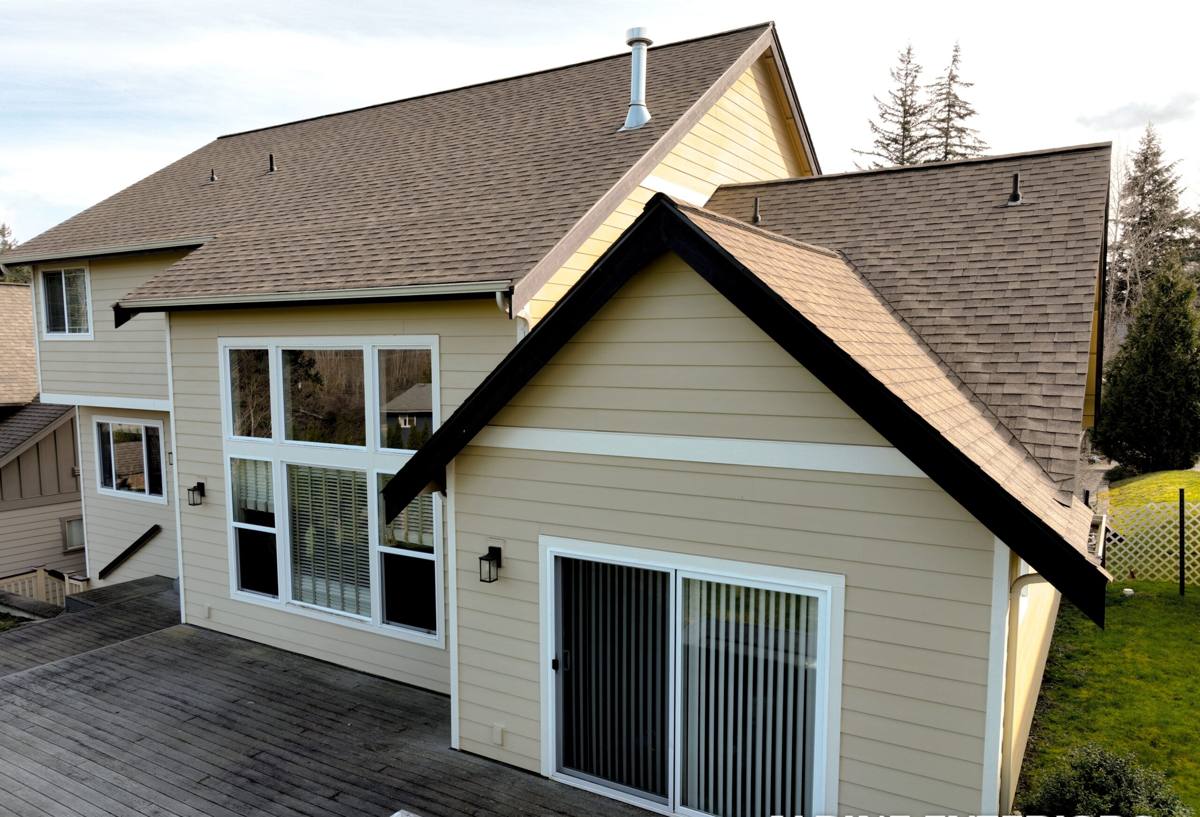
What Laurel's Climate Asks of a Siding Job
Driving Rain With No Windbreak
A lot of Laurel is open agricultural land, and open land means wind-driven rain has room to build speed before it hits a wall. Unlike a home tucked into a tree-sheltered lot, a house standing in open field exposure takes rain at an angle more often, which pushes water harder against seams, laps, and fastener penetrations. Siding that isn't installed with correct overlap and flashing detail will find that out the first few wet winters.
Salt Air That Travels Further Than People Expect
Laurel isn't waterfront, but Whatcom County's marine air moves well inland, and salt in that air accelerates corrosion on fasteners, flashing, and any exposed metal trim. It also breaks down lower-grade paint finishes faster than a dry inland climate would. Material and hardware choices that would be fine somewhere landlocked don't always hold up the same way here.
Moss on Shaded and Low-Lying Walls
The mix of tree lines, outbuildings, and low, flat ground around Laurel means a lot of homes have at least one wall that stays shaded and slow to dry most of the year. Moss and mildew take hold fastest on exactly those walls, and any siding surface that's even a little porous becomes a growth medium once organic matter and consistent moisture are both present.
Why We Only Install James Hardie in This Area
We used to offer a wider range of siding products. We stopped, and the decision came directly from what we saw on service calls and tear-offs in areas like Laurel — engineered wood siding softening at cut edges and fastener holes, vinyl trapping moisture behind panels where it can't be seen until the damage is done, cedar and primed spruce needing a repainting or resealing cycle that most homeowners underestimate going in.
| Material | Behavior in Sustained Rain | Maintenance Burden | Realistic Lifespan Locally |
|---|---|---|---|
| James Hardie fiber cement | Dimensionally stable; doesn't swell, cup, or wick water at seams | Low; factory finish resists moss and fading | 30+ years with correct install |
| LP SmartSide (engineered wood) | Vulnerable at cut edges and fastener holes if sealing lapses | Moderate; edge sealing needs ongoing attention | 15-25 years, climate-dependent |
| Vinyl siding | Can gap or bow under wind load; seams let moisture behind panels unnoticed | Low visible upkeep, but hidden issues are hard to catch | 20-30 years, variable |
| Cedar / primed spruce | Absorbs moisture readily without a consistent sealing schedule | High; recurring paint or stain cycle | 15-25 years with diligent upkeep |
Fiber cement's core doesn't expand and contract with moisture the way wood-based products do, and James Hardie's HZ5 formulation is engineered specifically for regions with heavy moisture exposure and freeze-thaw cycling — a fit for this part of Whatcom County rather than a warmer, drier climate zone. The factory-applied ColorPlus finish also means the color is baked on under controlled conditions before the boards ever reach the jobsite, so field-cut edges are the only spots that need on-site priming, not the whole wall.
What a Correct Fiber Cement Install Involves
Fiber cement siding is only as good as the installation behind it. The material itself resists moisture and rot well, but a sloppy install can still let water into the wall assembly around the siding rather than through it. A correct job includes:
- House wrap or weather-resistive barrier installed and properly lapped before any siding goes up
- A drainage plane or rainscreen gap so moisture that gets past the surface can dry out instead of sitting against the sheathing
- Correct lap and reveal on every course, following James Hardie's published spec rather than a generalized national standard
- Corrosion-resistant fasteners, correctly sized and spaced for this climate zone
- Properly flashed and lapped transitions at windows, doors, corners, and the base of the wall
- Field-cut edges primed before installation, since those cuts are the only place the factory finish doesn't already cover
Skip any one of these steps and the wall can still look right on install day. The problems show up later — staining at seams, soft spots low on the wall, paint failure at cut edges — and by the time they're visible, they've usually been developing for a season or two already.
Our Process for a Laurel Siding Project
Walkthrough and Assessment
We start by looking at the actual walls on your home: which ones take direct wind-driven rain, which stay shaded and slow to dry, and whether the existing wall assembly has any moisture damage that needs addressing before new siding goes on. New siding over a wet substrate just buries the same problem.
Planning Before Install Day
We work out flashing details, corner treatments, and how the siding will meet windows, trim, and rooflines before crews start cutting material. Deciding these details on paper first keeps the crew from improvising in the field, which is where corners tend to get cut on a rushed job.
Installation to Manufacturer Spec
Every fastener, lap, and flashing detail follows James Hardie's installation requirements for this climate zone. That's what keeps the manufacturer's warranty intact, and it's also what determines whether the wall performs for decades instead of years.
Final Walkthrough
We walk the finished job with you, explain what little maintenance fiber cement actually needs, and make sure you know what a healthy wall looks like if you ever want to check on it yourself.
Why Hire a Crew That Already Works Laurel
Laurel's mix of open field exposure and low-lying, shaded lots means moisture behaves differently from one property to the next, even within the same square mile. A crew that's installed siding across this specific area has already seen which orientations take rain the hardest, which walls need extra attention for drainage because of shade or nearby tree lines, and where flashing detail matters most given how open this ground is to wind. That's the kind of judgment that comes from repeated, local exposure to how this climate actually behaves on real houses, not from a generic install manual, and it's the difference between siding that still looks and performs the same in twenty years and siding that starts showing seam staining in five.
Cost Factors for Fiber Cement Siding in This Area
| Factor | Why It Matters |
|---|---|
| Home size and wall complexity | More corners, dormers, and transitions mean more cuts and flashing details |
| Tear-off vs. install over existing siding | Full tear-off reveals and lets us address substrate condition; overlay does not |
| Existing wall condition | Rot or moisture damage found underneath needs repair before new siding goes up |
| Siding profile chosen | Lap, shingle, and board-and-batten profiles differ in material and labor |
| Trim and window detailing | More openings mean more flashing and finish work around each one |
| Site access | Long driveways, outbuildings, or limited staging area can add labor time |
We'll walk your specific property and give you real numbers based on what we actually find, rather than a rough estimate off square footage alone. Two homes of similar size in the Laurel area can have very different costs depending on which of these factors are in play.
Signs Your Laurel Home Might Need New Siding Soon
- Moss or dark staining that returns quickly after cleaning, especially on shaded walls
- Soft or spongy siding, particularly low on the wall or around window and door trim
- Peeling or bubbling paint on walls that don't get much direct sun
- Visible gaps, warping, or bowing at siding seams
- Rust staining running down from fasteners or trim
- Rising energy bills that suggest the wall assembly isn't sealing the way it used to
If your home in the Laurel area needs new siding, or you're just not sure whether what you have is holding up the way it should, we're glad to come take a look. There's a form below for a free, no-pressure estimate — we'll walk the property, answer your questions honestly, and give you real numbers before you decide anything.