 Lynden Siding
 Siding Installation in Kendall: What the Local Climate Actually Demands
Kendall sits out in the rural country north of Lynden, in the part of Whatcom County where tree cover runs heavier, lots run bigger, and homes sit further from each other than they do in town. That setting is part of what makes the area a great place to live, but it also changes what a home's siding has to deal with day to day. More shade means slower drying times after rain. More surrounding vegetation means more organic debris and moisture sitting against exterior walls. And the same marine-influenced weather pattern that moves through the rest of Whatcom County — long stretches of driving rain, salt-tinged air pushed inland off the Sound, and a moss season that can run most of the year in shaded spots — doesn't skip Kendall just because it's a few miles from Lynden's core.
Siding installation done right in this area isn't just about picking a good-looking product. It's about understanding how water moves across and behind a wall system, how much drying time a wall actually gets between storms, and where moss and mildew are going to try to take hold first. This page focuses specifically on siding installation for Kendall homes and what it takes to get it right the first time.
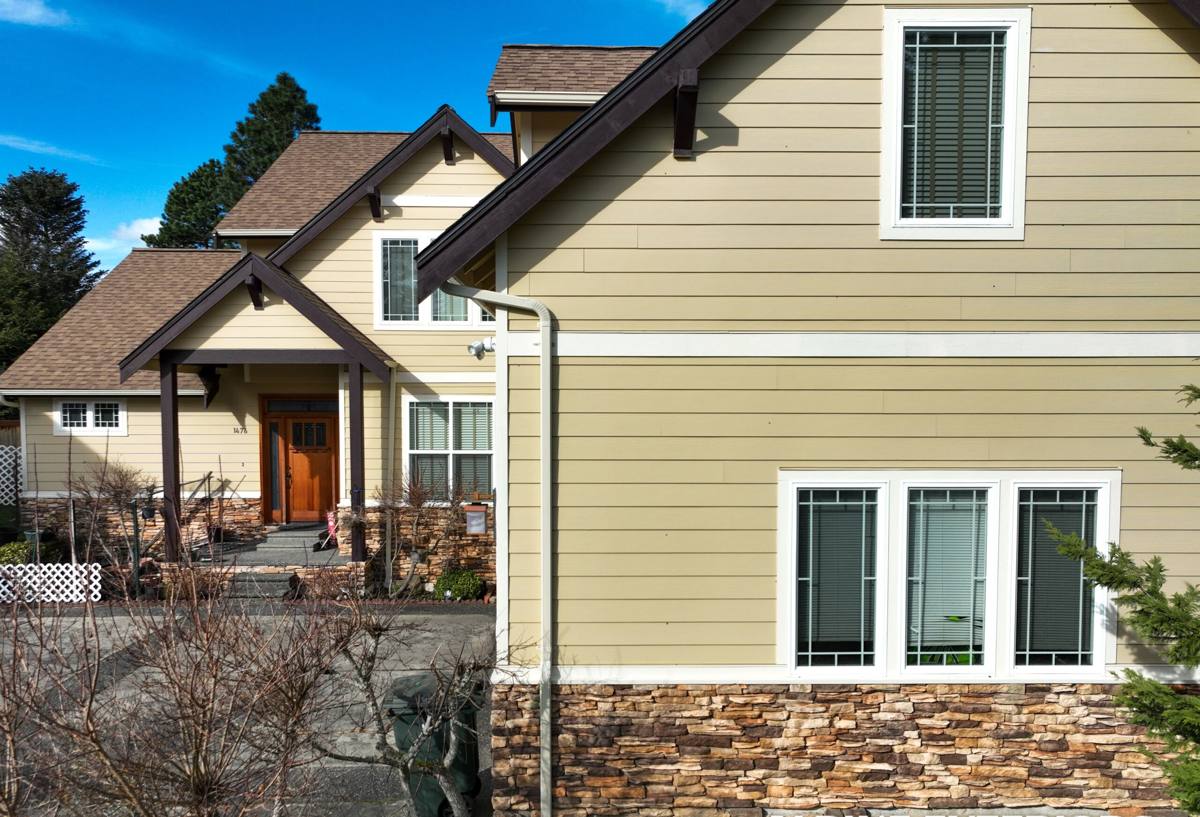
Why Kendall's Setting Puts Extra Stress on Siding
A few things about the Kendall area compound the normal wear that any Whatcom County home deals with:
- Tree cover and shade. More mature trees near the house means walls that stay damp longer after rain and get less direct sun to dry out, which is exactly what moss and algae need to establish.
- Longer moss season. In shaded, moisture-retaining spots, moss doesn't just show up seasonally — it can hang on nearly year-round, working into seams, laps, and any surface that isn't properly primed and sealed.
- Driving, wind-driven rain. Storms coming through this part of Whatcom County don't just fall straight down — wind pushes rain sideways into wall assemblies, which is why flashing and water-resistive barrier details matter as much as the siding material itself.
- Rural exposure. Larger, more open lots and less surrounding structure can mean more direct wind and weather hitting a home's exterior compared to a tightly built-up neighborhood.
None of this means siding fails fast in Kendall — it means the margin for a sloppy installation is smaller. A wall system with a weak weather barrier, poor flashing, or the wrong fastening pattern will show problems here sooner than it would in a drier climate.
What a Correct Siding Installation Actually Involves
Water Management Starts Before the Siding Goes On
The siding panel itself is the last thing that gets installed, but it's not the first line of defense. A correct installation starts with a continuous weather-resistive barrier over the sheathing, properly lapped so water always drains downward and outward rather than getting trapped behind the wall. Every window, door, and penetration needs flashing that directs water out and away — not just tape or caulk covering a gap. Skipping or rushing this stage is the single most common cause of hidden rot behind siding that looks fine from the curb.
Fastening and Joints Matter More Than the Panel Itself
Fiber cement siding has to be fastened at the correct spacing, with the correct fastener type, and with proper clearance from the ground, roofline, and any abutting surfaces. Butt joints and corners need to be treated as their own detail — caulked or flashed correctly, not just butted together and painted over. Panels installed too tight to the ground or to a deck or patio surface will wick moisture straight up into the material, which defeats even the best product on the market.
Ventilation and Clearance
Siding needs an air gap behind it in most modern assemblies, and it needs clearance at the bottom edge so bulk water and splashback don't sit against the material. In a shaded, moisture-heavy setting like Kendall, these clearances aren't a nice-to-have — they're what keeps a wall drying out between storms instead of staying damp for weeks at a time.
Why We Install Only James Hardie Fiber Cement
We standardized on James Hardie fiber cement siding and don't install vinyl, LP SmartSide, Cemplank, Allura, or bare cedar or primed spruce. That's a deliberate call, not a sales pitch. Fiber cement is non-combustible, holds paint and factory finish far longer than wood-based products, and doesn't have the expansion, moisture-swelling, or edge-degradation issues that engineered wood siding can develop over time in a wet climate. James Hardie's ColorPlus factory finish is baked on and warrantied, which matters in an area like Kendall where a lot of exterior surface time is spent damp, shaded, or covered in moss growth that needs periodic cleaning. Hardie also engineers specific product lines for different climate exposures, which lets us match the right product to a wetter, harder-exposure lot instead of using one generic panel everywhere.
We're not going to tell a homeowner another product is junk — most of them do what they're designed to do. Our decision is about what we're willing to put our name behind for the long haul in this specific climate, and after years of installation work in Whatcom County, fiber cement has been the product that holds up with the least maintenance headache and the fewest callbacks.
Our Installation Process for Kendall Homes
- On-site assessment. We look at sun exposure, tree cover, drainage patterns, and existing moisture or moss issues specific to the lot — not a generic checklist.
- Tear-off and substrate check. Old siding comes off and we inspect the sheathing underneath for rot or hidden damage before anything new goes up.
- Weather barrier and flashing. A continuous, properly lapped water-resistive barrier goes on first, with flashing detailed at every window, door, and penetration.
- Fiber cement installation. Panels are fastened to manufacturer spec, with correct clearances from grade, roofline, decks, and adjoining surfaces.
- Trim, caulking, and touch-up. Joints and cut edges get sealed and finished so the factory ColorPlus finish stays protected at every seam.
- Final walkthrough. We go over the finished exterior with the homeowner and flag anything worth watching, like a shaded corner that may need more frequent cleaning.
Material Comparison for a Wet, Shaded Climate
| Factor | James Hardie Fiber Cement | Vinyl | Wood / Engineered Wood |
|---|---|---|---|
| Moisture resistance | Non-combustible, dimensionally stable when installed to spec | Doesn't absorb moisture, but can warp or gap over time | Prone to swelling, delamination at cut edges if not sealed |
| Moss/algae resistance | Factory finish holds up to periodic cleaning | Surface can harbor growth in seams and laps | Untreated edges and grain texture are more hospitable to growth |
| Finish longevity | Factory-baked ColorPlus finish, warrantied | Color molded in but can fade/chalk | Paint or stain needs more frequent reapplication |
| Fire resistance | Non-combustible material | Can melt or deform under heat | Combustible |
| Long-term maintenance | Low, with periodic washing | Low, but repairs can be hard to color-match | Higher — repainting, sealing, spot repairs |
Cost Factors for Siding Installation in Kendall
Every home is different, but the same handful of factors drive most of the cost variation we see on Kendall-area projects:
| Factor | Why it affects cost |
|---|---|
| House size and complexity | More wall area, more corners, dormers, and rooflines mean more cutting and detail work |
| Condition of existing sheathing | Hidden rot found during tear-off requires repair before new siding can go on |
| Access and site conditions | Rural lots with tree cover, slopes, or limited equipment access can add labor time |
| Trim and detail level | Board-and-batten accents, trim boards, and custom detailing add material and labor |
| Product line selected | Hardie offers multiple lines and profiles at different price points |
We give straightforward, itemized estimates so a homeowner can see exactly what's driving the number rather than a single lump figure.
Maintenance After Installation
Correctly installed fiber cement siding is low-maintenance, not no-maintenance — especially in a shaded, moisture-heavy setting like Kendall. A simple annual routine goes a long way:
- Rinse siding with a garden hose or low-pressure wash once or twice a year, focusing on shaded and north-facing walls where moss and algae take hold first
- Keep gutters clear so overflow doesn't run down the wall face
- Trim back vegetation and tree branches that hold moisture against the siding or block airflow
- Check caulking at trim, corners, and penetrations every year or two and re-caulk if it's cracked or pulling away
- Walk the exterior after major storms and note any impact damage, loose panels, or standing debris at the base of walls
Signs a Kendall Home May Need New Siding Now
A few warning signs come up more often on rural, tree-covered lots than on in-town properties: soft or spongy spots when you press on the siding, paint or finish that's bubbling or peeling in patches rather than evenly, persistent moss or algae staining that keeps coming back within weeks of cleaning, visible gaps or warping at panel joints, and any musty smell along an exterior wall from the inside. Any one of these is worth a professional look before it turns into a sheathing or framing repair.
Why Hire a Crew That Already Works in Kendall
Siding installation isn't a one-size-fits-all job, and a crew that mostly works drier, more exposed neighborhoods elsewhere isn't automatically thinking about the shade, tree cover, and drainage patterns that define a Kendall lot. We've done installation work across Whatcom County long enough to know that a wall detail that's fine on an open, sunny lot in town needs extra attention on a shaded, forest-edge property out here — more careful clearance at grade, more attention to airflow behind the panel, and product choices matched to how much time that wall is actually going to spend wet. That local knowledge is part of what a homeowner is paying for when they hire a crew for siding work, not just the labor of hanging panels.
If you're weighing a siding project for a home in Kendall, we're happy to walk the property, look at your specific sun and moisture exposure, and put together a straightforward, no-pressure estimate — just fill out the form below to get started.