 Lynden Siding
 Building Decks in Kendall the Right Way
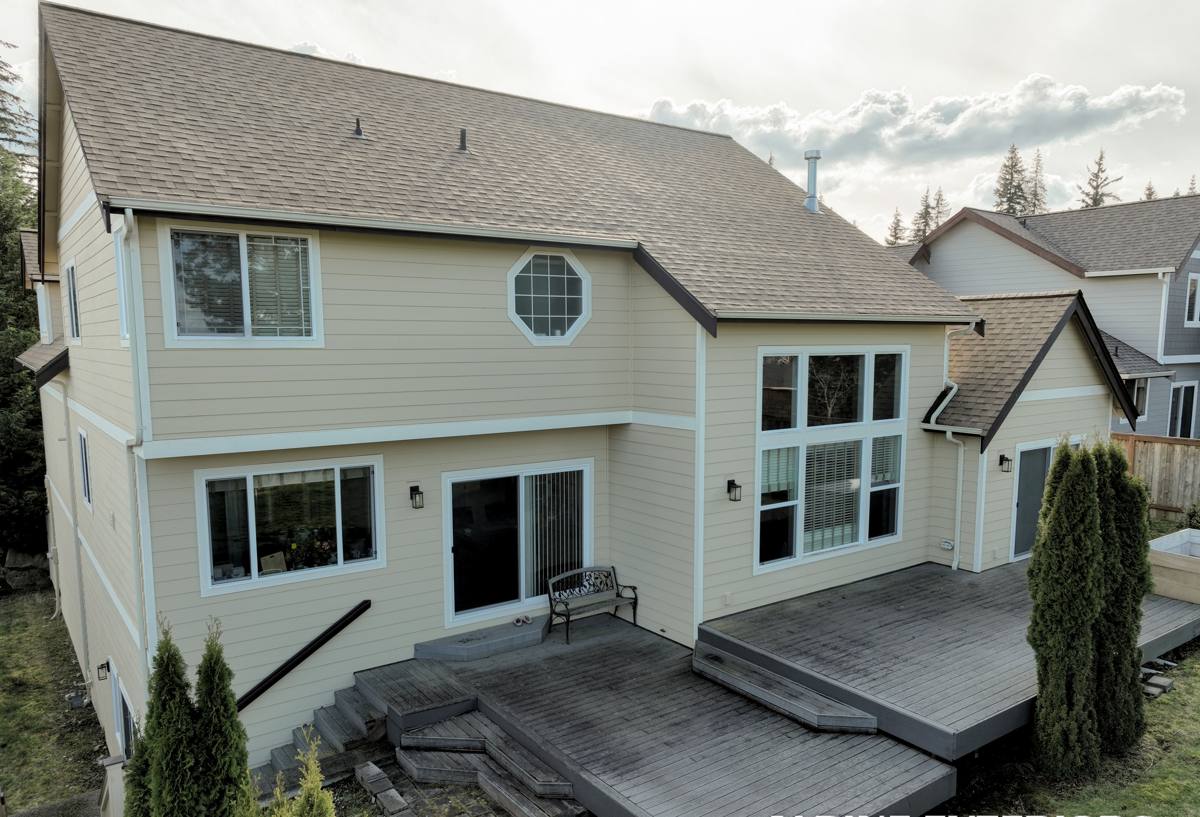
Kendall sits in a part of Whatcom County where the weather doesn't do a homeowner any favors. Between the fall and winter rain that settles in for weeks at a time, the humidity that never fully clears, and the moss that colonizes anything sitting still long enough, a deck out here is under constant low-grade attack. Most of the deck problems we get called out to inspect aren't dramatic structural failures — they're slow, quiet damage from water and organic growth that nobody noticed until boards started feeling soft underfoot or a railing post started to wobble.
A deck built for Kendall needs to be built differently than a deck built for a dry climate. That's not marketing talk — it's the difference between a deck that needs real attention every five years and one that needs a wash and a look-over.
What This Climate Actually Does to a Deck
Driving Rain and Standing Water
Rain in this part of Washington doesn't fall straight down and go away. It comes in sideways during storms, pools in low spots, and takes its time draining because the air stays damp for days after the rain stops. Any deck surface that doesn't shed water fast, and any structural framing that doesn't get a chance to dry out between storms, is going to trap moisture. Trapped moisture is where rot starts — not on the surface where you can see it, but underneath, in ledger boards, joist hangers, and the tops of posts.
Moss and Algae Season
Moss doesn't need much — shade, moisture, and time. Kendall has all three for a good chunk of the year. Moss on a deck surface is more than an eyesore. It holds water against the wood or composite surface, and it makes boards genuinely slick and dangerous underfoot, especially on stairs. Left alone, moss growth accelerates surface breakdown on wood decking and can stain composite materials in ways that are difficult to fully reverse.
Salt Air and Corrosion
Being close enough to Puget Sound air, homes in this area deal with a slow corrosive effect on exposed metal that inland homes don't. Fasteners, joist hangers, railing hardware, and structural connectors that aren't rated for it will start showing rust and pitting years before they should. Once fasteners weaken, the whole structure's safety margin drops even if the wood or decking above looks fine.
What a Correctly Built Deck Looks Like Out Here
There's no single "best" deck material for every home, but there are non-negotiables for this climate regardless of what surface material a homeowner chooses.
- Structural framing rated for ground contact and moisture exposure, not just standard treated lumber ratings
- Stainless steel or heavy hot-dip galvanized fasteners and hardware throughout — not just at the visible connections
- A proper ledger board flashing detail where the deck attaches to the house, so water is directed away from the wall assembly rather than into it
- Joist tape or a comparable protective barrier on top of every joist, so fasteners don't create a direct path for water into the wood
- Decking board spacing and airflow underneath sized to let the structure actually dry between rain events
- Post bases that hold posts up off standing water rather than burying wood directly in concrete or soil
Skip any one of these and you're building in a weak point that this climate will find.
Choosing a Decking Surface for Kendall Conditions
The surface material is the decision homeowners spend the most time on, and it's worth doing carefully because it drives most of the long-term maintenance.
| Material | How It Handles This Climate | Maintenance Reality |
|---|---|---|
| Pressure-treated wood | Affordable, but needs consistent sealing to resist moss and moisture; untreated cut ends are a weak point | Annual cleaning and re-sealing to keep ahead of moss and graying |
| Cedar | Naturally moisture and insect resistant, ages well if maintained, but still needs protection from constant damp | Periodic sealing/staining; moss removal in shaded areas |
| Composite decking | Resists rot completely, but can still grow surface moss/algae in damp shade if not cleaned | Occasional washing, no sealing or staining required |
| PVC/capped polymer | Best moisture resistance of the common options, fully sheds water at the surface | Lowest maintenance, periodic rinse is usually enough |
None of these materials solve moss on their own if the deck sits in heavy shade with poor airflow. Material choice reduces maintenance; layout and site conditions determine how much moss pressure the deck faces in the first place.
Design Decisions That Matter More in Kendall Than Elsewhere
Orientation and Shade
A deck tucked under mature trees or on the north side of a house will stay damp longer after every rain and will need more frequent moss treatment no matter what material sits on top. That's not a reason to avoid a shaded location — plenty of homeowners want the shade — but it does change the maintenance conversation we have before building, and it can change how we detail drainage and airflow underneath.
Railing and Hardware Choices
Railing systems see more direct weather exposure than the deck surface itself, since they're vertical and catch driving rain from the side. Cheaper aluminum or coated hardware can start showing corrosion at fastener points within a few seasons in this environment. We spec railing hardware the same way we spec structural fasteners — rated for the exposure, not just rated for looks.
Stair and Landing Details
Stairs are where moss becomes a safety issue rather than just a cleaning chore. Stair treads need surface texture or a non-slip strip option, and stair stringers need the same moisture protection as the rest of the framing, since they're often more exposed to splash-back from ground-level rain.
Our Process for a Kendall Deck Build
- Site assessment — we look at sun exposure, drainage patterns, existing moss or moisture problems on the property, and how the new deck ties into the house
- Material and layout conversation — honest trade-offs between upfront cost and long-term maintenance based on where the deck will actually sit
- Structural build — framing, flashing, and hardware detailed for this climate, not a generic spec
- Surface installation — decking, railings, and stairs installed with the spacing and fastening approach that lets the structure dry properly
- Final walkthrough — we go over what maintenance the specific materials chosen will actually need, in plain terms, before we leave
Maintenance That Actually Keeps a Deck Sound
Every deck, regardless of material, benefits from a short seasonal routine in this climate. Homeowners who stay ahead of this rarely need major repairs.
- Clear leaves and debris from between boards and off ledger flashing before fall rains set in
- Rinse or lightly scrub moss growth off surfaces and stair treads before it gets established, especially in shaded corners
- Check railing posts and stair stringers for movement once a year
- Reseal wood or cedar decking on the schedule the material actually requires, not just when it looks faded
- Keep gutters and downspouts near the deck clear so runoff isn't dumping extra water onto or under the structure
Why Local Experience Matters for This Job
Deck building isn't complicated in the abstract — the complications come from matching the build to the specific conditions of the site. A crew that works Kendall and the surrounding Lynden area regularly already knows which yards hold water longer, which lots get the worst moss pressure, and which hardware actually holds up rather than looking good on a spec sheet for the first year. That local pattern recognition is the difference between a deck that's engineered for this climate and one that's engineered for a climate somewhere else and hoping for the best.
We also stand behind the work with follow-up if something isn't performing the way it should — which matters more here than in a mild, dry climate, because problems in Whatcom County weather tend to show up during the wet season, not right after the build.
What a New Deck Typically Involves Cost-Wise
Every project is different based on size, framing complexity, height off the ground, and material choice, but homeowners in this area should expect a meaningful range between a basic pressure-treated build and a full composite or PVC system with upgraded railings. Rather than quote a number that won't match your specific yard and goals, we'd rather walk the site and give you a real figure based on what you're actually building.
If you're planning a new deck or replacing one that's showing its age in Kendall, we're happy to come take a look and put together a free, no-pressure estimate — just fill out the form below.