 Lynden Siding
 Siding Built for the Deming Climate, Not Just Any Climate
Homes in Deming sit inland from Lynden along the Nooksack River corridor, closer to the foothills of Mount Baker than to the open water — but the same damp, salt-tinged marine air that moves through Whatcom County still reaches this far east. Add heavy tree cover, driving winter rain, and a moss season that can stretch from October into May, and you have a climate that is genuinely hard on exterior siding. Materials that hold up fine in a drier region can fail here in a fraction of the time.
We install James Hardie fiber cement siding exclusively, and this page is about what that means specifically for a Deming home: what the local conditions actually do to siding, what a correct installation looks like, and why the details matter more here than they would in most parts of the country.
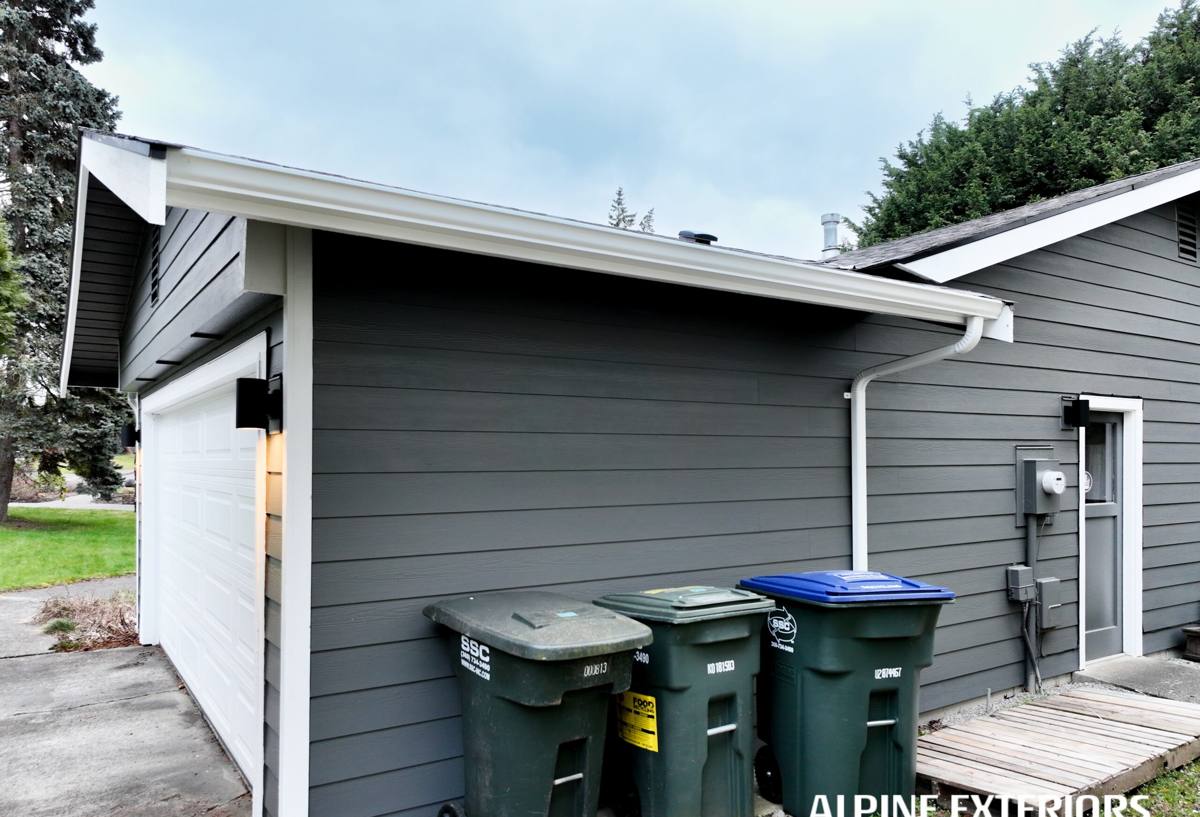
What This Climate Actually Does to Siding
Moisture That Never Fully Leaves
Whatcom County doesn't get flash floods so much as it gets weeks of steady, low-grade dampness. Combined with tree canopy and hillside shade that's common around Deming properties, siding can stay damp for days after a storm instead of drying out in an afternoon. Any product that absorbs water, swells, or delaminates when saturated is working against the climate every single winter.
Moss and Organic Growth
Shaded, north-facing walls and anything near overhanging trees will grow moss and algae if the siding material and finish give it something to hold onto. This is cosmetic at first, but moss holds moisture against the wall longer, which accelerates whatever underlying problem the siding already has.
Driving Rain and Wind-Driven Water
Storms coming off the Salish Sea and funneling up the Nooksack valley don't just fall straight down — wind pushes rain sideways into wall assemblies, especially at corners, window trim, and anywhere the original installation cut corners on flashing or gaps. Water intrusion at these points is the single most common cause of siding failure we see on older Whatcom County homes.
Temperature Swings Near the Foothills
Deming sees a wider temperature range than homes right on the coast — colder overnight lows in winter, warmer summer days reflecting off Mount Baker's foothills. Siding materials that expand and contract significantly with temperature are more prone to joint gaps and finish cracking over years of that cycle.
Why We Standardized on James Hardie
We don't install vinyl, LP SmartSide, primed wood, or other fiber cement brands. That's a deliberate call, not a marketing line. James Hardie's fiber cement is engineered specifically for moisture-heavy, moss-prone climates like this one — it's non-combustible, dimensionally stable, and doesn't feed organic growth the way wood-based products can. Hardie also builds region-specific HZ5 formulations engineered for areas with more freeze-thaw and moisture cycling, which fits the Whatcom County foothills better than a one-size-fits-all product.
The factory-applied ColorPlus finish matters just as much as the substrate. A finish baked on and cured at the factory resists the fading, chalking, and peeling that field-applied paint struggles with under constant damp-to-dry cycling. On a home that's going to sit under tree cover and take on moss exposure every winter, that finish quality is the difference between repainting in seven years and not touching the color for two decades.
What Correct Fiber Cement Installation Involves
Fiber cement siding is only as good as its installation. Most of the siding failures we get called out to inspect in this area trace back to installation shortcuts, not the material itself. A correct job includes:
- Proper weather-resistive barrier and rainscreen gap so water that gets behind the siding can drain and the wall can dry
- Correct fastener type, spacing, and placement per Hardie's published fastening schedule — not whatever was on hand
- Manufacturer-specified clearances at grade, roof lines, and decks so siding never sits in standing water or snow buildup
- Properly flashed and caulked penetrations at windows, doors, and utility penetrations — the most common failure point in wind-driven rain
- Correct joint gaps and factory-recommended sealants that stay flexible through temperature swings instead of cracking
- Field-cutting and touch-up painting done to Hardie spec so cut edges don't become moisture entry points
Skipping any one of these doesn't show up immediately. It shows up in three to five years as staining, soft spots, or paint failure at exactly the joints and penetrations that were rushed.
James Hardie Product Lines We Install
| Product Line | Best Suited For | What It Offers |
|---|---|---|
| HardiePlank Lap Siding | Most Deming homes, traditional and craftsman styles | Classic lap profile, wide texture and width options, ColorPlus factory finish |
| HardiePanel Vertical Siding | Accent walls, gables, modern or farmhouse exteriors | Clean vertical lines, often paired with board-and-batten trim |
| HardieTrim | Corners, fascia, window and door surrounds | Matches the siding finish and resists the moisture damage that rots wood trim |
| HardieShingle | Gable accents, dormers, decorative sections | Cedar-shingle look without the moisture upkeep of real wood shakes |
Our Process for a Deming Siding Project
1. On-Site Assessment
We walk the full exterior, checking existing siding condition, moisture damage at trim and penetrations, tree shading and moss exposure by wall face, and any sheathing or framing issues that need addressing before new siding goes on. Damaged sheathing gets fixed — new siding over a wet wall assembly just hides the problem.
2. Detailed Written Estimate
You get a clear scope: product line, color, trim details, and what's included — tear-off, disposal, house wrap, flashing, and finish work — so there's no ambiguity about what you're paying for.
3. Prep and Weather Barrier
Old siding comes off, sheathing gets inspected and repaired as needed, and a proper weather-resistive barrier with rainscreen goes on before a single piece of Hardie touches the wall. This step is where most of the long-term performance is actually decided.
4. Installation to Manufacturer Spec
Fastening, clearances, joint treatment, and flashing all follow James Hardie's published installation guidelines, not shortcuts. This is also what keeps the manufacturer's warranty intact — installation errors are one of the most common reasons siding warranties get denied.
5. Final Walkthrough
We walk the finished job with you, check every wall face, and make sure trim, caulking, and touch-up paint are done right before we call it complete.
Cost Factors for a Deming Fiber Cement Project
| Factor | Why It Affects Cost |
|---|---|
| Home size and wall complexity | More corners, gables, and dormers mean more cutting, trim, and labor time |
| Tear-off and disposal | Removing and hauling old siding adds labor and disposal fees versus new construction |
| Sheathing or framing repair | Moisture-damaged sheathing found during tear-off needs to be replaced before new siding goes on |
| Product line and texture | Lap width, texture, and specialty profiles like shingle-style accents vary in material cost |
| Color and trim package | Standard ColorPlus colors versus premium finishes and additional trim detailing |
| Access and site conditions | Steep grades, tree clearance, and staging space around the home affect labor time |
We don't publish blanket per-square-foot pricing because these factors genuinely change the number from one Deming property to the next. A walkthrough gives you an honest, specific figure instead of a guess.
Signs Your Current Siding May Already Be Failing
- Soft or spongy spots when you press on the siding, especially near the bottom courses
- Persistent moss or dark streaking that comes back shortly after cleaning
- Paint that's peeling, bubbling, or chalking heavily rather than just fading evenly
- Visible gaps, warping, or buckling at seams and corners
- Staining or discoloration on interior walls near exterior corners or windows
- Siding that was installed more than 20 years ago and has never been fully inspected
Any one of these on its own isn't necessarily an emergency, but they're worth having looked at before the next wet season, since damage behind the siding is almost always worse than what's visible on the surface.
Why Hire a Crew That Already Works This Area
Installation details that matter in a dry climate matter more here, and a crew that only occasionally works in Whatcom County can miss things that are second nature to a crew that installs siding on Deming and Lynden homes regularly — how much rainscreen gap actually makes sense given local rainfall, which wall faces need extra attention for moss and shade, and how to sequence a tear-off around a wet-season forecast instead of leaving a wall exposed overnight. Familiarity with the specific conditions here isn't a nice-to-have; it shows up directly in how long the siding lasts.
If you're considering new siding for a Deming home, we're happy to walk the property, give you a straight assessment of what condition your current siding is really in, and put together a detailed, no-pressure estimate for James Hardie fiber cement siding. Use the form below to get started.