 Lynden Siding
 Storm Damage Roof Repair for Ferndale Homes
Ferndale sits close enough to the water that its roofs take a different kind of beating than homes further inland. Between salt-laden air rolling off the coast, driving rain that comes in sideways during winter fronts, and a moss season that never really ends, roofs here age differently than roofs in drier parts of the state. When a storm rolls through and knocks loose shingles, lifts flashing, or drives water under a roof edge, the damage is rarely as simple as it looks from the ground. We repair storm-damaged roofs for homeowners in and around Ferndale, and this page covers what that work actually involves, what correct repair looks like, and what to expect from a crew that already knows this stretch of Whatcom County.
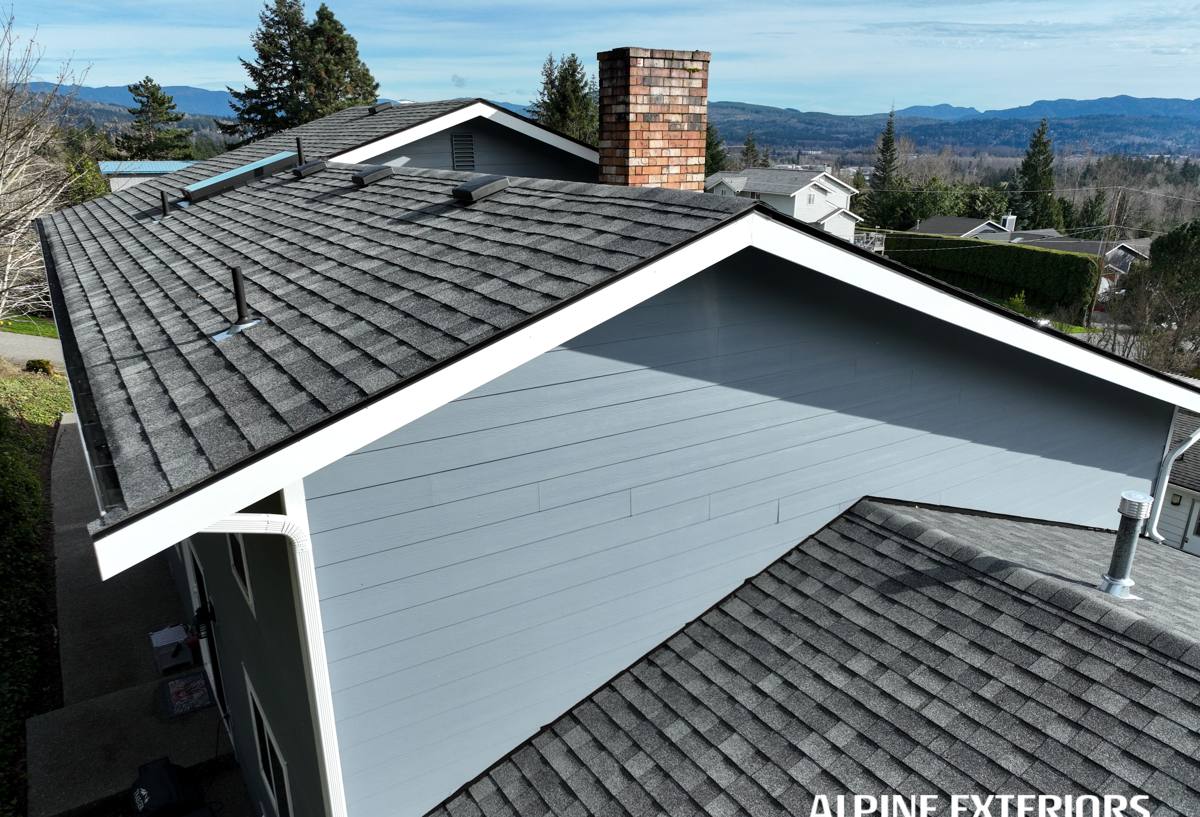
Why Ferndale's Climate Is Hard on Roofs
Every roof in Whatcom County deals with rain. Ferndale's roofs deal with rain plus a few extra variables that matter when you're assessing storm damage.
Salt Air and Metal Fasteners
Homes closer to the coast get more airborne salt than homes further inland. Salt accelerates corrosion on exposed metal — nail heads, flashing edges, gutter hardware, and the fasteners holding down ridge caps. A storm that wouldn't budge a fresh fastener can pop one that's already been quietly corroding for a few years. This is one reason storm damage on a Ferndale roof often looks worse, or spreads faster, than the same wind event would cause on a roof 20 miles inland.
Driving Rain and Wind-Driven Water
Storms here rarely bring rain straight down. Wind pushes it sideways and up under roof edges, around chimney flashing, and into any gap that a calm-weather rain would never reach. This is why storm damage inspections need to check more than just the obvious missing shingle — wind-driven rain finds the weak point, not the visible one.
A Moss Season That Doesn't Take a Break
Whatcom County's damp, mild climate keeps moss and algae growing on roofs for most of the year. Moss holds moisture against shingles, works its way under tab edges, and adds weight. A storm hitting a moss-covered roof does more damage than the same storm hitting a clean one, because the moss has already been prying up the shingle edges it's growing under. Storm repair on an older, moss-heavy roof almost always means dealing with the moss problem at the same time, or the repair won't hold.
Signs Your Roof Took Storm Damage
Not all storm damage announces itself with a hole in the ceiling. Some of it sits quietly for months before it becomes an interior leak. After any significant wind or rain event, it's worth checking for the following:
- Shingles that are cracked, curled, creased, or missing entirely
- Granules collecting in gutters or at downspout outlets
- Flashing that's bent, lifted, or pulled away from a chimney, wall, or vent pipe
- Soft spots or sagging in the roof deck when walked (do not walk your own roof to check this — leave it to us)
- New water stains on ceilings or in the attic, especially near exterior walls
- Debris — branches, moss clumps, granule grit — pushed into valleys or against the roof edge
- Gutters pulled loose from fascia or sagging under storm debris weight
- Daylight visible through the roof deck from inside the attic
If you notice any of these after a storm, the roof should be looked at before the next one hits. Small openings get bigger fast once wind-driven rain has a way in.
What a Correct Storm Damage Repair Actually Involves
A storm repair that only addresses what's visible from the driveway is a repair that's likely to fail again in the next storm. We treat every storm call as three separate questions: what broke, what let it break, and what else nearby is now vulnerable.
Assessing the Full Extent
We inspect the roof surface, the flashing details, the gutter system, and — when accessible — the attic side of the deck. Storm damage often extends past the shingles that are obviously missing. A gust strong enough to lift one shingle has usually loosened the adhesive seal on several neighbors, even if they haven't blown off yet.
Matching Materials Correctly
Repairs need shingles, flashing, and underlayment that are compatible with what's already on the roof — not just close enough. Mismatched shingle profiles or incompatible flashing metals can create new leak points instead of fixing the old one. When exact color matches aren't available due to sun fading on the existing roof, we tell you that up front rather than promising a seamless blend we can't deliver.
Addressing the Root Cause
If moss contributed to the failure, we deal with the moss, not just the shingle it damaged. If corroded fasteners let flashing lift, we replace the fastener, not just re-seat the flashing on the same weak points. A repair that ignores the cause is a repair you'll be paying for again.
Our Repair Process
- Inspection and documentation. We walk the roof, photograph the damage, and check attic access points where possible. This documentation also supports an insurance claim if you're filing one.
- Honest scope and estimate. We tell you what needs to be fixed now, what can wait, and what we're keeping an eye on. No upselling a full replacement when a targeted repair will genuinely hold.
- Temporary protection if needed. If there's active water intrusion, we can install temporary protection to stop further damage while the full repair is scheduled.
- The repair itself. Removal of damaged materials, inspection of the deck underneath, replacement with matched or compatible materials, and proper resealing at every flashing point disturbed during the work.
- Final check. We confirm the repair area, surrounding shingles, and flashing are sound before calling the job done.
Repair or Replace? Key Decision Factors
Not every storm-damaged roof needs full replacement, but some do. The table below covers the factors that typically decide which direction makes sense.
| Factor | Leans Toward Repair | Leans Toward Replacement |
|---|---|---|
| Roof age | Under 12–15 years, otherwise in good shape | Nearing or past expected service life |
| Extent of damage | Isolated to one section or slope | Spread across multiple slopes or the whole roof |
| Deck condition | Solid, no rot found during inspection | Soft spots or rot discovered under damaged shingles |
| Moss/algae history | Minor, manageable with treatment | Heavy, longstanding, already undermining multiple areas |
| Prior repair history | First significant repair | Repeated patch jobs in the same areas over the years |
We'll walk you through where your roof falls on this list honestly — including telling you when a repair is the right call even if a replacement would be an easier sale for us.
What Affects Storm Repair Cost
Every roof is different, so we don't quote sight-unseen, but these are the factors that generally move the price:
| Cost Factor | Why It Matters |
|---|---|
| Size of damaged area | More shingles, flashing, and underlayment to replace |
| Roof pitch and access | Steeper or harder-to-access roofs take more time and safety setup |
| Deck repair needs | Rotted or soft decking found underneath adds material and labor |
| Flashing complexity | Chimneys, skylights, and multiple valleys take more careful detail work |
| Material match availability | Discontinued or heavily faded shingles may require broader replacement to blend properly |
We give you a written estimate that breaks these out so you know exactly what you're paying for and why.
Insurance Claims and Storm Damage
Many storm repairs are covered, at least in part, by homeowners insurance, especially when there's a documented wind or rain event behind the damage. We're happy to provide the photo documentation and written scope of damage that adjusters ask for. We're not a public adjuster and won't promise a claim outcome, but we'll give you an honest, well-documented assessment of what happened and what it takes to fix it — which is the foundation any claim needs.
Why Hire a Crew That Already Works Ferndale
A roofing crew that works this part of Whatcom County regularly already knows how salt air treats fasteners, how wind-driven rain behaves around this area's common roof and flashing details, and how aggressively moss needs to be managed here compared to drier regions. That local familiarity shortens the guesswork during an inspection and means the repair addresses conditions that are actually relevant to a Ferndale roof — not a generic checklist written for a different climate. It also means faster response after a storm, since we're not driving in from across the region to get to you.
After the Repair: Keeping It From Happening Again
A storm repair holds longer when it's paired with basic upkeep between storms:
- Keep gutters and downspouts clear so water has somewhere to go
- Have moss and algae treated before it spreads to un-affected areas of the roof
- Trim back overhanging branches that drop debris into valleys and against flashing
- Schedule a roof check after any major wind event, even if nothing looks obviously wrong
- Address small issues — a lifted shingle corner, a loose gutter bracket — before the next storm finds them
If you've got storm damage on a Ferndale roof, or you just want an honest opinion on whether last week's wind did any harm, we're glad to take a look. Request a free, no-pressure estimate using the form below and we'll get back to you.