 Lynden Siding
 Siding That Has to Work in Deming's Climate, Not Just Look Good on Day One
Deming sits in the Nooksack River valley in Whatcom County, in the shadow of the foothills leading up toward Mount Baker. Homes here deal with a long wet season, heavy tree cover in a lot of neighborhoods, and the same marine-influenced weather pattern that soaks the rest of Whatcom County for much of the year. Siding on a Deming home isn't just an appearance choice — it's the first line of defense against months of standing moisture, shaded north walls that never fully dry out, and the moss and algae growth that comes with both.
We install James Hardie fiber cement siding exclusively, and Deming is a good example of why. This is not a climate that forgives a siding product installed a little loose, caulked instead of flashed, or chosen because it was cheaper up front. It's a climate that finds every weak point over a few wet seasons and turns it into a repair bill.
Rain and Moisture Exposure
Whatcom County gets a long stretch of low-intensity, driving rain rather than short heavy downpours, and that pattern is hard on siding in a specific way: it pushes water sideways and upward under laps, trim, and around penetrations if the water-resistive barrier and flashing details underneath aren't done correctly. Products that swell, delaminate, or wick moisture at the edges get punished slowly over years, not all at once — which is exactly why so many siding problems in this area go unnoticed until they're expensive.
Moss, Shade, and a Long Wet Season
Deming's tree cover and valley location mean plenty of homes have walls that stay shaded and damp well after a storm has cleared elsewhere. That's ideal growing conditions for moss and algae on siding surfaces, and it's rough on anything with a painted or unsealed wood-based substrate. Siding that holds a factory finish and resists moisture absorption at the surface simply grows less of it, and what does grow is easier to rinse off without damaging the material underneath.
Salt Air's Influence Across the Region
Whatcom County's proximity to the Salish Sea means a lot of siding sold and installed in this region has to hold up to some degree of salt-laden air moving inland, in addition to the rain and moss pressure. Even away from the immediate shoreline, that regional moisture chemistry is part of why we standardized on a product engineered specifically for Pacific Northwest conditions rather than a generic national spec.
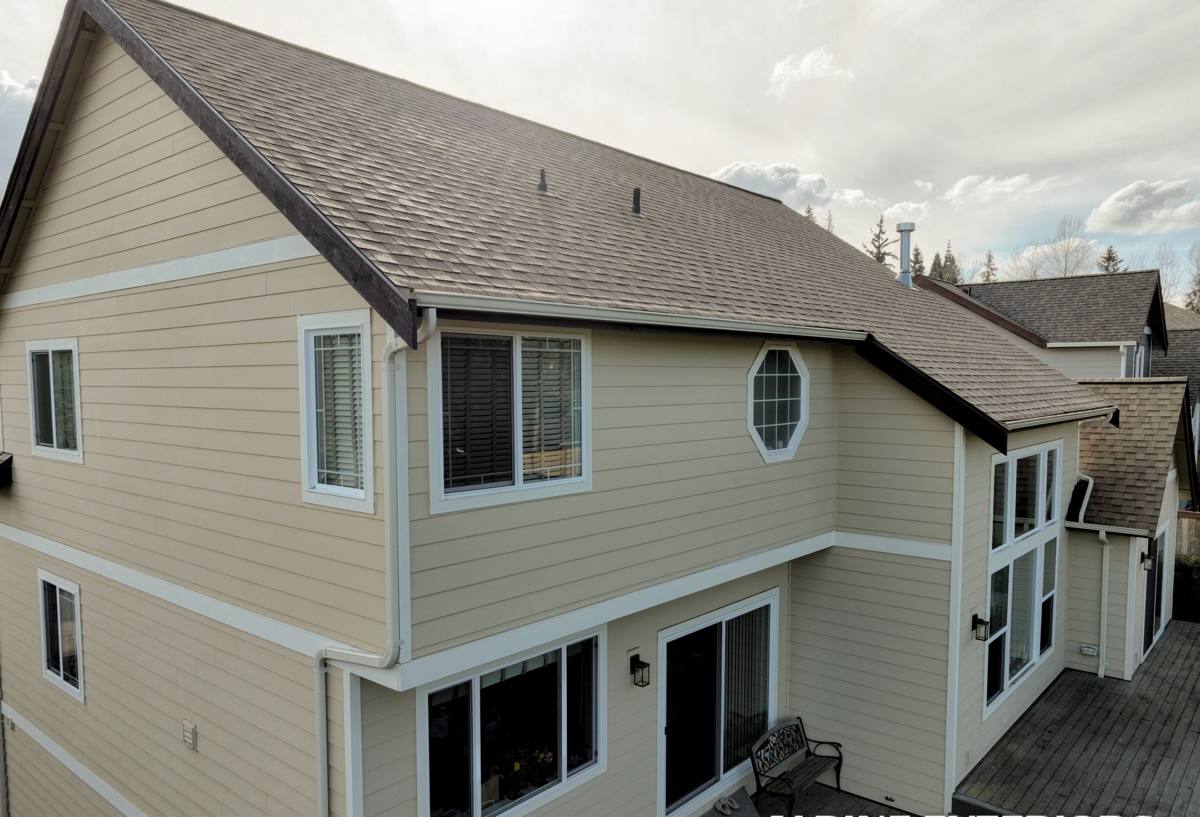
What James Hardie Brings to a Deming Home
James Hardie fiber cement siding is manufactured from cement, sand, and cellulose fiber — a composition that doesn't rot, doesn't feed pests, and doesn't absorb water the way wood-based or wood-adjacent siding products do. For this region, Hardie produces its HZ5 product line, engineered specifically for climates with prolonged moisture exposure and freeze-thaw cycling, which describes Whatcom County well.
The factory-applied ColorPlus finish is a big part of why this matters for a shaded, damp property. It's baked on in a controlled environment rather than field-applied, which means better adhesion and color consistency than a job-site paint job — and a finish that resists the fading and chalking that shows up fast on north- and east-facing walls that never get direct sun to dry them out.
Choosing the Right Hardie Product Line
Not every Hardie product fits every home, and part of doing this job right is matching the product to the house rather than defaulting to one option. Here's how the main lines compare for a typical Deming property:
| Product | Best Fit | Notes for This Climate |
|---|---|---|
| HardiePlank Lap Siding | Most single-family homes | Widest color and texture range; the workhorse choice for full re-sides |
| HardiePanel Vertical Siding | Accent walls, gables, modern designs | Sheds water efficiently on steep or vertical runs |
| HardieShingle | Craftsman or cottage-style accents | Adds texture without the maintenance burden of real wood shingle |
| HardieTrim | Corners, fascia, window/door surrounds | Resists the swelling and cracking wood trim shows in damp shade |
What Correct Installation Actually Involves
James Hardie siding performs the way it's rated to perform only when it's installed to spec. In a climate like this, the installation details matter as much as the product itself.
Water Management Behind the Siding
A correctly installed water-resistive barrier, properly lapped and taped seams, and flashing at every window, door, and horizontal trim transition are what actually keep water out — the siding itself is the second line of defense, not the only one. This is the step that gets rushed on underbid jobs, and it's the step that causes callback problems two or three winters later.
Fastening and Clearances
Hardie specifies fastener type, spacing, and placement for a reason — done wrong, boards can crack, pop, or fail to hold their seal at the laps. Ground clearance and gaps at grade, decks, and roof lines also matter more here than in a dry climate, since standing moisture at the bottom edge of a board is where rot and staining problems start on any siding system.
Caulking Is a Backup, Not a Strategy
A siding job that depends on caulk to keep water out is a siding job that will need re-caulking on a schedule forever, and will eventually fail somewhere caulk can't reach. Correct flashing and lap technique reduce how much the assembly depends on sealant at all.
Our Process for a Deming Project
- On-site assessment — we look at existing siding condition, moisture damage, shaded/exposed wall orientation, and trim details specific to the house.
- Product and color selection — matching Hardie line and ColorPlus finish to the home's style and exposure.
- Tear-off and substrate check — old siding removed, sheathing inspected for hidden rot before anything new goes up.
- Water-resistive barrier and flashing — the part that determines whether the job holds up long-term.
- Installation to Hardie's fastening and clearance specifications.
- Final walkthrough — trim, caulking points, and finish check before we consider the job done.
Cost Factors on a Deming Home
Every property is different, but the same handful of factors drive most of the cost variation we see on jobs in this area:
| Factor | Why It Matters |
|---|---|
| Existing siding removal | Tear-off and disposal add labor, especially with moisture-damaged wood siding underneath |
| Sheathing repair | Hidden rot found during tear-off has to be fixed before new siding goes on |
| Home size and complexity | Gables, dormers, and multiple trim transitions add labor time |
| Product line mix | Combining lap, panel, and shingle styles costs more than a single product throughout |
| Access and site conditions | Tree cover, slope, and driveway access affect setup and scaffolding needs |
We give straightforward, itemized estimates rather than vague per-square-foot numbers, because the honest answer depends on what we find once tear-off starts.
Signs Your Current Siding Is Already Failing
A lot of siding damage in this climate is quiet until it isn't. Worth checking for:
- Soft or spongy spots when you press on siding, especially near the bottom edge or under windows
- Persistent moss or algae staining that comes back within weeks of cleaning
- Visible warping, cupping, or gaps opening up between boards
- Peeling or bubbling paint, particularly on shaded walls
- Water stains or discoloration on interior walls near exterior corners
- Siding that feels cool and damp to the touch well after rain has stopped
Any one of these is worth a look before it turns into sheathing or framing damage.
Why a Crew That Already Works Deming Matters
Deming's mix of tree cover, valley moisture, and older housing stock means the failure points we find during tear-off aren't hypothetical — they're patterns we've seen repeatedly on homes with the same exposure and age in this part of Whatcom County. A crew that already understands how water moves on a shaded Deming wall, or where moss tends to build up on a given roofline, catches problems during the estimate instead of after the siding is already up. That local familiarity is part of why we only take on jobs we can do to Hardie's full specification, rather than stretching thin across products and regions we don't know as well.
Maintenance and What to Expect Long-Term
Correctly installed Hardie siding with a ColorPlus finish is low-maintenance, not no-maintenance. Expect to rinse siding periodically to keep moss and algae from taking hold, check caulking at trim joints every year or two, and keep an eye on anything shaded or below grade level. James Hardie backs its products with a strong transferable limited warranty, which matters more in a wet climate like this than in a dry one — it's a meaningful backstop if a manufacturing issue ever does show up.
If you're weighing a re-side or repair on a Deming home, we're happy to walk the property, point out what we're seeing, and put together a straightforward, no-pressure estimate — no obligation, just an honest look at what your siding actually needs.