 Lynden Siding
 Building a Deck That Actually Holds Up in Acme
Acme homeowners know their property doesn't get the mildest version of Whatcom County weather. Between the marine air that moves in off the water, long stretches of driving rain, and shade from mature trees that keeps everything damp longer than it should be, a deck out here works harder than one built in a drier climate. A deck that looks fine on installation day but wasn't detailed for this environment usually shows problems within a few wet seasons — soft spots at the ledger, black streaking on the boards, railings that wobble because a post base never had a chance to drain.
This page is specifically about custom deck building and rebuilding for Acme-area properties. It's not a generic "we build decks" page — it's what we've learned building and repairing decks in this exact kind of climate, and what we think every deck in this neighborhood needs to be built or upgraded to.
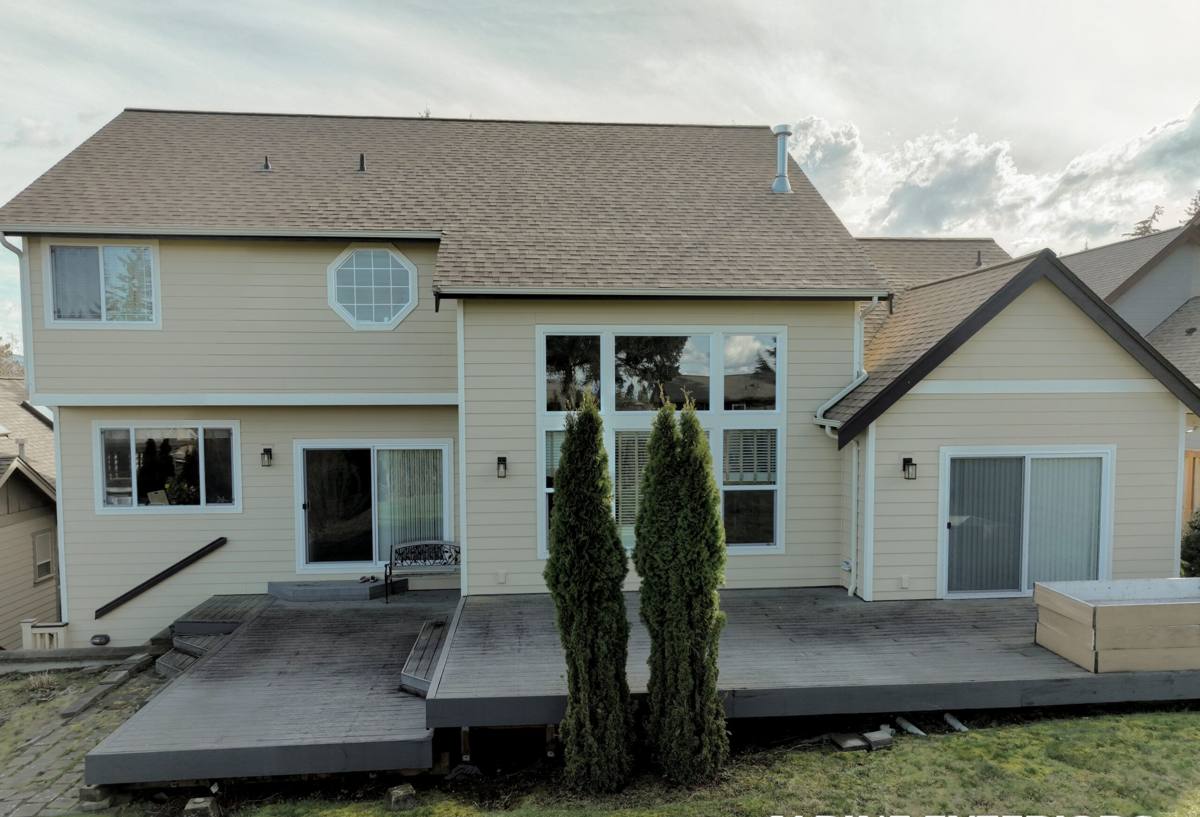
The Real Enemy Isn't the Rain — It's Where the Water Doesn't Leave
Rain itself doesn't rot a deck. Trapped moisture does. Almost every deck failure we get called out for in this area traces back to one of a handful of moisture traps, not to the wood or composite material simply "wearing out."
Ledger board attachment
The ledger board — where the deck bolts to the house — is the single most common failure point on older decks in wet climates. If it wasn't flashed correctly when the deck was built, water works its way behind the board and into the house rim joist. This is slow, hidden damage that often isn't obvious until siding or interior trim starts showing signs of it. Proper flashing (and a drainage gap behind the ledger) isn't optional here — it's the difference between a deck that lasts decades and one that quietly damages the house it's attached to.
Post bases and footings sitting in standing water
Post bases that sit flush on grade, or footings poured without enough drainage around them, hold water against the post end grain all winter. Combined with the shade and tree cover common around Acme properties, that moisture doesn't evaporate off quickly — it just sits there feeding rot and moss growth at ground level.
Decking boards with no gap or airflow underneath
Boards installed tight together, or over a substructure with no airflow, trap moisture between and underneath the deck surface. That's exactly the condition moss and algae need to take hold, and it's why some decks in shaded, damp yards turn slick and green within a single season while others down the street stay clean.
Choosing Decking Material for This Climate
There's no universally "best" decking material — there's the right material for how much sun a specific yard gets, how much upkeep the homeowner actually wants to do, and budget. Here's how the common options hold up specifically under Whatcom County's wet, shaded, moss-prone conditions.
| Material | How it handles moisture & moss | Maintenance | Typical lifespan here |
|---|---|---|---|
| Pressure-treated wood | Absorbs moisture; needs a real drainage gap and airflow underneath or it holds water and grows moss | Annual cleaning, periodic staining/sealing | 15–20 years with upkeep |
| Cedar | Naturally more rot-resistant than treated pine, still needs sealing to resist graying and moss in shade | Sealing every 1–2 years | 15–25 years with upkeep |
| Capped composite | Solid cap sheds moisture well and resists moss better than wood, though shaded boards still need occasional washing | Occasional washing, no staining/sealing | 25–30+ years |
| Uncapped/older composite | Exposed core can absorb moisture over time in constantly wet conditions; more prone to surface mold in shade | Regular washing, more care in shaded areas | Shorter than capped composite |
For yards with heavy tree cover — common around Acme — we lean homeowners toward capped composite or a well-sealed cedar over standard pressure-treated for the decking surface itself, simply because it holds up better to prolonged shade and dampness with less annual work. That said, plenty of homeowners are happy maintaining a treated wood deck if they're willing to clean and seal it on schedule. We'll walk through the honest tradeoffs for your specific yard rather than push one product.
What a Correctly Built Frame Looks Like
The decking surface is what you see; the framing underneath is what determines whether the deck is still solid in fifteen years. For a deck built to hold up in this climate, that means:
- Footings poured to the proper frost depth and set on solid, undisturbed soil — not just set on grade
- Post bases raised off the footing with a standoff so post ends never sit in pooled water
- Stainless steel or heavy hot-dip galvanized fasteners and hardware throughout — coastal and marine-influenced air accelerates corrosion on lower-grade fasteners faster than most homeowners expect
- Joist tape or flashing on top of every joist to keep water from wicking into the wood through screw holes
- A proper drainage gap and flashing behind the ledger board, tied into the house's existing water management
- Consistent board spacing that allows airflow without becoming a hazard for narrow heels or dropped items
None of this is visible once the deck is finished, which is exactly why it matters — it's the part that determines whether you're looking at routine maintenance in ten years or a full rebuild.
Railings, Stairs, and Code Requirements
Guardrails, baluster spacing, and stair geometry are governed by building code, and inspectors in Whatcom County check these details closely — for good reason, since railing and stair failures are where deck injuries actually happen. A correctly built deck has railings that don't flex under lateral pressure, baluster spacing that meets code (important if you have kids or pets), and stair stringers sized for the actual rise and run of your yard's grade rather than a generic template. If you're adding a deck where none existed, or extending an existing one, permitting through the county is part of doing it right — it protects you if you ever sell the home, and it protects your family in the meantime.
Our Process, From Estimate to Finished Deck
We keep the process straightforward because the last thing a homeowner needs is more confusion added to a big project:
- On-site walk-through. We look at your yard's grade, drainage, sun/shade exposure, and how the deck will tie into the house before recommending anything.
- Honest material and layout options. Based on how much sun your specific spot gets and how much maintenance you want to take on, we'll lay out real tradeoffs — not a single upsell.
- Permitting. We handle the paperwork with the county so footings, railings, and stairs are inspected and built to code from the start.
- Build. Footings, framing, flashing, decking, and railings — built with the moisture-management details above, not skipped because they're invisible once finished.
- Walkthrough. We go over the finished deck with you, including what maintenance it actually needs (and what it doesn't).
Maintenance in a Moss-Heavy, Rainy Climate
Even a well-built deck needs some seasonal attention out here — the goal is just making sure it's the right kind of attention, not constant repair.
- Sweep leaves and debris off the deck regularly in fall — trapped organic matter is what moss and algae feed on
- Rinse or lightly scrub shaded boards a couple times a year to keep moss from getting a foothold
- Check that gaps between boards haven't filled in with debris, which blocks the drainage they're designed for
- Inspect the ledger board area and post bases once a year for any staining, softness, or standing water
- Reseal wood decking on schedule (roughly every 1–2 years) rather than waiting until it's visibly graying
- Keep gutters and downspouts near the deck clear so roof runoff isn't dumping extra water onto or under it
Why Hire a Crew That Already Works in Acme
A deck built from a generic template — one that doesn't account for shade patterns, drainage on sloped or wooded lots, or the moisture load this climate puts on a structure — is the deck that ends up needing early repairs. We build decks specifically around what Whatcom County properties, including yards around Acme, actually deal with: long wet seasons, tree cover that keeps things shaded and damp, and marine air that's harder on hardware and finishes than a lot of manufacturers' warranty language accounts for. That's not a sales pitch — it's the practical difference between a deck that needs babying every year and one that's built to shrug off the conditions it's actually going to sit in.
We also know the local permitting process, which keeps your project from stalling out waiting on paperwork or failing inspection over a detail that's easy to get right the first time.
What Affects the Cost of Your Deck
Every yard is different, so we won't quote a number without seeing the site, but the main cost drivers on a custom deck in this area are consistent:
- Size and shape — multi-level decks and non-rectangular layouts cost more per square foot than a simple rectangle
- Decking material — treated wood, cedar, and composite carry different upfront costs and different long-term maintenance costs
- Height and footing depth — a deck off a walkout basement or steep grade needs more substantial framing and footings than a low deck at grade
- Railing style — cable, glass, and custom railing systems cost more than standard baluster railing
- Site access and existing conditions — tearing out and hauling away an old deck, or working around difficult grade and tree roots, adds labor
If you're weighing a new deck against repairing or rebuilding an existing one, we're happy to give you a straight opinion on which makes more sense for your situation rather than steering you toward the bigger project by default.
If you're planning a new deck or need an honest look at one that's showing its age, we'll come take a look and put together a free, no-pressure estimate — just fill out the form below.