 Lynden Siding
 Board & Batten Siding Built for Custer's Coastal Conditions
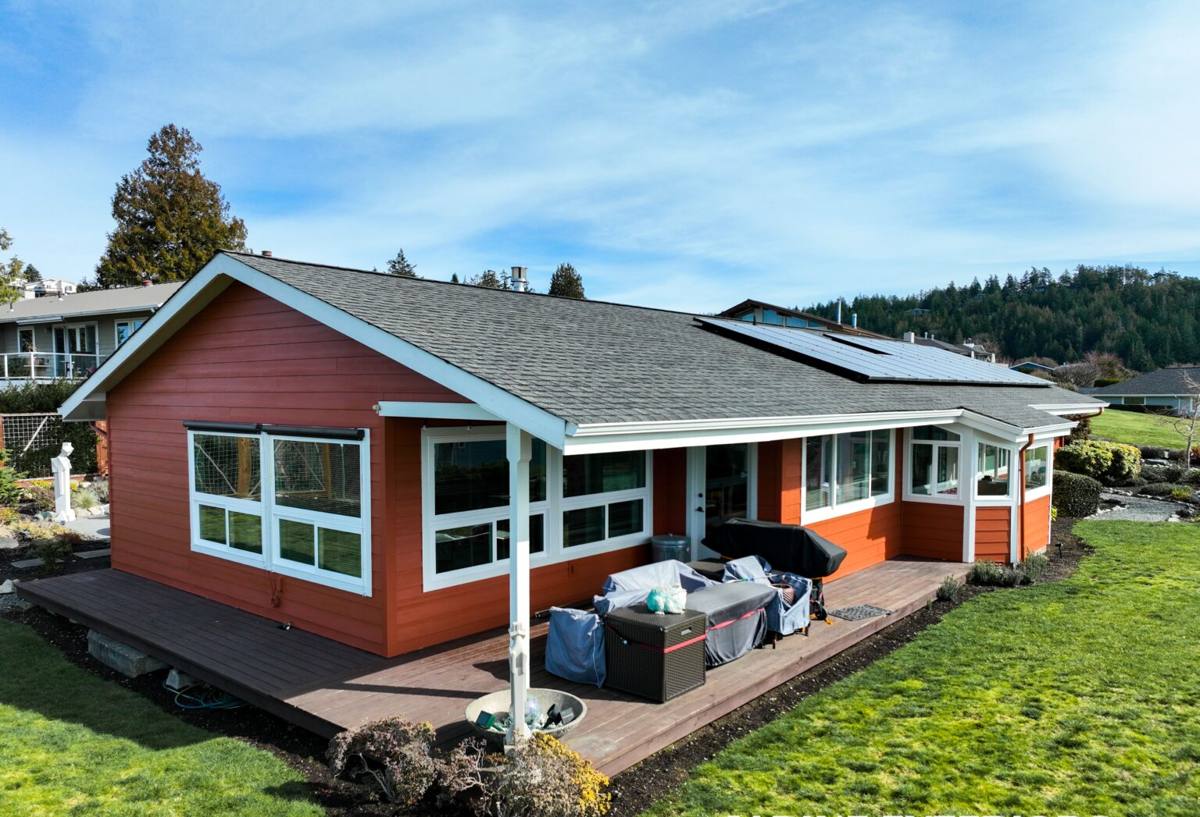
Custer sits close enough to Puget Sound and the Strait of Georgia that homes here take on weather most inland Whatcom County properties don't deal with. Salt-laden air off the water, wind-driven rain that comes in sideways rather than straight down, and a moss season that can stretch from October through May all put real stress on exterior siding. Board and batten is one of the most popular looks we install in this area — the vertical lines read as clean, modern farmhouse, or classic Pacific Northwest depending on trim and color choices — but the look only holds up if the material and the installation are matched to what Custer actually throws at a house.
This page is about that one combination: board and batten siding, done right, on a Custer home. Not a generic overview of the style — the specific decisions that matter when the house is a few miles from saltwater and gets more wet-dry cycling than most siding is designed for.
What Custer's Climate Actually Does to Siding
Three things drive most of the siding problems we see on service calls out here:
- Salt air corrosion. Airborne salt accelerates the breakdown of fasteners, trim flashing, and any coating that isn't built for a marine-influenced environment. Cheap or under-spec fasteners fail years before the siding itself would.
- Driving rain. Wind off the water pushes rain into joints and laps that would stay dry in a calmer inland location. Vertical board and batten has more seams per square foot than lap siding, which means more places for water to find a way in if the detailing is wrong.
- Moss and sustained dampness. Long stretches of gray, wet weather keep exterior surfaces damp for days at a time. Any siding material that absorbs moisture, or any batten-to-board gap that traps organic debris, becomes a moss farm.
None of this means board and batten is a bad choice for Custer — it means the material and the install both have to be chosen with these three factors in mind, not just for looks.
Why We Install Board & Batten in James Hardie Fiber Cement Only
We install James Hardie fiber cement exclusively — no vinyl, no LP SmartSide, no cedar, no primed spruce boards. For a vertical board and batten application specifically, that matters more than it might for a plain lap job, for a few reasons:
- Non-combustible core. Fiber cement doesn't burn, which matters anywhere wildfire smoke and dry-season risk are part of the regional conversation, and it simply removes a failure mode that wood-based products carry.
- Dimensional stability. Wood and wood-composite battens expand, contract, cup, and check with repeated wet-dry cycling. In a spot with as much moisture exposure as Custer, that movement opens gaps at the batten edges over time — exactly where wind-driven rain wants to get in. Hardie's fiber cement moves far less.
- Factory-applied ColorPlus finish. The color and protective coating are baked on at the factory, not brushed on in the field. That finish is engineered to hold up to UV and moisture cycling far longer than a field-applied paint or stain, which matters a lot on boards facing direct salt spray and rain.
- Climate-engineered HZ formulation. Hardie's HZ5 product line is formulated for wetter, colder climates like ours, rather than a one-size-fits-all mix.
We're not going to tell you cedar board and batten looks bad — it doesn't. But cedar in this climate means an ongoing commitment to refinishing, sealing cut ends, and watching for moisture intrusion at every batten. Vinyl board and batten profiles exist too, but vinyl on a home this close to the water tends to show UV fade and can become brittle faster in cold snaps. We stopped installing both because we were tired of doing warranty callbacks that a different material would have prevented.
What Correct Board & Batten Installation Actually Involves
Board and batten looks simple — vertical boards, battens over the seams — but the parts nobody sees are what determine whether it lasts 10 years or 40 in a place like Custer.
Drainage plane and rainscreen gap
Behind every board, we install a weather-resistive barrier and maintain a drainage gap so any moisture that gets past the surface can drain and dry out rather than sitting against the sheathing. This is not optional in a high-rain, high-humidity area — it's the single biggest factor in whether trapped moisture becomes a rot problem five years down the road.
Fastener selection
We use corrosion-resistant fasteners rated for fiber cement in coastal-influenced environments. Standard fasteners that are fine 30 miles inland can start showing rust streaks within a few years of salt air exposure — and a rust-streaked fastener head is both a cosmetic problem and an early sign of a compromised seal.
Flush vs. batten spacing and expansion joints
Fiber cement still requires manufacturer-specified gaps at butt joints and around penetrations to allow for the material's minor expansion and contraction. Skipping these gaps — a common shortcut — leads to cracking and paint failure at the joints first.
Flashing at every horizontal interruption
Window heads, doors, decks, and roof-to-wall intersections all need proper step and head flashing integrated with the drainage plane before the first board goes up. Vertical siding funnels more water down each seam than horizontal lap siding does, so flashing details at these interruptions carry more of the load.
Caulking discipline
Correct board and batten uses sealant only where the manufacturer specifies it — not as a substitute for proper flashing and lap details. Over-caulking is a common sign of a crew covering for bad flashing work underneath.
Our Process for a Custer Board & Batten Project
| Stage | What Happens | Why It Matters Here |
|---|---|---|
| Site assessment | Inspect existing sheathing, moisture barrier condition, and any prior moss or rot damage | Coastal-adjacent homes often have hidden moisture history that needs addressing before new siding goes on |
| Drainage plane install | Weather-resistive barrier plus rainscreen furring or drainage mat | Creates the drying path that driving rain and humidity demand |
| Flashing integration | Window, door, and penetration flashing tied into the drainage plane | Prevents the vertical-seam water paths specific to board and batten |
| Board and batten install | James Hardie panels or boards set per manufacturer fastening and gap specs, battens installed over seams | Correct spacing and fastening keep the assembly stable through wet-dry cycling |
| Trim and caulk detailing | Manufacturer-specified sealant points only, corrosion-resistant trim fasteners | Matches the salt-air durability of the siding itself |
| Final walkthrough | Review with the homeowner, confirm warranty registration | Documents the install for the transferable Hardie warranty |
Cost Factors for Board & Batten in a Coastal-Adjacent Setting
Every board and batten quote is different, but the line items that actually move the price on a Custer job tend to be the same few things:
| Factor | Why It Affects Cost |
|---|---|
| Existing wall condition | Rot or moisture damage found during tear-off adds sheathing repair before new siding can go on |
| Wall height and complexity | Vertical board and batten on tall gable walls or complex rooflines takes more layout and cutting time than a simple rectangular elevation |
| Trim and corner detail level | Wider corner boards, window trim upgrades, and accent bands add material and labor |
| Color selection | Standard ColorPlus colors versus custom or premium finishes carry different material costs |
| Access and site conditions | Tight lots, landscaping to protect, or multi-story sections affect staging and scaffolding time |
We give a firm, itemized quote after the site assessment — not a ballpark over the phone — because the wall condition underneath the old siding is usually the biggest unknown until we open it up.
Maintenance Checklist for Board & Batten Homes in Custer
Fiber cement is low-maintenance compared to wood, but "low-maintenance" isn't "no-maintenance" in this climate. A short annual routine keeps a board and batten exterior performing the way it's designed to:
- Rinse siding annually to clear salt residue and organic buildup before it feeds moss growth
- Check north- and shade-facing walls each fall for early moss or algae, since those elevations dry slowest
- Inspect caulk lines at trim and penetrations yearly — replace any that's cracked or pulling away
- Look at fastener heads and trim flashing for rust streaking, especially on elevations facing prevailing weather
- Keep gutters clear so overflow doesn't run down the wall face and saturate the lower courses of siding
- Trim back landscaping that holds moisture against the wall or blocks airflow behind the battens
Why Hiring a Crew That Already Works in Custer Matters
Board and batten installation isn't a specialty skill in the abstract — plenty of crews can hang boards and battens. What separates a durable install from one that needs attention in five years is whether the crew understands the specific moisture load and salt exposure of a given location. A crew that's worked houses in Custer and along this stretch of Whatcom County knows which elevations tend to hold moisture longest, how much drainage gap is actually needed given the local rain patterns, and where prior installers usually cut corners on flashing.
That local pattern recognition doesn't replace manufacturer specs — it supplements them. The specs tell you the minimums; local experience tells you where to exceed them.
Get a Straight Answer on Board & Batten for Your Custer Home
If you're weighing board and batten siding for a home in the Custer area, we're glad to walk the property, look at what's underneath the current siding, and give you a clear, no-pressure estimate — including an honest answer if board and batten isn't the best fit for your particular house. Use the form below to get started.