 Lynden Siding
 Building New in Birch Bay Means Building for the Water and the Wind
Birch Bay sits right on the water, and that changes what a new-construction window job actually needs to be. A window package that works fine on a sheltered lot inland from Lynden can start showing problems within a few years on a bay-front or near-bay lot — corroded hardware, chalky finishes, and seals that give up early. Salt-laden air, wind-driven rain off the water, and the long gray moss season that Whatcom County gets from fall through spring all put extra load on window units and the flashing around them. When you're framing new, you get one real chance to get the window opening, flashing, and product selection right before siding and interior finish cover it up. We do this work as a package — windows and exterior envelope together — because the two are inseparable on a coastal lot.
What "New Construction" Actually Means Here
New-construction windows are built with a nailing fin (or flange) that gets integrated into the wall's weather-resistive barrier during framing, as opposed to replacement or retrofit windows that get inserted into an existing frame after the fact. On a new build or a full addition in Birch Bay, this is the right approach — it lets us build a proper drainage plane and flashing system around every opening from scratch, rather than working around whatever's already there. Done correctly, it's the strongest, most weathertight way to get glass into a wall.
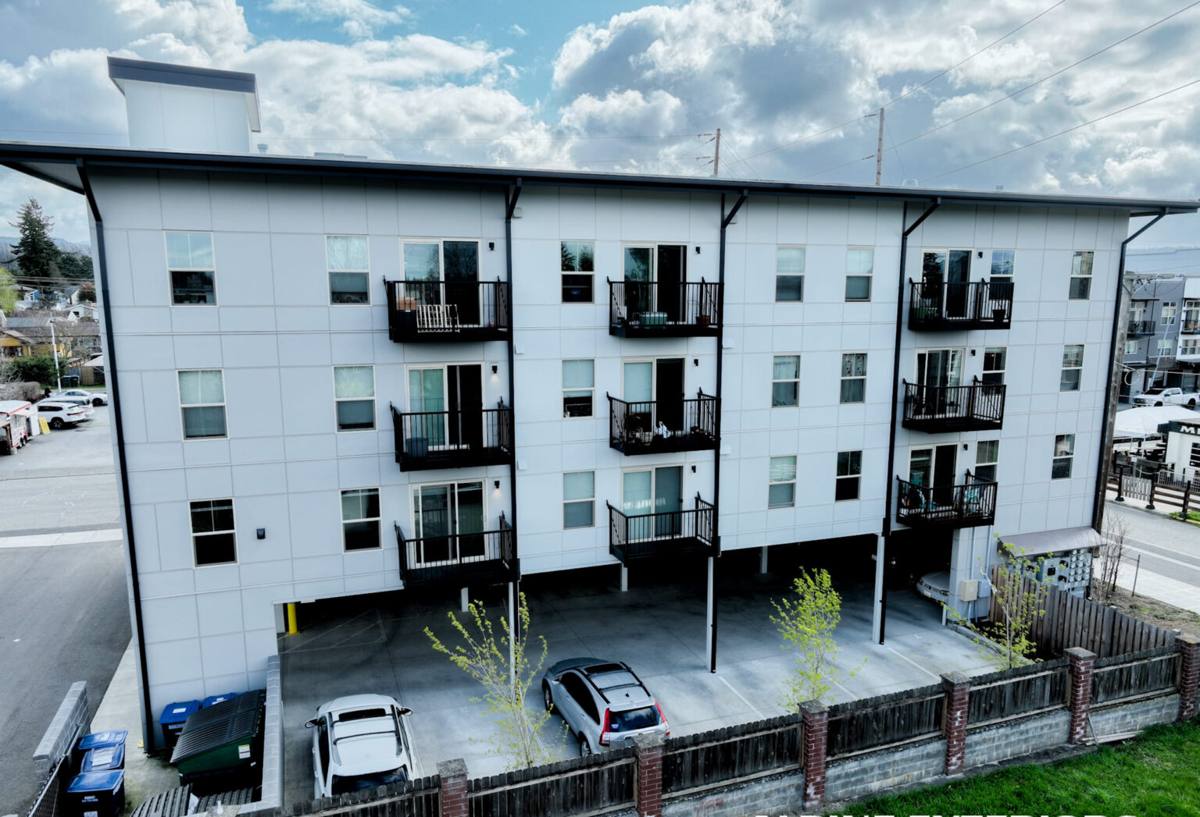
Why Birch Bay's Climate Changes the Job
Three things drive our decisions on a Birch Bay window job, and they're worth understanding before you pick products or a contractor:
- Salt air corrosion: Airborne salt off the bay attacks unprotected metal — screws, hinges, cranks, and cheaper aluminum cladding — faster than it would a few miles inland. Hardware and cladding choices matter more here than on a typical Lynden lot.
- Driving rain: Wind off the water pushes rain sideways, not straight down. That means flashing details that would be adequate on a calm inland elevation can fail on a bay-facing wall. Sill pan flashing and proper head flashing aren't optional extras here — they're the difference between a dry wall cavity and a rot problem five years out.
- Moss season: Whatcom County's wet season runs long, and moss and algae growth on north-facing and shaded elevations is a fact of life. It doesn't damage a window directly, but it holds moisture against trim and sills longer, which means detailing around the window needs to shed water cleanly rather than trap it.
None of this means Birch Bay needs exotic materials. It means ordinary best practices — good flashing sequence, the right hardware finish, quality sealants — have to actually be followed, every time, on every opening. That's where a lot of new-construction window jobs go wrong: not from bad products, but from a rushed or skipped flashing step that nobody sees again until there's a stain on the drywall.
What a Correct New-Construction Window Install Involves
The window unit itself is maybe a third of what determines how this performs over time. The rest is installation sequence. Here's the order we follow on a Birch Bay opening:
- Rough opening check. Confirm the opening is square, plumb, and sized correctly before anything else happens. An out-of-square opening stresses the window frame and can cause the sash to bind or seals to compress unevenly.
- Sill pan flashing. A sloped, sealed pan at the bottom of the opening so any water that does get past the window has somewhere to go — out, not into the wall cavity. This is the single most important step for a wind-driven-rain climate like Birch Bay's.
- Weather-resistive barrier integration. The house wrap or building paper gets lapped correctly around the opening — over the sill pan, behind the side flashing, under the head flashing — so water always drains down and out over the layer below it, never behind it.
- Window installation and fastening. The unit is set into the opening, shimmed level and plumb, and fastened per the manufacturer's schedule — not just "enough screws to hold it."
- Flange sealing and flashing tape. The nailing fin gets sealed and taped following a strict shingle-lap order (sides first, then head) so every layer drains onto the one below it.
- Head flashing. A drip cap or head flashing above the window kicks water out and away from the top of the opening — critical on any wall that takes direct wind-driven rain.
- Interior and exterior sealant. Backer rod and sealant at the interior air seal, and a proper exterior sealant joint that's designed to move with the building, not crack and let water in.
Skip or rush any one of these steps and the window itself barely matters — water will find the gap. This is also why we don't treat window installation as a separate trade from siding. The flashing at a window opening has to integrate with the housewrap and siding drainage plane as one continuous system, and that's much easier to get right when the same crew is doing both.
Choosing Window Products for a Bay-Front Lot
We don't push one brand — the right product depends on your budget, the home's design, and how exposed the specific elevation is. But a few factors matter more in Birch Bay than they would on a sheltered inland lot:
| Factor | Why it matters here | What to look for |
|---|---|---|
| Frame material | Salt air accelerates corrosion on unprotected metal and degrades weak vinyl formulations faster | Vinyl with UV/weather-rated formulation, or fiberglass/clad-wood with a factory-applied, marine-durable finish |
| Hardware finish | Cranks, locks, and hinges are the first parts to corrode near salt air | Stainless steel or corrosion-resistant coated hardware, especially on operable units |
| Glazing / Low-E coating | Whatcom County's long gray season means more low-angle light and heat loss than sun load | Low-E coating tuned for heating-climate performance, dual or triple pane depending on budget |
| Weatherstripping | Wind-driven rain tests seals more than still-air rain does | Quality compression seals rated for high wind-driven-rain exposure, verified by the manufacturer's testing |
| Cladding/finish color | Dark exterior finishes can fade or chalk faster under UV plus salt exposure over years | Manufacturer-warrantied finish colors, especially on the bay-facing elevation |
If a home is directly on the water versus a few blocks back in Birch Bay, we'll often recommend stepping up hardware and finish quality on that specific job even if it's a modest bump in cost — it's cheaper than replacing corroded hardware or a chalked finish in ten years.
What We Look At Before We Quote
Every Birch Bay lot faces the water a little differently, so we walk the site before pricing anything:
- Which elevations take direct wind and rain off the bay versus which are sheltered by the home itself or neighboring structures
- Roof overhang depth at each elevation — deeper overhangs reduce how much wind-driven rain actually hits the wall and window
- Sun and shade pattern, since shaded north walls hold moisture longer and are more prone to moss and algae buildup around trim
- Whether the framing plan allows a clean, continuous drainage plane tie-in at each rough opening
- Local wind exposure category, which affects the structural and water-resistance rating the windows need to meet
This walk-through is also where we talk through trade-offs honestly. A larger picture window facing the water looks great, but it's a bigger flashing detail to get right and a bigger surface for wind load — worth doing, but worth doing carefully, not worth cutting corners on to save a step.
Why the Installing Crew Matters as Much as the Window
Two identical windows, installed by two different crews, can perform completely differently five years later. The window manufacturer's warranty typically covers the unit itself — glass seal failure, hardware defects — but it generally does not cover water intrusion caused by poor flashing or installation. That's on the installer, and on a coastal lot like Birch Bay, installation quality is what actually determines whether you have a dry wall in year eight.
A crew that works Birch Bay regularly already knows which elevations on a given street layout tend to catch the worst of the wind-driven rain, what moss and algae growth actually looks like locally versus overblown internet advice, and how the local building department wants flashing details documented at inspection. That local pattern recognition doesn't replace following manufacturer instructions — it's what tells you where to be extra careful and where standard detailing is enough.
A Straightforward Checklist for Comparing Bids
If you're getting more than one quote for new-construction windows on a Birch Bay build, ask each contractor these questions and compare the answers directly:
- Do you install a dedicated sill pan flashing at every opening, or rely on sealant alone?
- What's your flashing lap sequence — sides before head, or head before sides?
- Are you fastening to the manufacturer's published schedule, or "as needed"?
- What hardware finish and frame material are you recommending for a bay-facing elevation specifically?
- Who is responsible if a leak shows up in year three — the window warranty, or your installation warranty?
- Will the same crew handle the siding and drainage plane tie-in, or is that a separate trade?
A contractor who can answer these clearly and consistently, without hedging, is usually one who does this correctly as a matter of habit rather than as an afterthought.
Timing and Coordination on a New Build
Window installation on new construction has to land at the right point in the framing schedule — too early and the rough openings may not be final; too late and you're racing weather with an open building envelope. In Whatcom County's wet season especially, we coordinate window delivery and install closely with the framing and house wrap schedule so the building isn't sitting open to driving rain any longer than necessary. On a Birch Bay lot with real wind exposure, that scheduling discipline is part of the job, not a bonus.
If you're framing new or planning an addition in Birch Bay and want a straight answer on what your windows and openings actually need for this stretch of coastline, we're glad to walk the site and put together a free, no-pressure estimate — just fill out the form below.