 Lynden Siding
 Why Birch Bay Siding Takes More Punishment Than You'd Think
Birch Bay sits right where Whatcom County's weather gets personal. The water isn't just scenery here — it's a steady source of salt-laden air that drifts onto every exterior surface, all year, whether or not a storm is happening. Add the Pacific Northwest's long wet season, the driving rain that comes sideways off the water during winter blows, and the shade and moisture that let moss colonize anything that stays damp too long, and you've got one of the more demanding siding environments in the county. A siding product and installation that would be perfectly fine a few miles inland, away from the water, can wear noticeably faster out here.
None of this means Birch Bay homes need something exotic. It means they need a siding system that's actually engineered for moisture cycling and salt exposure, installed by people who understand why the details matter more here than they do elsewhere. That's the whole conversation on this page.
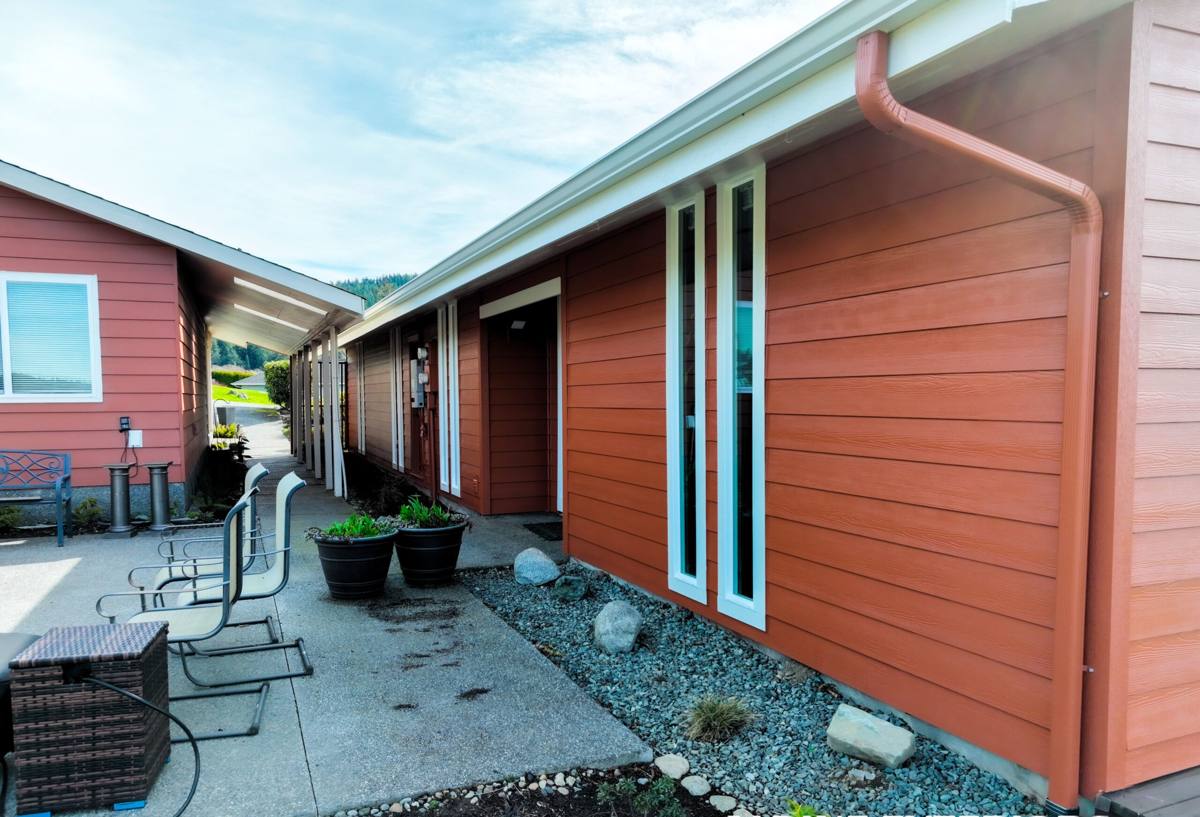
What Salt Air Actually Does to a Home's Exterior
Salt in the air isn't just corrosive to metal — it's abrasive and hygroscopic, meaning it pulls moisture out of the air and holds it against whatever surface it lands on. For siding, that translates into a few specific problems:
- Fasteners and trim hardware corrode faster near open water, which is why fastener choice and flashing details matter more here than in a landlocked neighborhood.
- Paint and finishes break down faster under salt exposure combined with UV, leading to chalking, fading, and adhesion failure on lower-quality coatings.
- Any wood-based product — trim, fascia, or siding with wood or wood-fiber components — absorbs that salt-laden moisture more readily, which accelerates swelling, checking, and rot at joints and cut edges.
None of this is dramatic on any single day. It's cumulative. A home a block from the water in Birch Bay can show exterior wear years before an identical home in a drier, more sheltered part of Whatcom County — not because anything went wrong, but because the exposure is simply higher.
Driving Rain and Moss: The Other Half of the Problem
Salt air gets the attention, but the bigger day-to-day stress on Birch Bay siding is water — specifically, wind-driven rain that hits siding at an angle instead of falling straight down. That kind of rain finds every gap in flashing, every under-caulked seam, and every spot where siding wasn't held off the wall assembly correctly. Over a normal Pacific Northwest wet season, a small installation shortcut becomes a real moisture path.
Then there's moss. Birch Bay's tree cover, marine humidity, and long stretches of overcast, damp weather create ideal conditions for moss and algae growth on north-facing walls, shaded elevations, and anywhere siding stays damp longer than it should. Moss holds moisture against the siding surface, which is bad news for anything underneath that isn't built to handle sustained dampness. It also just looks bad — green-black staining on siding is one of the most common exterior complaints we hear from Whatcom County homeowners near the coast.
Why This Combination Is Tougher Than "Just Rainy"
A lot of siding products are rated for rain exposure in general terms. Fewer are actually tested and engineered for the specific combination Birch Bay deals with: sustained marine humidity, salt aerosol, and driving rain, on a cycle that repeats for months at a time without much drying window in between. That's the gap that matters when you're choosing a product for a home out here.
Why We Install James Hardie Fiber Cement — and Only That
We standardized on James Hardie fiber cement for every home we side, including here in Birch Bay, for reasons that are specific to this climate, not just brand preference. Fiber cement is a cement, sand, and cellulose fiber composite — it has no wood content to absorb moisture, swell, or feed rot, and it's non-combustible. James Hardie's HZ5 product line is specifically engineered for climates with high moisture exposure, which fits Whatcom County's coastal communities well.
The factory-applied ColorPlus finish is a meaningful part of this, too. It's baked on in a controlled environment rather than field-applied, which gives it better adhesion and UV resistance than most site-applied paint jobs — a real advantage when you're fighting salt air and sun cycling at the same time. It also comes with a longer color-retention warranty than what you typically get from repainting a wood-based or vinyl product on your own schedule.
We don't install LP SmartSide, vinyl, Cemplank, Allura, or bare cedar or spruce siding, and we're upfront about why: each of those has real strengths, but none of them hold up to Birch Bay's specific combination of salt exposure, driving rain, and moss pressure as consistently as Hardie fiber cement installed correctly. That's a professional standard we hold across every job, not a knock on any single homeowner's existing siding.
What Correct Installation Looks Like Here
Fiber cement siding is only as good as the installation behind it. In a coastal-influenced area like Birch Bay, a few details matter more than they would elsewhere:
Water Management Behind the Siding
Correct installation starts with a drainable weather-resistive barrier and, ideally, a rainscreen gap that lets any moisture that does get behind the siding drain and dry out instead of sitting against the wall sheathing. This is standard good practice everywhere, but it's non-negotiable in a driving-rain environment.
Flashing and Fastener Details
Every window, door, and penetration needs flashing that actually sheds water outward, not just caulk covering a gap. Fasteners need to be corrosion-resistant and driven to Hardie's specifications — not overdriven, not underdriven — because fastener failure is one of the more common causes of premature siding problems near salt air.
Clearances That Prevent Moss and Rot
Hardie specifies minimum clearances between the bottom of the siding and grade, roofing, decks, and other horizontal surfaces. Those clearances aren't cosmetic — they're what keeps splash-back moisture and standing damp leaf litter from sitting against the siding edge, which is exactly where moss and edge-swelling problems start.
Caulking and Joint Treatment
Panel joints, trim intersections, and butt joints need the right sealant, applied correctly, and touched up as part of ongoing maintenance. A missed or failed joint is a direct water path in a driving-rain climate.
Comparing Siding Options for a Birch Bay Home
| Factor | James Hardie Fiber Cement | Vinyl | Wood / Cedar |
|---|---|---|---|
| Moisture absorption | None (cement-based, engineered for wet climates) | None, but seams and expansion gaps can let water behind panels | High — absorbs moisture, especially at cut ends and joints |
| Salt air resistance | Strong; factory finish resists chalking and fading | Moderate; can become brittle over time | Poor; salt-laden moisture accelerates rot and finish failure |
| Moss and algae resistance | Good, especially with proper clearances and maintenance | Moderate; textured surfaces can trap growth | Poor; porous surface holds moisture that feeds growth |
| Fire resistance | Non-combustible | Combustible, can melt/deform under heat | Combustible |
| Maintenance cycle | Periodic caulk/paint touch-up; no repainting for years with ColorPlus | Low, but cracks and fades; hard to patch invisibly | Frequent repainting/staining and rot inspection |
Our Process, Start to Finish
- On-site assessment — we look at your home's exposure: how close to the water, which elevations take the worst weather, and where existing moss or moisture staining is showing up.
- Inspection of the wall assembly — once old siding is off, we check sheathing, framing, and any existing moisture damage before anything new goes up. This is where problems from a previous installation usually surface.
- Weather barrier and drainage plane installation — done to spec, with attention to how water will actually move and drain on your specific home.
- Hardie panel and trim installation — installed to manufacturer clearances and fastening specs, with flashing detailed at every penetration.
- Final joint and caulk work — the finishing details that determine how the siding performs during its first few wet seasons.
- Walkthrough — we go over what maintenance (if any) to expect and answer questions before we consider the job done.
Why Hiring a Crew That Already Works Birch Bay Matters
Siding installation isn't identical everywhere, and a crew that mostly works drier, inland jobs can miss details that matter specifically near the water. Working regularly in Whatcom County's coastal communities means we've already worked through the clearance, flashing, and drainage decisions that this climate demands — we're not learning on your house. It also means we understand what "normal wear" looks like out here versus what's actually a warning sign, which matters if you're trying to figure out whether your current siding needs a patch, a partial repair, or a full replacement.
Signs Your Birch Bay Home's Siding Needs Attention
- Persistent green-black staining that comes back shortly after cleaning, especially on shaded or north-facing walls
- Soft spots, bubbling, or visible swelling at seams, corners, or the bottom edge of siding
- Paint that's chalking, peeling, or fading unevenly, particularly on elevations facing the water
- Visible gaps at trim or window flashing where you can see daylight or feel air movement
- Rust streaking from fasteners or trim hardware
- Siding sitting flush against grade, decking, or roofing with little to no clearance
Any one of these on its own might just mean routine maintenance. Several together, especially on a home with some age on its exterior, are worth a closer look before they turn into sheathing or framing damage.
If you're weighing a siding project for a Birch Bay home, we're happy to take a look and talk through what your specific exposure calls for — no pressure, no obligation. Fill out the form below and we'll set up a free estimate.