 Lynden Siding
 Why Sumas Roofs Wear Differently Than You'd Expect
Sumas sits at the northern edge of Whatcom County, tucked against the Nooksack River valley and the Canadian border. It doesn't get hammered by ocean surf the way a coastal town does, but the same marine air that rolls in off the Salish Sea pushes inland through the valley all winter long, carrying moisture and a faint edge of salt with it. Combine that with the valley's fog pockets, the long gray stretch from October through April, and shade from mature trees on a lot of older Sumas properties, and you get a roof environment that's tougher on asphalt shingles than a lot of homeowners assume.
The result isn't usually a dramatic leak. It's slower: granule loss that shows up early, moss creeping up from the north-facing eave, and shingles that lose their seal a few years before the warranty says they should. A roof that's built and installed correctly for this specific climate holds up. One that's built to a generic spec — the same shingle and detailing you'd use in a dry inland climate — starts showing its age fast.
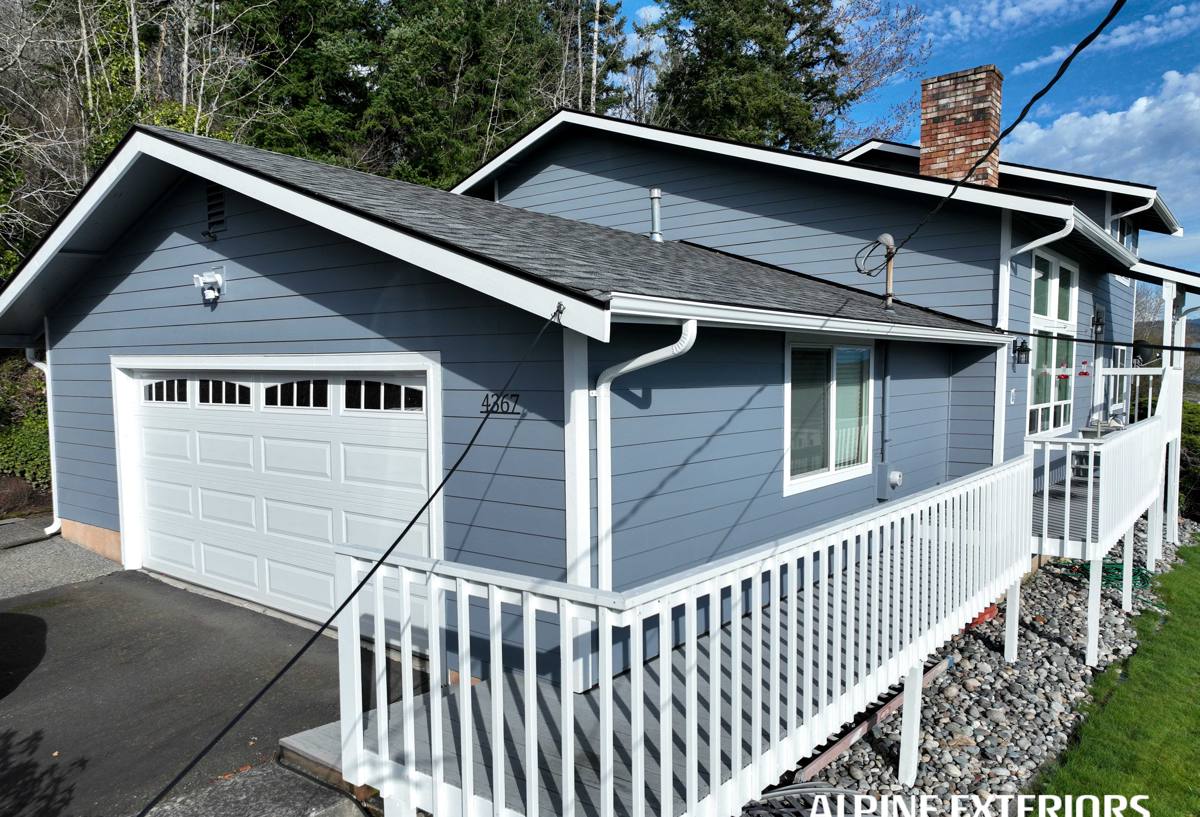
What a Correct Asphalt Shingle Job Actually Involves
"Asphalt shingle roofing" sounds simple, and the material itself is affordable and forgiving. But a roof is a system, not a single product, and most of the failures we get called out to inspect in Sumas trace back to a shortcut somewhere in the system — not the shingles themselves.
Deck Inspection and Tear-Off
Every legitimate reroof starts with removing the old shingles down to the deck, not layering over them. That's the only way to actually see the plywood or OSB underneath — soft spots, old nail holes, water staining, and rot don't show up until the old layer is gone. In a wet climate like this one, roofing over a compromised deck just seals the problem in.
Underlayment and Ice & Water Protection
Underneath the shingles is where a lot of the real weather resistance lives. We use synthetic underlayment across the field of the roof and self-adhering ice-and-water membrane at the eaves, valleys, and any roof-to-wall transitions — the spots where wind-driven rain gets pushed backward under the shingle edge instead of running off. Whatcom County's driving rain, especially in fall and winter storms, is exactly the condition this membrane is built for.
Ventilation
A shingle roof needs balanced intake and exhaust airflow through the attic. Without it, moist air gets trapped, condensation forms on the underside of the deck, and shingles can prematurely fail from the inside out — a problem that has nothing to do with the shingle brand and everything to do with the vent design. We check ridge, soffit, and gable venting on every job, not just the shingle layer.
Flashing and Edge Details
Chimneys, skylights, dormers, and valleys are where roofs actually leak — flat field shingles rarely fail on their own. Correct step flashing, counter-flashing, and valley metal (rather than just running shingle material through the valley) make the difference between a roof that sheds Sumas's winter rain cleanly and one that finds a way in over a few seasons.
Problems We Commonly See on Older Sumas Roofs
- Moss colonization on north- and shade-facing slopes, which holds moisture against the shingle surface and accelerates granule loss
- Nail pops and lifted tabs from wind events, especially on roofs where shingles weren't hand-sealed or nailed to the manufacturer's pattern
- Granule loss and algae streaking that shows up faster than the shingle's rated lifespan would suggest, usually tied to poor attic ventilation
- Valley wear where water volume concentrates and generic installation shortcuts show up first
- Soft or spongy decking discovered only once old shingles are pulled, often from a slow leak that went unnoticed for years
None of these are unusual for the region — they're what you'd expect from asphalt roofing exposed to a long wet season year after year. The point isn't to scare anyone off asphalt shingles; it's that the install details matter more here than they would in a drier climate.
Choosing the Right Shingle for This Climate
Asphalt shingles aren't one product — there's a real range in weight, wind rating, and algae resistance, and the right choice depends on your roof's exposure and how long you want to go before thinking about it again.
| Shingle Type | Typical Lifespan | Wind Rating | Best Fit |
|---|---|---|---|
| 3-tab strip shingle | 15–20 years | Lower | Budget-driven projects, rental properties |
| Architectural (dimensional) | 25–30 years | Higher, better seal strip | Most Sumas homes — the standard we recommend |
| Impact-resistant (Class 4) | 25–30+ years | Highest | Homes with heavy tree exposure or a history of storm damage |
For most homes in Sumas, we steer people toward a mid-to-upper architectural shingle with algae-resistant granules built in. It costs more upfront than a 3-tab, but the thicker profile and stronger seal strip hold up noticeably better against the wind gusts that come through the valley, and the algae-resistant coating buys real time against the streaking that shows up fast in this climate. We're honest that a basic 3-tab shingle can still be the right call on a lower-slope, budget-sensitive project — it's not our default recommendation, but it's a legitimate option in the right situation.
A Note on Ridge and Starter Shingles
It's common to see roofs where the field shingle is upgraded but the ridge cap and starter strip are whatever came cheapest. Those two components take direct wind and water exposure and are usually the first thing to fail in a windstorm. We match ridge and starter product to the field shingle's rating on every job — it's a small cost difference and it closes a real gap.
Our Process, Start to Finish
- On-site inspection — we look at the existing roof, attic ventilation, and any problem areas before quoting anything
- Written estimate — a clear scope covering tear-off, decking repair allowance, underlayment, shingle product, and flashing work, so there's no ambiguity about what's included
- Scheduling around weather — asphalt shingles need to be installed within their manufacturer temperature range and on a dry deck; we plan around Whatcom County's wet stretches rather than rushing a job into the rain
- Tear-off and deck repair — old roofing removed, deck inspected, any soft or damaged sheathing replaced before anything new goes down
- Underlayment, flashing, and shingle installation — installed to manufacturer spec so the warranty is actually valid, not just installed to "look right"
- Cleanup and magnetic nail sweep — job site and yard cleared of debris and stray nails before we consider the job done
- Final walkthrough — we go over the finished roof with you before we call it complete
Cost Factors for a Sumas Reroof
We don't publish flat prices because roof cost depends on real variables specific to your house — but homeowners deserve to know what actually drives the number up or down before they call around for quotes.
| Factor | Why It Matters |
|---|---|
| Roof size and number of stories | More square footage and steeper access both add labor time |
| Roof pitch and complexity | Valleys, dormers, and multiple roof planes take more flashing and labor than a simple gable |
| Deck condition | Rotted or soft sheathing found during tear-off adds material and labor not visible from the ground |
| Shingle tier chosen | 3-tab, architectural, and impact-resistant products carry different material costs |
| Layers of existing roofing | Multiple old layers mean more tear-off labor and disposal weight |
We give a firm written number after the on-site inspection, not a phone estimate — decking condition especially can't be judged accurately from the driveway.
Roof Maintenance Checklist for Sumas Homeowners
A well-installed asphalt shingle roof still benefits from basic upkeep in a climate that grows moss this readily. A few habits go a long way between full inspections:
- Keep gutters clear, especially before the fall rains — overflow backs water up under the eave line
- Trim back tree limbs that shade the roof or drop debris, which slows drying and feeds moss growth
- Look for moss or dark streaking once a year, particularly on north-facing slopes, and address it early rather than letting it spread
- After any significant windstorm, do a visual check from the ground for lifted or missing shingles
- Check attic ventilation isn't blocked by insulation or storage — airflow protects the shingles from underneath
- Have a professional look at flashing around chimneys and skylights every few years, since these are the most common leak points
Why Hire a Crew That Already Works in Sumas
Roofing code, permitting, and material behavior don't change much from one Whatcom County town to the next, but local exposure conditions do. A crew that's already worked roofs in Sumas knows which slopes tend to hold moss, how the valley's wind patterns hit a roofline differently than they do closer to Bellingham Bay, and what decking condition to expect on homes of a certain age in this area. That's the kind of judgment that doesn't come from a spec sheet — it comes from doing the work here, repeatedly, and seeing how these specific roofs age.
It also means a shorter drive for warranty work or a maintenance check, and a crew that isn't learning the region on your project. For a roof that's supposed to protect your home for the next two to three decades, that local track record is worth asking about when you're comparing contractors.
If you're weighing a reroof or want a second opinion on a roof that's showing early wear, we're happy to take a look. Use the form below to request a free, no-pressure estimate — we'll walk the roof, tell you honestly what condition it's in, and give you a written scope before any work begins.