 Lynden Siding
 Roof Repair for Aldergrove, BC Homes
Aldergrove sits just across the line from Whatcom County, close enough that the weather doesn't know the difference — and neither does a leaking roof. Salt-laden air moving in off the Strait, long stretches of driving rain through fall and winter, and a moss season that never really ends all put the same kind of stress on roofs in Aldergrove that they put on homes ten minutes south in Lynden. We repair roofs on both sides of that line, and the diagnosis and fix don't change based on which country the house happens to sit in.
This page is about one job: roof repair, done right, for homes in and around Aldergrove, BC. Not a full tear-off, not a sales pitch for a replacement you don't need yet — a straight look at what actually goes wrong with roofs out here, what a correct repair involves, and why it matters to hire a crew that already knows this climate instead of learning on your roof.
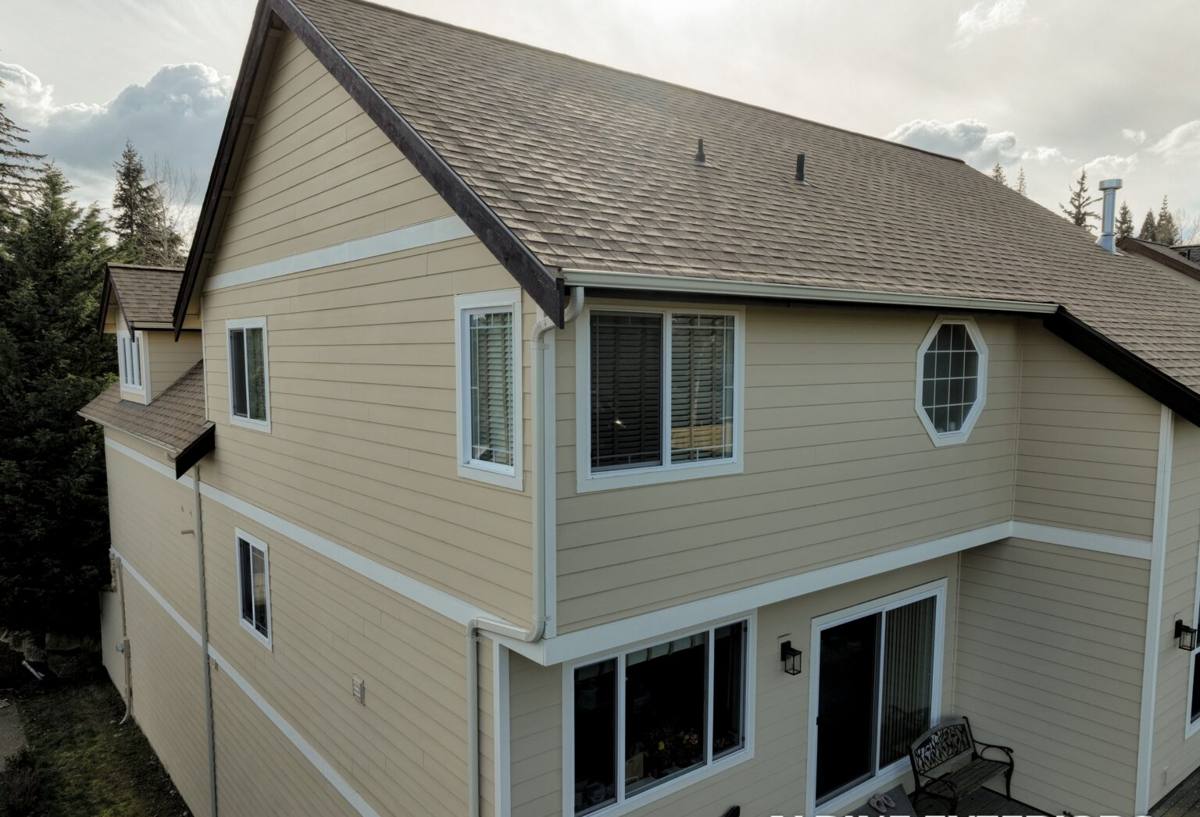
What the Climate Does to a Roof Out Here
The Fraser Valley and northern Whatcom County share a maritime climate that's tougher on roofing than most homeowners realize. Three things drive most of the repair calls we get in this area:
Salt Air and Metal Fatigue
Even well inland from the water, salt-carrying air corrodes exposed metal faster than drier climates do. Flashing, fasteners, and metal roof panels take the brunt of it. Once corrosion starts at a seam or a nail head, it's rarely cosmetic — it's the beginning of a leak path.
Driving Rain
Rain here doesn't just fall straight down. Wind-driven rain gets pushed sideways under shingle edges, into open laps, and through gaps in flashing that would stay dry in a calmer climate. A repair that would hold up fine somewhere with gentler weather can fail here within a season if it doesn't account for wind-driven moisture.
A Long Moss Season
Shade, moisture, and mild temperatures give moss and algae a long growing window on north-facing slopes and under tree cover — which describes a lot of Aldergrove properties. Moss doesn't just look bad. It holds water against the roofing material, lifts shingle edges, and works its way under flashing over time.
The Repairs We See Most Often
| Problem | What's Usually Going On | Left Alone, It Leads To |
|---|---|---|
| Active leak | Failed flashing, cracked pipe boots, or wind-lifted shingles | Sheathing rot, interior drywall and insulation damage |
| Moss buildup | Shade and moisture on north-facing or tree-covered slopes | Lifted shingles, granule loss, trapped moisture |
| Damaged flashing | Corrosion, poor original installation, or storm damage | Leaks at valleys, chimneys, and wall intersections |
| Clogged or failing gutters | Debris buildup, sagging sections, loose fasteners | Water backing up under the roof edge, fascia rot |
| Missing or cracked shingles | Wind events, age, foot traffic | Exposed underlayment, accelerated water intrusion |
What a Correct Repair Actually Involves
The single biggest mistake in roof repair isn't skill — it's stopping at the symptom. A stain on the ceiling doesn't tell you where the water actually got in; water can travel along rafters or sheathing for several feet before it shows up inside. A repair that just patches the spot below the stain often leaves the real entry point untouched.
A correct repair means:
- Tracing the leak to its actual entry point, not just the visible damage
- Checking the condition of the sheathing underneath, not just the surface layer
- Matching materials so the repair ages at the same rate as the surrounding roof
- Re-flashing properly at valleys, penetrations, and wall intersections rather than relying on sealant alone
- Confirming the fix accounts for wind-driven rain, not just straight-down water
Sealant and caulk have their place, but they're a short-term fix when used alone. On a roof exposed to this much wind-driven moisture, a repair built around mechanical flashing and proper laps will outlast one that depends on a bead of caulk staying intact.
Our Process
- Inspection. We look at the whole roof, not just the spot you're worried about — moss growth, flashing condition, gutter function, and attic or ceiling signs of moisture, all included.
- Honest assessment. We tell you plainly whether this is a repair, and if it's not, we explain why — no upsell, no scare tactics.
- Written scope. You know exactly what's being done and why before any work starts.
- The repair. Proper tear-out of the damaged area, matched materials, correct flashing and fastening technique.
- Cleanup and check. Debris cleared, gutters checked, and a final look to confirm the fix addressed the actual source.
Repair or Replace? How We Tell the Difference
Not every leak means a new roof, and not every roof past its warranty needs to come off immediately. Here's roughly how we weigh it:
| Factor | Leans Toward Repair | Leans Toward Replacement |
|---|---|---|
| Age of roofing | Well within expected service life | At or past typical lifespan for the material |
| Extent of damage | Localized — one section, one cause | Multiple areas failing independently |
| Sheathing condition | Solid, no soft spots | Rot or soft decking in more than one area |
| Moss/algae history | Manageable with cleaning and maintenance | Chronic, recurring despite treatment |
| Underlying cause | Identifiable and fixable | Systemic — ventilation, slope, or original install issues |
When a roof is genuinely at the repair-versus-replace line, we'll say so and lay out both paths honestly rather than defaulting to whichever job is bigger.
Why It Matters to Hire a Crew That Already Works Aldergrove
Aldergrove sits close enough to Whatcom County that plenty of contractors on either side of the border will take the work — but showing up isn't the same as showing up prepared. A crew that regularly works this stretch of the Fraser Valley and Whatcom County already understands the moss patterns on north-facing slopes here, knows how far wind-driven rain travels under an unsealed lap in this weather, and isn't guessing at how a repair will hold up through a wet winter. We also handle the logistics of working across the border as a routine part of doing business here — it's not a special trip, it's part of our regular service area.
That familiarity shows up in small decisions during a repair: where to add an extra course of flashing that isn't strictly required by code but holds up better against sideways rain, or recognizing moss regrowth patterns that tell you a one-time cleaning won't be enough. Those are the calls a local crew makes without having to think twice.
What Drives the Cost of a Roof Repair
| Factor | Why It Matters |
|---|---|
| Size and location of damage | A single flashing repair costs far less than multiple failure points |
| Roof pitch and access | Steeper roofs and difficult access take more time and safety setup |
| Material match | Matching existing shingle color and profile can affect material cost |
| Underlying damage | Sheathing replacement adds cost beyond the surface repair |
| Moss removal scope | Heavy, long-term moss buildup takes more labor to clear safely |
Most straightforward roof repairs land in a modest range compared to a full replacement — but the only honest number is one based on an actual look at your roof. We won't quote a repair sight unseen, and we won't inflate a small fix into a bigger job than it needs to be.
Signs You Likely Need a Roof Repair Now
- Water stains on ceilings or upper walls, especially after a windy rain
- Visible moss or dark streaking on north-facing or shaded roof sections
- Shingles that look lifted, curled, or are missing granules
- Rust staining or visible gaps around flashing at chimneys, vents, or valleys
- Gutters overflowing or pulling away from the fascia
- A musty smell in the attic or upper floor that wasn't there before
Any one of these is worth a look before it becomes an interior repair on top of a roof repair.
Maintenance That Extends the Life of a Repair
A good repair holds up longer with basic upkeep. Keeping gutters clear so water isn't backing up under the roof edge, trimming back branches that keep a section of roof shaded and damp, and having moss treated before it spreads rather than after it's established all reduce how often you're calling about the same spot. None of this replaces a proper inspection, but it buys the repair more years before anything else needs attention.
If you're dealing with a leak, moss buildup, or a roof that just needs an honest look, we'd be glad to come take a look. The estimate is free, there's no pressure to do more work than your roof actually needs, and you'll get a straight answer about what's going on — just fill out the form below.