 Lynden Siding
 Siding Replacement for Acme Homes
Acme sits in the rural stretch of Whatcom County east of Lynden, where homes deal with a climate that's tough on exterior materials: long stretches of driving rain, humid air that rarely gets a real drying-out period, and a moss season that seems to start earlier and last longer every year. Add in the salt-laden air that moves through the county from the Puget Sound and Georgia Strait, and you have conditions that will find every weakness in a siding system over time. If your siding is cupping, cracking, or holding onto moss and mildew no matter how often you clean it, replacement — not another repair — is usually the honest answer.
This page focuses specifically on siding replacement for homes in and around Acme. It's a different job than new construction siding, and it's different from what a home in a drier part of the state needs. The existing wall assembly, the moisture history of the old siding, and the realities of a wet, wooded, low-sun environment all shape how the replacement should be done.
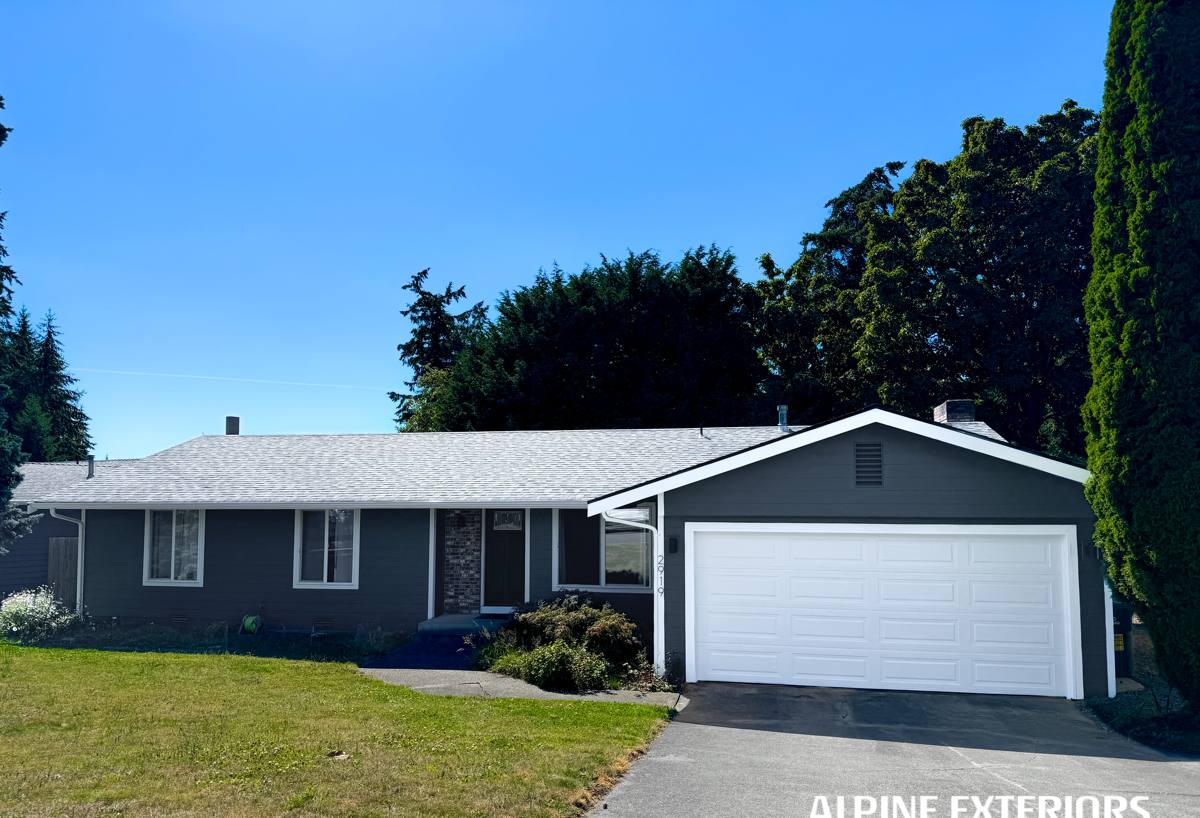
Why Siding Fails Faster Out Here
Moisture That Doesn't Get a Break
Whatcom County doesn't just get rain — it gets rain that lingers. Homes tucked near trees or on shaded lots (common around Acme) lose the sun exposure that would otherwise help siding dry out between storms. Wood-based and composite sidings that stay damp for extended periods are the ones most likely to swell, delaminate, or rot at the seams.
Moss and Organic Growth
A long moss season means algae and moss get a real foothold on north-facing walls and anywhere siding stays shaded and damp. Beyond the cosmetic issue, moss holds moisture against the surface of the siding, which accelerates whatever damage the material is already prone to.
Salt Air and Wind-Driven Rain
Even well inland from the water, salt-laden air moving through the region contributes to faster degradation of paint finishes, fasteners, and caulking. Combined with wind-driven rain that gets pushed into laps, joints, and trim details, this is an environment where installation quality matters as much as the material itself.
Signs a Home in Acme Needs Replacement, Not Repair
- Siding boards that are cupping, bowing, or visibly swollen at the edges
- Soft or spongy spots when you press on the siding, especially near the bottom courses
- Paint that won't hold, no matter how recently it was redone
- Moss or dark staining that returns within a season or two of cleaning
- Visible gaps at seams, corners, or trim that let daylight or drafts through
- Interior signs — peeling paint, musty smell, or staining on walls that back up to exterior siding
- Siding that's original to a home built more than 20-25 years ago with wood, hardboard, or older composite products
One or two of these can sometimes be spot-repaired. Several at once, especially moisture-related ones, usually means the underlying wall assembly is compromised and a full tear-off is the more honest recommendation.
What a Correct Siding Replacement Job Actually Involves
Siding replacement done right is not just "removing old boards and nailing up new ones." For a home that's been dealing with Whatcom County moisture for years, the work underneath the siding matters as much as what goes on top.
- Full tear-off of the old siding down to the sheathing, not installation over existing material.
- Sheathing inspection for rot, soft spots, or water damage that has to be repaired before anything new goes up.
- Weather-resistive barrier installed correctly, lapped shingle-style so water sheds outward and down, never inward.
- Flashing at every window, door, and penetration — this is where most siding failures we see actually originate, not in the siding field itself.
- Proper fastening to manufacturer spec — correct fastener type, spacing, and depth, since over- or under-driven fasteners are a common cause of early siding problems.
- Correct clearances at grade, decks, and roof lines so the new siding isn't sitting in a spot that traps moisture from day one.
Skipping any of these steps to save time is exactly how a home ends up needing another full replacement in half the time it should have lasted.
Why We Only Install James Hardie Fiber Cement
We install James Hardie fiber cement siding exclusively. We don't install vinyl, LP SmartSide, Cemplank, Allura, primed spruce, or cedar — not because those products don't have a place in the market, but because after years of doing this work in a climate like ours, we standardized on the one product line we're confident holds up to Whatcom County conditions without asking the homeowner to babysit it.
What That Means in Practice
- Non-combustible core — fiber cement doesn't feed a fire the way wood-based products can.
- Engineered for wet climates — Hardie's HZ5 product line is specifically formulated for regions with extended moisture exposure, which describes Acme and the rest of Whatcom County well.
- Factory-applied ColorPlus finish — baked-on color that resists fading and holds up to the salt-air and UV exposure that strips paint off field-finished materials faster.
- Doesn't feed moss and mildew growth the way organic wood fiber products can, since it has no wood pulp for organisms to feed on.
- Strong transferable warranty backed by a manufacturer with decades of track record in wet Pacific Northwest climates.
We're not going to tell you every alternative product is junk — plenty of them perform fine in the right climate with the right maintenance. But we've made a professional call: for the rain, moss, and salt air this area sees, fiber cement installed to spec is what we're willing to put our name on.
Our Siding Replacement Process
- On-site assessment — we look at the current siding, check for hidden moisture damage, and walk the property with you.
- Written estimate — scope, product selection, and a realistic timeline, no pressure to decide on the spot.
- Tear-off and sheathing repair — removing the old material and fixing anything underneath before moving forward.
- Weather barrier and flashing installation — the part of the job that determines whether the siding lasts 10 years or 40.
- Hardie installation — installed to manufacturer specification for fastening, clearances, and joint treatment.
- Final walkthrough — going over the finished work with you before we consider the job done.
Cost Factors for Siding Replacement
Every home is different, but these are the main variables that move the price up or down on an Acme-area siding replacement:
| Factor | Why It Matters |
|---|---|
| Home size and wall complexity | More corners, gables, and dormers mean more cutting, flashing, and labor time |
| Sheathing condition | Rot or water damage found during tear-off adds repair scope before new siding can go on |
| Siding profile and trim detail | Lap width, shake-style panels, and trim boards vary in material and labor cost |
| Access and site conditions | Tree cover, slope, and driveway access around Acme properties can affect setup time |
| Existing siding removal | Full tear-off of multiple old layers takes longer than removing a single layer |
| Paint vs. factory finish | ColorPlus factory-finished panels cost more upfront but skip a field-paint step |
We'll walk through these specifics for your home during the estimate rather than quoting a number sight unseen.
Why Hiring a Crew That Already Works in Acme Matters
Siding installation is detail work, and the details that matter change with the climate. A crew that mostly works in drier parts of the state may not think twice about a flashing detail or drainage gap that's non-negotiable out here. A crew that's used to Whatcom County's rain patterns, moss growth, and shaded lots knows to slow down at exactly the spots where water actually gets in — valleys, window heads, deck ledgers, and grade transitions.
There's also a practical side: a local crew can respond quickly if a question comes up after the job, knows the local permitting process, and isn't working from a playbook built for a different climate.
Maintenance After Installation
- Rinse siding annually to keep moss and organic buildup from establishing, especially on shaded, north-facing walls
- Keep gutters clear so overflow doesn't run down the siding face
- Trim back vegetation that keeps walls shaded and damp
- Inspect caulking at trim and penetrations every year or two, and have any gaps addressed promptly
- Address any impact damage quickly rather than letting moisture get behind a cracked panel
Fiber cement is low-maintenance compared to wood-based alternatives, but "low-maintenance" doesn't mean "no maintenance" — a few minutes of attention a year keeps a well-installed system performing for decades.
If your Acme-area home is showing signs of siding wear, or you're planning ahead before the next wet season sets in, we're happy to take a look and give you a straightforward, no-pressure estimate. Use the form below to get started.