 Lynden Siding
 Metal Roofing in Acme: Built for What This Corner of Whatcom County Throws at a Roof
Acme sits out in the rural, foothill side of Whatcom County, close enough to Lynden to be part of the same service area but different enough in character — bigger lots, more tree cover, more properties with a barn, shop, or outbuilding already wearing a metal roof. That rural setting doesn't shield a house from the same weather that shapes exterior work across the rest of the county. Salt-tinged marine air still moves through, wind still drives rain sideways during fall and winter storms, and the shade from mature trees and long stretches of damp weather still add up to a moss season that runs most of the year on anything that doesn't get much direct sun.
Our crew works out of Lynden and covers the surrounding area, including Acme, on siding, roofing, windows, and decks. This page is specifically about metal roofing — what this climate demands from it, what a correct installation actually involves, and how the process runs from first look to final walk-through. It's written for homeowners deciding whether metal is the right call for their house, not as a sales pitch for one material over another.
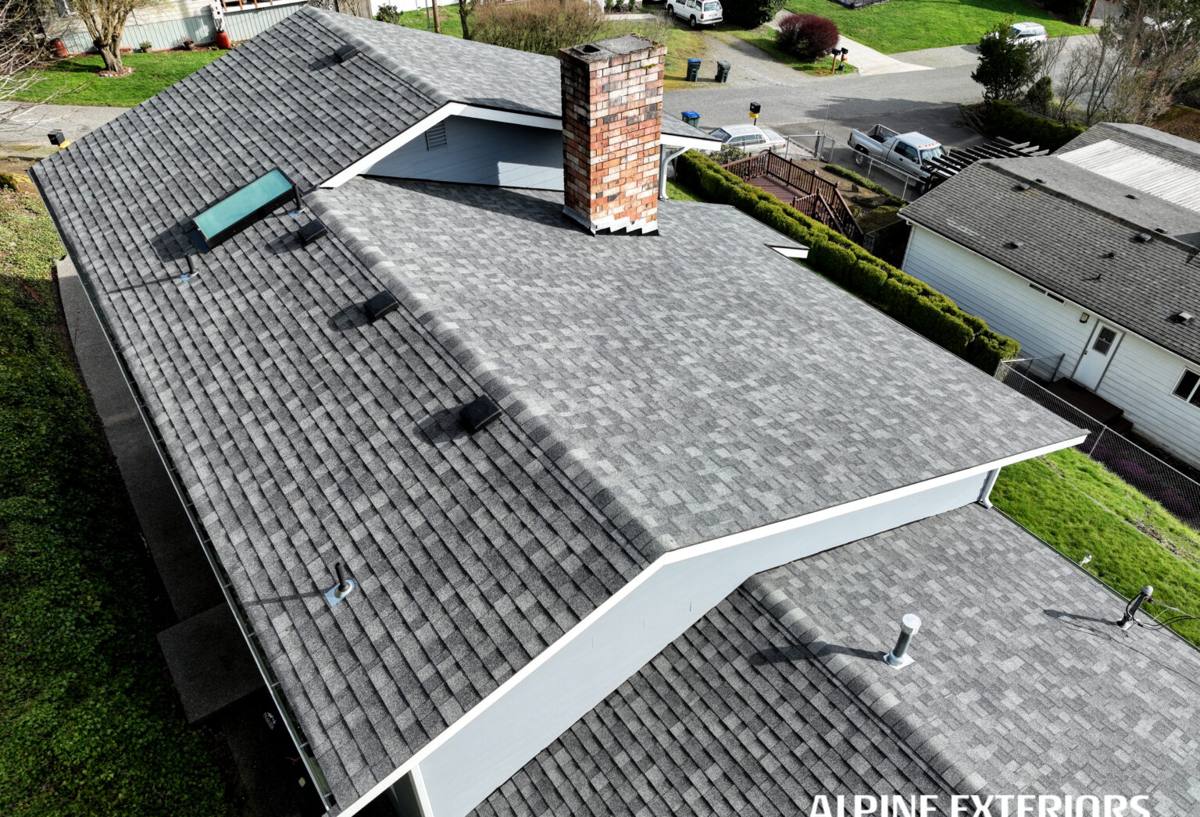
What This Climate Puts a Metal Roof Through
Salt Air and Corrosion
Even well inland from the immediate shoreline, homes across Whatcom County sit inside a marine-influenced air pattern that carries a low, steady dose of salt. On a metal roof, that matters more than it would on shingles, because the whole roofing surface — not just the fasteners and flashing — is metal. Panel material, finish coating, and fastener hardware all need to be chosen with corrosion resistance in mind, or the roof starts showing surface degradation and rust staining well before it should.
Wind-Driven Rain
Rain in this part of the state rarely falls straight down through the wetter months. Wind pushes it sideways into seams, laps, and flashing details, which is a heavier and more directional load than a simple annual rainfall number suggests. Metal roofing sheds water aggressively when it's installed correctly, but that advantage depends entirely on how the seams, end laps, and penetrations are detailed — a well-chosen panel with weak flashing work will still leak in a sideways storm.
A Long Moss Season
Shaded roof planes and roofs under mature trees — common on the larger, more wooded lots around Acme — stay damp longer between rains, and that's exactly the condition moss needs to establish. Metal's smooth, non-porous surface and typically steeper pitch make it one of the more moss-resistant roofing choices available, but it isn't immune. Panels installed with poor drainage, valleys that collect debris, or shaded low-slope sections can still grow moss over time, just more slowly than a porous material would.
Why Metal Roofing Makes Sense for a Lot of Acme Properties
Metal isn't the right fit for every house or every budget, but there are practical reasons it comes up often for rural Whatcom County properties specifically. Larger roof footprints and outbuildings mean more total roof to maintain over the years, and metal's long service life and low maintenance burden matter more the more roof surface a property has. Homeowners who already run a metal roof on a shop or barn are often looking to match that material and appearance on the house, and metal roofing takes well to steeper pitches and larger unbroken roof planes, both common on rural lots with more room to build than a tighter in-town lot allows.
| Panel Type | Salt Air & Moisture Behavior | Moss Resistance | Typical Maintenance |
|---|---|---|---|
| Concealed-fastener standing seam | Excellent when specified with a coastal-rated finish; no exposed fastener heads to corrode or leak | High; smooth surface and raised seams shed water and debris well | Low; occasional sealant and trim checks |
| Exposed-fastener panel (corrugated or ribbed) | Adequate with marine-rated screws, but exposed gaskets and fastener heads are the first point of failure in salt air | Moderate to high depending on pitch and panel profile | Moderate; fastener and gasket inspection every several years |
| Stone-coated steel | Good; coating adds a layer of protection over the steel substrate | Moderate; textured surface holds slightly more debris than smooth panel | Low to moderate |
We'll go over which panel type and finish actually fits a given roof's pitch, exposure, and budget during the estimate. A steep, open roof plane and a lower-pitch section tucked under trees don't call for the same recommendation, even on the same house.
What a Correct Metal Roof Installation Actually Involves
Underlayment and Substrate
Metal panels are only as good as what's underneath them. We use a high-temperature synthetic underlayment rated for the sustained moisture this climate delivers, with self-adhered membrane at eaves, valleys, and other points where water and debris tend to concentrate. Skipping this step to save a little on materials is one of the more common shortcuts we see on roofs that fail early.
Fastening System: Concealed Clips vs. Exposed Fasteners
Standing seam panels attach through a concealed clip system, with no fastener penetrating the panel face — that's a meaningful advantage in a climate with this much sustained moisture, since there's no exposed screw head or gasket for water or salt air to work on over time. Exposed-fastener panels cost less up front but rely on a rubber washer at every screw to stay watertight, and those washers degrade with age and UV exposure, which is why exposed-fastener roofs typically need a fastener and gasket check every several years that standing seam roofs don't.
Flashing and Trim Detail
Ridge caps, valleys, wall transitions, and any roof penetration are where a metal roof actually succeeds or fails. We use corrosion-resistant flashing matched to the panel material — mixing incompatible metals at a flashing joint can cause galvanic corrosion, which is a detail that's easy to get wrong and expensive to fix after the fact. Every flashing point gets proper lap and sealant integration rather than relying on sealant alone to do the work.
Panel Material and Finish
Steel and aluminum are the two common substrates, and both perform well here when the finish coating is right. We spec finishes rated for coastal and marine-influenced exposure, since a lower-grade finish can chalk, fade, or lose corrosion resistance faster in this air than the same panel would in a drier inland climate.
Ventilation
Proper intake and exhaust ventilation keeps the roof deck drier underneath the panels and reduces the condensation risk that comes with a non-porous roofing surface over a humid attic space. We check and correct ventilation as part of every installation rather than assuming the existing setup is adequate.
Our Metal Roofing Process
- On-site assessment. We look at the existing roof, deck condition, pitch, sun and shade exposure, and any outbuildings on the property, and take measurements for an accurate estimate.
- Panel and finish selection. We go over standing seam, exposed-fastener, and stone-coated options with honest trade-offs for the specific roof and budget.
- Tear-off and deck inspection. Old roofing comes off, and the deck is checked for rot or soft spots before anything new goes down.
- Underlayment installation. Synthetic underlayment and self-adhered membrane go in at eaves, valleys, and vulnerable points.
- Panel installation. Panels are installed to manufacturer spec, with attention to seam alignment, fastening pattern, and thermal expansion allowance.
- Flashing and trim. Ridge, valley, and wall-transition flashing are installed and integrated with the underlayment, not just caulked over.
- Ventilation check. Intake and exhaust ventilation are confirmed to be working correctly before close-out.
- Final walk-through. We review the completed roof with the homeowner and go over care and warranty details.
Is Metal Roofing the Right Fit for Your Acme Home?
Metal makes the most sense for certain situations more than others, and we'll say so honestly during an estimate rather than defaulting to whatever's more profitable to install. It's a strong fit when:
- You're planning to stay in the home long enough to benefit from a roof rated for decades rather than one rated for twenty years
- The property already has metal roofing on a barn, shop, or outbuilding you'd like to match
- The roof has a steep pitch or large, open planes that suit panel installation well
- Low ongoing maintenance matters more to you than the lowest possible up-front cost
- Shaded, moss-prone sections of the roof have been a recurring problem with a previous shingle roof
It's worth a closer conversation, rather than an automatic yes, if the budget is tight and you don't plan to stay in the home long enough to recover the higher upfront cost, or if the roof geometry has an unusual number of complex penetrations that would drive up flashing labor disproportionately. We'll walk through the real numbers for your specific roof rather than a generic recommendation either way.
What Affects the Cost of a Metal Roof in Acme
Every metal roof prices out differently, but a handful of factors consistently move the estimate. We don't quote a number without seeing the roof, since pitch and access alone can shift a bid meaningfully.
| Factor | Why It Matters |
|---|---|
| Panel type | Concealed-fastener standing seam costs more up front than exposed-fastener panel but needs less long-term maintenance |
| Roof size and complexity | More valleys, dormers, and penetrations mean more flashing labor and material |
| Pitch and access | Steep or hard-to-access roofs take longer and require more safety setup |
| Deck condition | Rot or soft sheathing found during tear-off adds repair cost not visible before the old roof comes off |
| Panel material and finish | Aluminum and premium coastal-rated finishes cost more than standard steel but resist corrosion longer in this climate |
| Outbuilding matching | Coordinating panel color and profile across a house and existing barn or shop roof can affect material ordering and cost |
Maintaining a Metal Roof in This Climate
A correctly installed metal roof needs less upkeep than most other roofing materials, but "low maintenance" isn't "no maintenance" here:
- Keep gutters and valleys clear of needles and debris so water isn't held against panel seams
- Have exposed fasteners and gaskets inspected periodically if the roof uses an exposed-fastener panel
- Trim back tree limbs that keep a section of roof shaded and slow to dry between rains
- Check flashing at chimneys, vents, and wall transitions after major windstorms
- Address any scratched or worn finish coating promptly, since bare metal corrodes faster once the protective finish is compromised
Why Hire a Crew That Already Works Acme
A roofer who mostly works tighter, in-town lots isn't wrong about roofing in general — they're just working from a different set of defaults. Larger rural roof planes, existing outbuilding metal to match or coordinate with, and longer driveways and different access logistics are all things that show up more often on Acme properties than on a standard in-town job. A crew that's already worked this part of Whatcom County has a feel for those differences going in, rather than figuring them out on your roof for the first time.
There's also the practical side of being close by. Being based in Lynden means we're a short drive from Acme for the initial estimate, for checking in during the job, and for any follow-up question that comes up after the roof is finished — not a company that quoted the job from an office an hour away and moved on to the next region once the crew packed up.
If you're weighing metal roofing for your Acme home, or want an honest second opinion on whether it's the right fit before you decide, we're glad to take a look. Reach out for a free, no-pressure estimate using the form below.