 Lynden Siding
 Why Metal Roofing Makes Sense in Abbotsford
Abbotsford sits in the Fraser Valley, close enough to the coast that homes here deal with the same wet-weather punishment we see on our side of the border in Whatcom County: long stretches of driving rain, damp air that carries salt inland on stronger weather systems, and short, dark winters where a roof rarely gets a real chance to dry out. Add in a moss season that can stretch from late fall through spring, and asphalt shingle roofs in this area tend to age faster than their warranty numbers suggest. Metal roofing holds up differently. It sheds water fast, gives moss spores far less to grip onto, and doesn't absorb moisture the way organic shingle mat can. That's the case for metal here — not hype, just how the material behaves in this specific climate.
None of that means metal is maintenance-free or that it's the right call for every house. It's a tradeoff, like every roofing choice, and part of our job is being honest with you about what that tradeoff looks like before you commit to it.
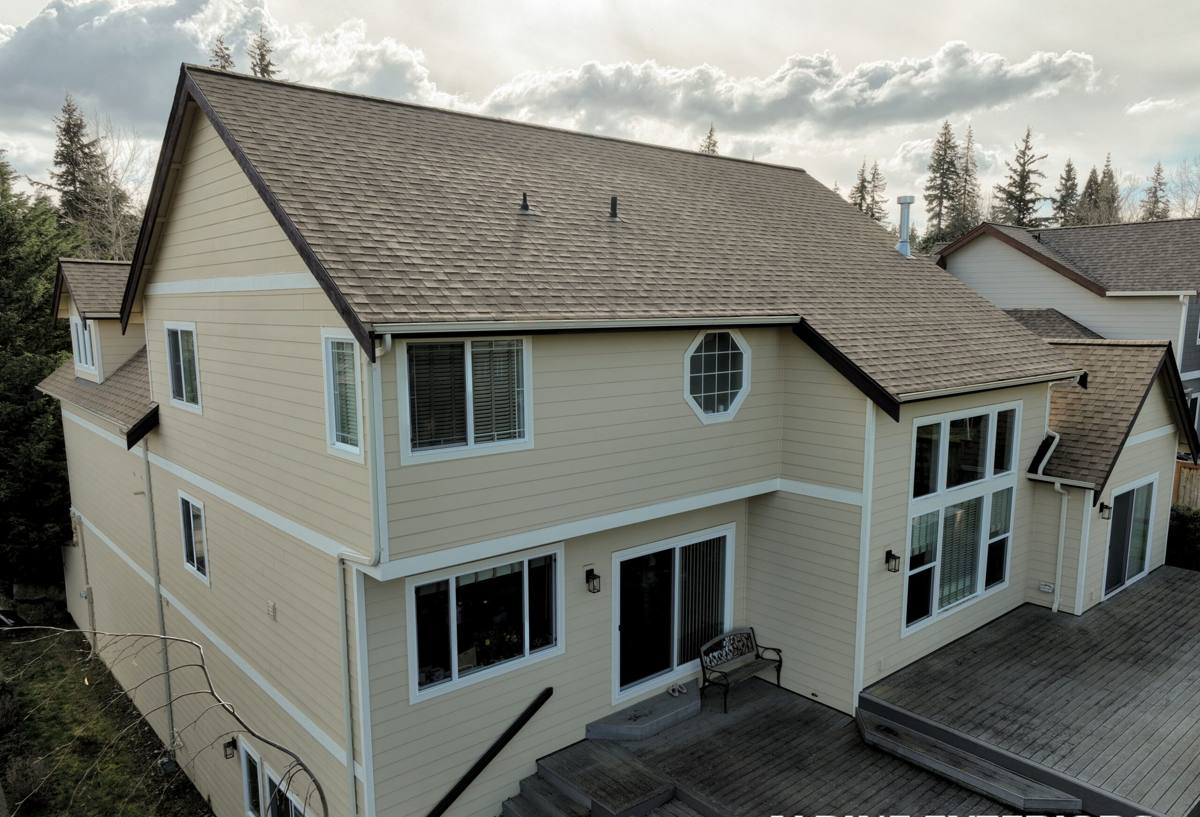
What Correct Metal Roofing Installation Actually Involves
Metal roofing fails early almost exclusively because of installation shortcuts, not because the material itself wore out. The panels are usually the last thing to go wrong — the underlayment, fastening, and flashing details are where problems start.
Underlayment and Moisture Barrier
Metal roofs need a synthetic or self-adhered underlayment rated for the higher heat and condensation conditions metal creates, especially in a climate like this one where temperature swings between day and night stay damp. Standard felt underlayment isn't the right match under metal in a wet coastal-influenced climate — it breaks down faster and doesn't manage condensation the way a purpose-built membrane does.
Fastening and Panel Movement
Metal expands and contracts with temperature more than shingles do. Exposed-fastener panels need the correct fastener spacing and torque so panels can move slightly without the screws backing out or the panel oil-canning. Standing seam systems use concealed clips instead of through-panel screws, which handles that movement better over the long run but requires a crew that's actually trained on the clip system being used.
Flashing at Every Transition
Valleys, chimneys, skylights, and wall intersections are where nearly every roof leak actually starts, metal or otherwise. Correct metal roofing work means custom-bent flashing at each transition, not generic trim pieces forced to fit. In a rain-heavy area like Abbotsford, undersized or poorly lapped flashing is the single most common cause of a "metal roof that leaks."
Ventilation
A sealed-up attic under a metal roof traps moisture, and trapped moisture leads to condensation on the underside of the panels — which looks like a leak but isn't one. Ridge venting and intake venting need to be sized correctly for the roof, not just carried over from whatever the old shingle roof had.
Metal Roofing Styles and How They Compare
Not every metal roofing product is built the same way or priced the same way. Here's a straightforward comparison of the systems we install most often.
| Style | Fastening | Best For | Tradeoffs |
|---|---|---|---|
| Standing Seam | Concealed clips, no exposed screws | Long-term durability, cleanest look, best moisture performance | Higher upfront cost, requires a specialized crew |
| Exposed-Fastener Panel | Screws through the panel face | Budget-conscious projects, outbuildings, simpler rooflines | Fasteners need periodic inspection and eventual re-torquing or replacement |
| Metal Shingle/Shake Panels | Interlocking panels, concealed fasteners | Homeowners who want a traditional shingle or shake look with metal's durability | More seams than standing seam, so flashing detail work matters even more |
For most homes in the Abbotsford area, we lean toward standing seam or a quality interlocking panel system, simply because the reduced seam exposure holds up better against sustained rain and the freeze-thaw cycles that show up most winters.
Salt Air, Moss, and What They Actually Do to a Roof
Salt-laden air accelerates corrosion on any exposed metal — fasteners, flashing, and cut edges are the vulnerable points, not the painted panel field. That's why fastener material and coating quality matter as much as the panel gauge itself. Moss is a different problem: it doesn't rot metal, but moss and the organic debris it traps hold moisture against seams, fasteners, and flashing longer than they'd otherwise stay wet. On a shingle roof that moisture soaks into the mat. On a properly installed metal roof it mostly just sits on the surface, but "properly installed" is doing real work in that sentence — poor flashing under a mat of wet moss is still a leak waiting to happen.
Practical upkeep for this climate
- Keep gutters and valleys clear of needles and leaf debris so water has a clean path off the roof
- Trim back overhanging branches to cut down shade and moisture retention, which slows moss growth
- Do a visual check after major wind or rain events for lifted flashing or debris buildup in valleys
- Avoid pressure washing metal panels — it can force water under laps and damage factory coatings
- Have fasteners on exposed-fastener systems checked periodically, since they're the first thing salt air and thermal cycling work on
Our Process for Abbotsford Metal Roofing Projects
1. On-Site Assessment
We look at the existing roof structure, decking condition, ventilation setup, and rooflines before recommending a panel style. A steep, simple gable roof and a complex roof with multiple valleys and dormers don't call for the same product or the same install approach.
2. Straight Material and System Recommendation
We'll walk you through panel gauge, fastening system, and finish options in plain terms, including what each choice costs and why, so you're deciding with real information instead of a sales pitch.
3. Tear-Off and Deck Prep
Old roofing comes off, decking gets inspected for soft spots or water damage, and any repairs happen before a single panel goes down. Installing new roofing over a compromised deck just hides the problem for a while.
4. Underlayment, Panels, and Flashing
Installed in the sequence and with the fastening specs the manufacturer requires, with custom flashing formed for your roof's actual transitions rather than generic stock trim.
5. Final Walkthrough
We go over the finished roof with you, point out the flashing and ventilation details, and make sure you know what routine upkeep looks like going forward.
What Metal Roofing Costs Depend On
We won't quote a number without seeing the roof, but these are the factors that actually move the price, so you know what you're paying for.
| Factor | Why It Matters |
|---|---|
| Roof complexity | More valleys, dormers, and penetrations mean more custom flashing labor |
| Panel system | Standing seam runs higher than exposed-fastener panel due to material and labor |
| Deck condition | Rot or soft decking found during tear-off adds repair cost before install can continue |
| Panel gauge and coating | Heavier gauge and marine-grade coatings cost more but resist salt-air corrosion longer |
| Ventilation upgrades | Older homes often need added ridge or intake venting to perform correctly under metal |
Signs Your Current Roof Is Ready for a Change
- Granule loss or bald patches on an aging asphalt shingle roof
- Persistent moss buildup that comes back within a season of cleaning
- Visible rust or lifting on old metal flashing or an aging metal roof
- Daylight or water staining visible in the attic after heavy rain
- Curling, cracked, or missing shingles after a windy winter
Why a Crew That Already Works This Area Matters
Abbotsford and the surrounding Fraser Valley sit close enough to Lynden and Whatcom County that the two areas share almost identical weather patterns — the same rain systems, the same moss pressure, the same freeze-thaw swings. A crew that already installs and repairs metal roofing in this corridor knows what actually holds up here versus what looks good on paper. That's a different starting point than a contractor pricing a metal roof from a spec sheet without having stood on roofs in this specific climate. We treat every Abbotsford project with the same install standards we hold ourselves to at home, because the weather doesn't care which side of the border a roof is on.
Get a Straight Answer on Your Roof
If you're weighing metal roofing for a home in the Abbotsford area, we're glad to take a look and give you an honest read on what your roof actually needs — no pressure, no inflated scare tactics. Use the form below to request a free estimate and we'll go from there.