 Lynden Siding
 Deck Replacement for Abbotsford, BC Homeowners
A deck built for the Fraser Valley has to survive a different kind of year than a deck in a drier climate. Abbotsford sits close enough to the Salish Sea and the Fraser River lowlands that homes here deal with salt-tinged air, long stretches of driving rain, and a moss season that can run from October through April. We're a Lynden-based crew that works this side of the border regularly, and deck replacement in Abbotsford is one of the jobs we get called out for most — usually because a deck that looked fine from a distance turns out to be rotten, spongy, or structurally unsound once you get underneath it.
This page is about deck replacement specifically — tearing out a deck that's past the point of reasonable repair and rebuilding it correctly, from the footings up. If your deck just needs a few boards swapped or a railing tightened, that's a repair job, not a replacement, and it's worth having someone look at it before you commit to a full rebuild.
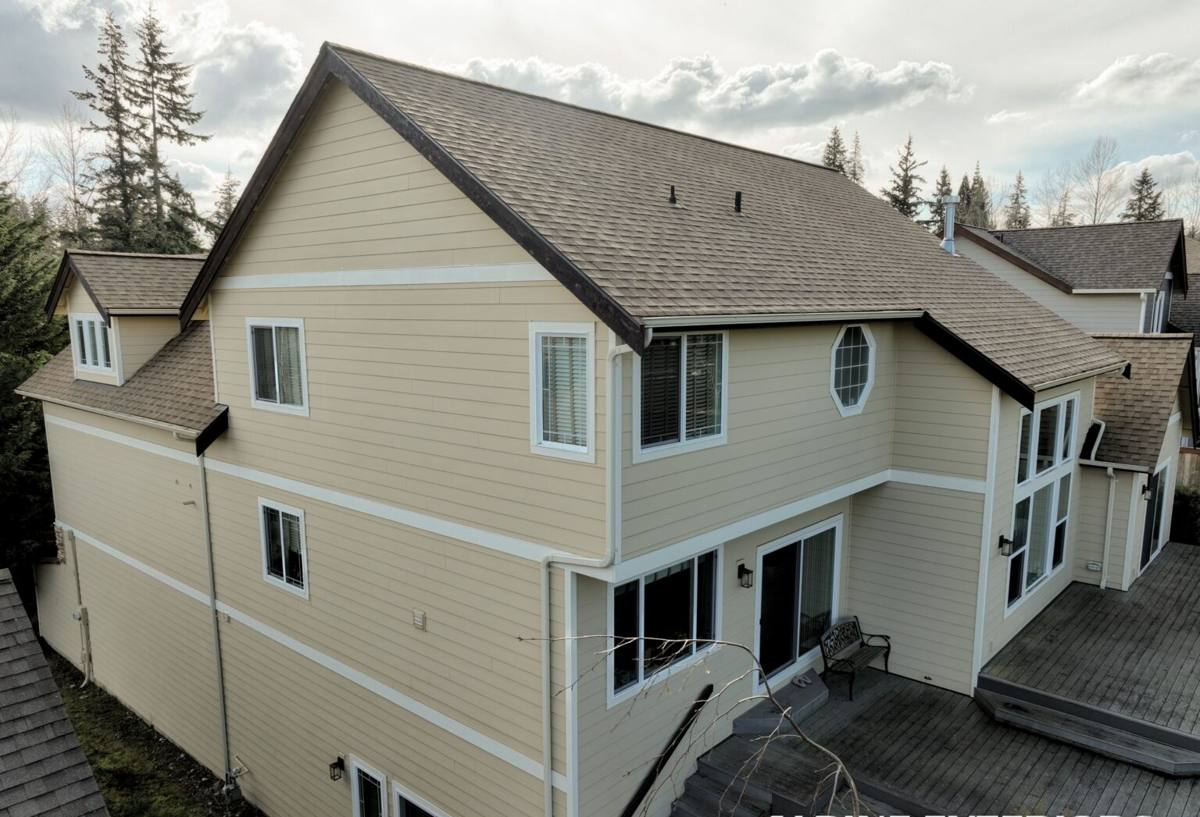
Why Decks Wear Out Faster Here Than People Expect
Most homeowners assume a deck failure is about age. In this region, it's usually about moisture cycling, not age alone. The Fraser Valley's combination of frequent rain, high humidity, and moderate winter temperatures means wood rarely gets a long enough dry stretch to fully release moisture before the next rain arrives. That constant wet-dry cycling is what breaks down fasteners, softens framing lumber, and lets rot start in places you can't see from the surface.
The Salt Air Factor
Proximity to marine air matters more than people think, even well inland from open water. Salt-laden moisture accelerates corrosion on fasteners, joist hangers, and any exposed metal hardware. A deck built with standard, non-coated hardware in this environment can show rust-streaked staining and weakened connections years before the wood itself gives out. This is one of the most common failure points we find on older decks in this area — the wood looks salvageable, but the hardware holding it together is compromised.
Moss, Algae, and Trapped Moisture
A long moss season isn't just cosmetic. Moss and algae hold water against the deck surface and, more importantly, against the ledger board and framing underneath. On decks with poor airflow or tight board spacing, moss can establish itself in the gaps between boards and along the house-side ledger connection — exactly where you don't want standing moisture. Left long enough, this contributes directly to ledger rot, which is one of the more serious structural problems a deck can develop.
Driving Rain and Wind-Driven Wetting
Rain in this region often comes in sideways with wind, which pushes water into places a straight-down rain wouldn't reach — under railing caps, behind fascia boards, and into any gap where flashing wasn't installed or was installed poorly. This is why flashing detail at the ledger board is one of the first things we check on an older deck; it's also one of the most commonly skipped details on decks that weren't built to current standards.
Signs a Deck Needs Replacement, Not Repair
Not every problem deck needs a full teardown. Here's how we sort it out on an assessment visit:
- Soft or spongy decking boards in multiple areas, not just one or two isolated spots
- Rot or discoloration at the ledger board where the deck attaches to the house
- Wobble or movement in the railing posts when pushed firmly
- Visible gaps, cracking, or rust streaking at joist hangers and other hardware
- Footings that have shifted, heaved, or show visible cracking
- A deck more than 15-20 years old that has never had structural framing inspected
- Persistent moss growth on the framing side of the boards, not just the surface
If the problems are limited to surface boards and the framing underneath tests solid, a resurface or targeted repair can make sense. If the ledger, joists, or footings are compromised, replacement is almost always the more honest recommendation — patching a structurally weak deck just delays the same conversation a year or two later.
What a Correct Deck Replacement Involves
A deck replacement done right is a structural project, not a cosmetic one. Here's what we cover on every rebuild:
Footings and Foundation
We check existing footings for depth, condition, and frost-line compliance before deciding whether they can be reused or need to be replaced. In this climate, footings that were undersized or shallow to begin with are a common source of long-term settling and deck movement.
Ledger Board Attachment
The ledger board — where the deck ties into the house — is the single most important connection on the whole structure, and it's the one most likely to have been done wrong on an older build. We install proper flashing behind and over the ledger to direct water away from the house wall, and we use structural fasteners rated for the load, not just deck screws.
Framing and Joist Layout
Joist spacing, beam sizing, and hardware all get matched to the actual span and load of the deck, not just copied from what was there before. We use corrosion-resistant, coated hardware throughout, given how much salt-air exposure this region gets.
Decking Surface and Railings
Board spacing is set to allow airflow and drainage underneath — tight, no-gap installs look clean on day one but trap moisture and moss in a wet climate. Railings are built to current structural standards for post spacing and attachment, which is one of the areas older decks most often fall short.
Decking Material Options
Material choice matters more here than in a drier climate, because everything on this list is being tested by rain and humidity nearly year-round.
| Material | How It Handles This Climate | Maintenance | Typical Lifespan |
|---|---|---|---|
| Pressure-treated lumber | Good rot resistance when properly sealed; needs re-sealing to hold up against constant moisture | Annual cleaning and re-sealing/staining | 10-15 years |
| Cedar | Naturally moisture- and insect-resistant, but still needs sealing in this rainfall pattern | Regular cleaning, periodic sealing | 15-20 years |
| Composite decking | Doesn't rot or absorb water like wood; performs well against moss and moisture cycling | Occasional washing, no sealing or staining | 25-30+ years |
| PVC/vinyl decking | Fully water-resistant surface; best option where moss and algae buildup are the main concern | Occasional washing | 25-30+ years |
We don't push one material on every job. Pressure-treated lumber is still a reasonable, budget-conscious choice if you're willing to keep up with sealing on a regular schedule. Composite and PVC cost more up front but make sense for homeowners who want to stop thinking about deck maintenance altogether — that trade-off is worth discussing honestly rather than assuming one option is automatically "better."
Our Process
- On-site assessment. We inspect the existing deck, including getting underneath it to check framing, ledger condition, and footings — not just a surface look.
- Honest scope discussion. We tell you plainly whether you're looking at a repair, a partial rebuild, or a full replacement, and why.
- Written estimate. Materials, structural scope, and timeline laid out clearly before any work starts.
- Demolition and disposal. Old decking, framing, and any compromised hardware removed and hauled off.
- Structural rebuild. Footings, ledger, framing, and hardware installed to current structural standards.
- Decking, railings, and finish work. Surface material installed with proper spacing and drainage, railings set to code.
- Final walkthrough. We go over the finished deck with you before calling the job done.
Permits and Cross-Border Logistics
Deck replacement in Abbotsford falls under BC building requirements, which is a different permitting process than what applies on the Washington side. Structural work — new footings, ledger reattachment, framing changes — typically requires a permit and inspection sign-off, and railing height and guard spacing have specific code requirements that older decks often don't meet. We factor permit requirements into the project timeline from the start so there are no surprises partway through.
Working across the border also means planning material deliveries, crew scheduling, and site logistics around crossing times, which is part of why hiring a crew that already does this regularly matters — see below.
Deck Maintenance Between Major Work
Whether you're replacing a deck now or extending the life of one that's still sound, these habits matter more in this climate than in most:
- Sweep debris and standing leaves off the surface regularly, especially in fall
- Keep gutters and downspouts clear so runoff isn't dumping directly onto or near the deck
- Clean moss and algae off the surface at least once a year, before it gets established
- Check railing posts for movement or looseness once a year
- Reseal or restain wood decking on the schedule appropriate to the product — don't wait until it looks obviously worn
- Look underneath the deck periodically for signs of moisture staining or soft framing
Why a Local Crew Matters for This Job
Deck replacement is one of those projects where local knowledge shows up in details that aren't obvious until something goes wrong. Knowing how this region's rain patterns and salt air affect hardware choice, understanding BC permitting on top of Washington-side operations, and having done enough of these jobs in Whatcom County and the Fraser Valley to recognize a compromised ledger board on sight — that experience is what separates a deck that lasts fifteen years from one that needs attention again in five. We're not a crew that occasionally crosses the border for a job; working in Abbotsford is a regular part of what we do.
If your deck is showing signs of wear, or you just want an honest opinion on whether it needs repair or full replacement, we're happy to come take a look. Reach out for a free, no-pressure estimate using the form below.